In the complex landscape of neuroscience, certain dogmas have persisted for decades, acting as the foundation upon which researchers build their understanding of human movement. One such pillar is the assumed linear relationship between two primary cell populations within the cerebellum: the Purkinje cells and the deep cerebellar nuclei (DCN) cells. For years, the scientific consensus held that because Purkinje cells provide inhibitory signals to the deep nuclei, monitoring the former offered a reliable window into the functional state of the latter.
However, a groundbreaking study from the Fralin Biomedical Research Institute at VTC, led by assistant professor Meike van der Heijden, is now challenging this foundational assumption. By revealing a lack of correlation between these two cell types, the research suggests that current approaches to studying and treating chronic neurological conditions—such as dystonia, ataxia, and tremor—may be fundamentally misaligned.
The Cerebellar Conundrum: A Question of Anatomy and Physiology
The cerebellum, often referred to as the "little brain," is the epicenter of motor coordination. It processes sensory information and fine-tunes motor commands, ensuring that our movements are smooth, precise, and balanced. When this delicate neural circuitry is disrupted, the results are often debilitating. Patients suffering from cerebellar disorders like dystonia (involuntary muscle contractions), ataxia (lack of voluntary coordination), and tremors face significant challenges that severely impact their quality of life.
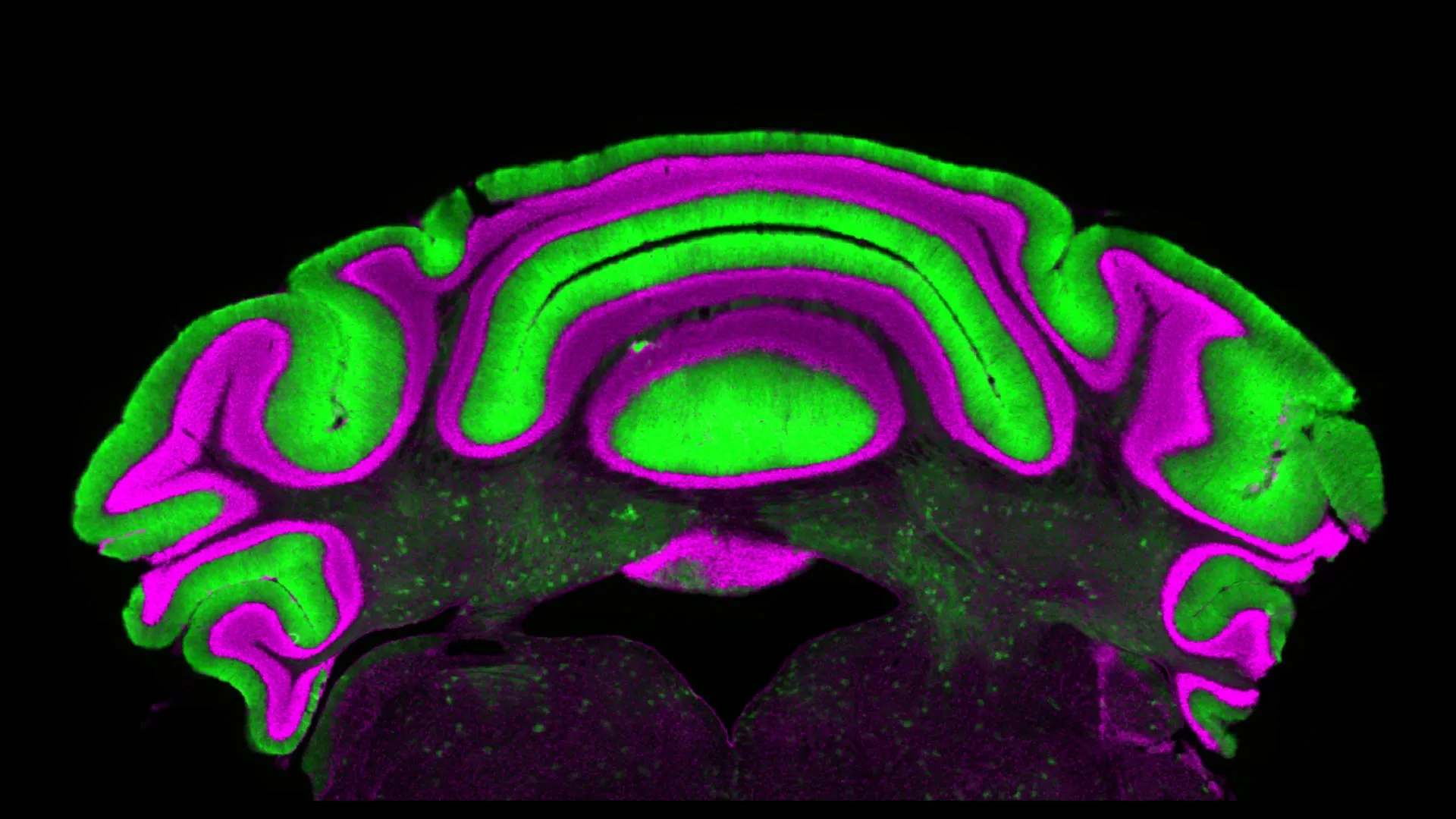
For generations, the "Purkinje-centric" model has dominated cerebellar research. Anatomically, Purkinje cells are the sole output neurons of the cerebellar cortex, and they exert a powerful inhibitory influence over the deep cerebellar nuclei. Because Purkinje cells are located in the outer, more superficial layer of the cerebellum, they are far more accessible for electrophysiological recordings than the DCN cells, which are buried deep within the brain’s structure.
Because of this accessibility, scientists have long utilized Purkinje cell activity as a "proxy" or biomarker for the functional status of the entire cerebellar circuit. If the Purkinje cells showed a specific firing pattern, it was traditionally assumed that the deep nuclei cells would respond in a predictable, inverse fashion. This convenience-based methodology has effectively dictated the trajectory of cerebellar research for decades.
Chronology of a Paradigm Shift
The journey toward these findings began when Meike van der Heijden and her team at Virginia Tech decided to rigorously test the validity of the "proxy" assumption. The researchers recognized that while the anatomical connection is indisputable, the functional translation of that connection in a disease state remained largely unverified.
The Research Methodology
To investigate this, the team performed an extensive analysis of a comprehensive database containing electrophysiology recordings from pre-clinical models of cerebellar disease. The objective was to determine if the expected inhibitory relationship—where increased Purkinje activity leads to decreased DCN activity—held true under the physiological stress of a disease state.
The Dissection of Data
The results were startling. The team found no significant linear correlation between the two populations. The predictive power of Purkinje cell activity regarding DCN cell behavior was found to be remarkably limited. This meant that monitoring the outer layer of the cerebellum was not providing an accurate reflection of what was occurring in the deep nuclei, where the final, integrated motor signals are generated.
The study, recently published in the Journal of Physiology, serves as a quantitative rebuttal to the simplified models that have long been accepted as fact. By demonstrating that one cell type does not reliably predict the other, the research has effectively shifted the goalposts for future cerebellar investigation.
Supporting Data and the Fallacy of Linear Relationships
The core of the study’s impact lies in the decoupling of Purkinje and DCN activity. To understand why this is significant, one must look at the mathematical expectations versus the observed reality.
Under normal, healthy conditions, the inhibitory synaptic input from Purkinje cells is a critical regulator of DCN excitability. However, the brain is not a static machine; it is a dynamic, plastic system. In a disease state, the homeostatic mechanisms that maintain this balance are often compromised.
Van der Heijden’s team highlighted that even when Purkinje cells exhibited high-frequency firing, the corresponding DCN cells did not consistently show the expected suppression. Conversely, periods of low Purkinje activity did not guarantee a surge in DCN excitation. This suggests that the DCN cells are likely integrating a wider variety of inputs—perhaps from mossy fibers or other interneurons—that outweigh or mask the inhibitory influence of the Purkinje cells.
The data indicates that the "input-output" relationship of the cerebellum is far more complex than a simple relay system. Researchers are now forced to consider that the DCN serves as a sophisticated computational hub rather than a mere secondary participant following the dictates of the Purkinje layer.
Official Responses and Researcher Perspective
The findings have sparked a conversation within the global neuroscience community, with Van der Heijden and her lead author, doctoral candidate Alyssa Lyon, serving as the primary voices for this shift in perspective.
"We see that there’s not a clear linear relationship between activity in the Purkinje cells and in the deep nuclei cells," said Van der Heijden. "So there’s very limited predictive power in monitoring one to understand what’s going on in the other."
Alyssa Lyon, who is part of Virginia Tech’s Translational Biology, Medicine, and Health Graduate Program, emphasized the clinical urgency of the discovery. "Purkinje and cerebellar deep nuclei cell activity is disrupted in a disease state, and a better understanding of the relationship between these neuron types will ultimately help optimize treatments for diseases such as dystonia, ataxia, and tremor," Lyon stated.
The researchers are careful not to discard previous work entirely, but rather to advocate for a more nuanced methodology. Their message is one of academic rigor: if the goal is to understand the cerebellum in a diseased state, scientists must move past the limitations of ease and accessibility. "We suggest that if you want to know how the cerebellum is behaving in a disease state, you have to look at the deep nuclei neurons, not just the Purkinje cells," Van der Heijden added.
Implications for Future Treatment and Research
The implications of this research are twofold, impacting both the basic science of the brain and the clinical application of neuro-therapeutics.
A Cautionary Tale for Clinical Interventions
Currently, many therapeutic strategies—including deep brain stimulation and pharmacological approaches—are designed to modulate Purkinje cell activity with the hope of "fixing" the DCN output. If the link between these two populations is as loose as the study suggests, these treatments may be targeting the wrong node in the circuit. If clinicians modulate the Purkinje cells but the DCN cells do not respond as predicted, the intended therapeutic effect may never materialize, potentially explaining the inconsistent outcomes seen in some movement disorder treatments.
Reshaping the Research Pipeline
Moving forward, this study serves as a "cautionary tale" for the broader scientific community. It warns against the danger of relying on convenient proxies in favor of harder-to-reach but more clinically relevant data. Researchers are now encouraged to invest in the technical advancements required to measure DCN activity directly in living systems, rather than assuming that the outer cortical layer tells the whole story.
The Path Toward Precision Medicine
By refining our understanding of cerebellar circuits, we open the door to a new era of precision medicine for neurological disorders. Instead of broad-spectrum approaches, researchers can now begin to map the specific dysfunctions within the DCN. This could lead to more precise stimulation protocols or more targeted drugs that address the actual computational errors within the deep nuclei, rather than attempting to indirectly influence them through the Purkinje cells.
Conclusion: A New Frontier in Neuroscience
The study from Virginia Tech’s Fralin Biomedical Research Institute is a reminder that in science, the most deeply held assumptions are often the ones most in need of scrutiny. By challenging the long-standing model of cerebellar function, Meike van der Heijden and her team have not only provided a new set of data but have also provided a new mandate: to prioritize biological accuracy over experimental convenience.
As neuroscientists move forward, the focus will likely shift deeper into the cerebellum. While the Purkinje cells will remain a vital component of the puzzle, they can no longer be viewed as the sole key to understanding the complex motor disorders that plague millions. The path ahead is more difficult, requiring greater technical sophistication and more rigorous experimentation, but it is a path that promises a much higher probability of success in the quest to alleviate the burden of movement disorders. The "little brain" has once again proven that it holds secrets that are far from simple, and for the sake of patient care, it is time that we look closer at the deep nuclei of our own assumptions.