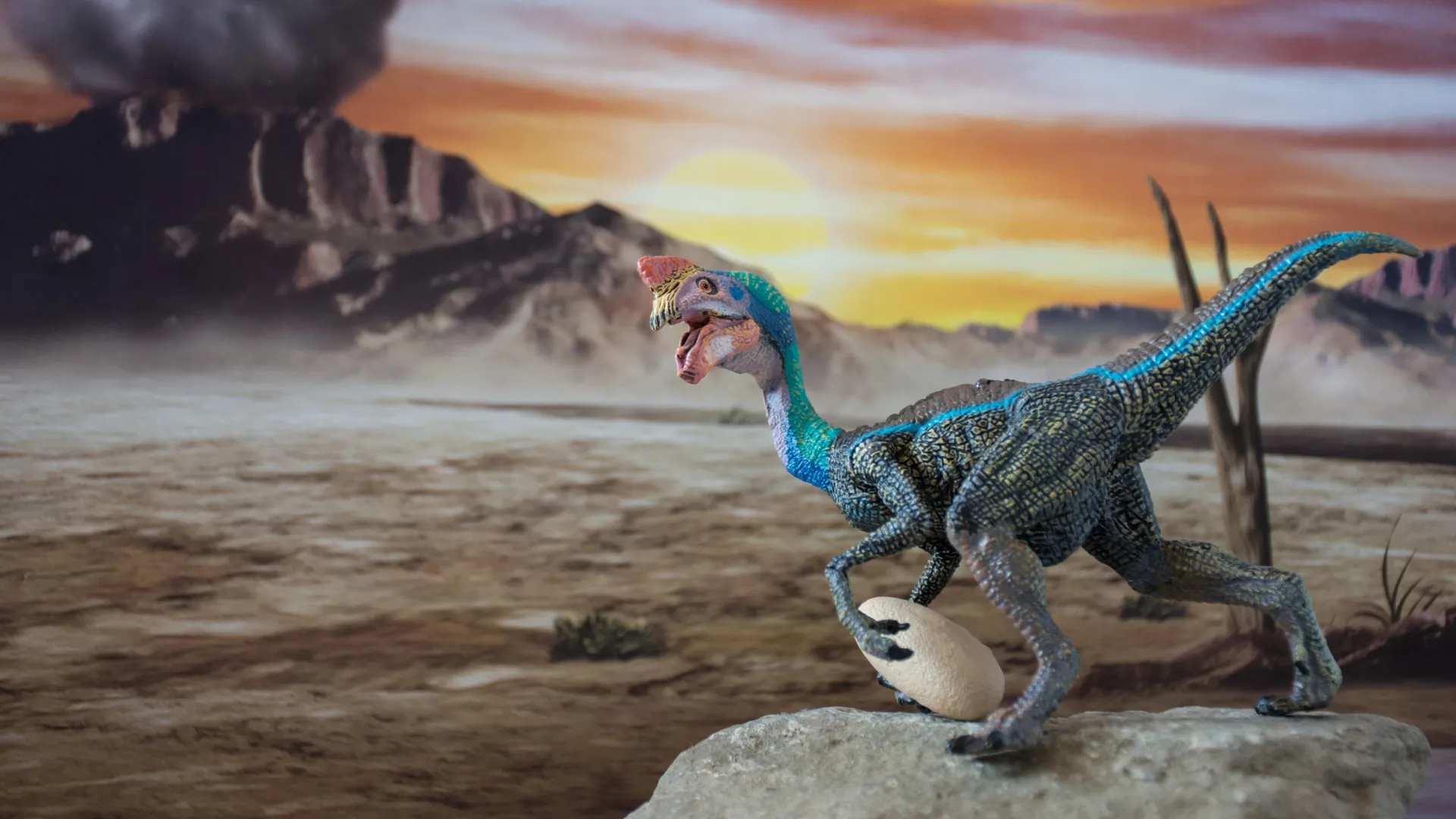
For decades, the image of the Oviraptor has been shrouded in a mixture of scientific misconception and evolutionary intrigue. Once unfairly labeled as a nest-raiding villain—its name literally translates to "egg thief"—this feathered, bird-like dinosaur has since been rehabilitated in the public consciousness as a dedicated, protective parent. Yet, even as researchers confirmed that these Late Cretaceous creatures were brooding over their own clutches rather than pilfering those of others, a fundamental question remained unanswered: Exactly how did they bring their young into the world?
New research published in the journal Frontiers in Ecology and Evolution has finally provided a compelling, evidence-based window into this prehistoric nursery. By merging physical experimentation with advanced computer modeling, a team of researchers in Taiwan has demonstrated that Oviraptor incubation was a delicate, collaborative dance between the dinosaur’s body heat and the ambient warmth of the environment.
The Evolutionary Crossroads: Birds and Dinosaurs
To understand why the Oviraptor is so critical to paleontology, one must look at its place on the tree of life. Living between 100 and 66 million years ago, Oviraptors were small-to-medium-sized theropods characterized by their bird-like features: toothless, beak-like jaws, long, graceful necks, and often, elaborate crests atop their skulls.
They serve as a vital evolutionary bridge. Their anatomy—feathers, nesting habits, and evidence of parental care—suggests that the traits we define as "avian" today were not sudden inventions, but rather slow-evolving characteristics honed over millions of years of dinosaurian history. While they were not capable of flight, their biology points toward a transitionary period where the line between "dinosaur" and "bird" began to blur.
Recreating an Ancient Nest: A Chronology of Discovery
The path to this discovery began with a meticulous reconstruction of Heyuannia huangi, an Oviraptor species that thrived in what is now China during the waning years of the Cretaceous. To bridge the gap of 70 million years, the research team, led by Dr. Tzu-Ruei Yang of Taiwan’s National Museum of Natural Science, embarked on an ambitious engineering project.
Phase 1: Building the Model
The team constructed a life-sized model of the dinosaur using a combination of a wooden framework and polystyrene foam. To mimic the soft tissues of the creature, researchers applied layers of cotton, cloth, and bubble paper. This wasn’t merely a taxidermy project; it was a thermodynamic tool.
Phase 2: Simulating the Clutch
Because Oviraptor eggs are unique in the fossil record—unlike those of any living species—the team had to manufacture their own. They cast resin eggs and arranged them in the characteristic double-ring pattern observed in fossilized nests.
Phase 3: Environmental Testing
With the model and nest in place, the researchers subjected their creation to varying environmental conditions. By manipulating heat sources and the positioning of the "parent," they were able to record how thermal energy transferred through the clutch. This allowed them to calculate incubation efficiency, comparing their results to the known thermal regulation of modern birds.
The Data: Sunlight as a Co-Parent
The study’s most striking finding is the role of the sun in the Oviraptor nursery. The researchers discovered that the position of the brooding adult relative to the eggs was the primary driver of hatching success, but it was not the only one.
Temperature Gradients and Hatching Asynchrony
Under cooler conditions, the nest experienced significant thermal inequality. Eggs in the outer ring of the clutch were significantly cooler than those nestled closer to the adult’s body—sometimes by as much as 6°C. This temperature gap would have likely resulted in "asynchronous hatching," where some eggs matured and hatched days or weeks before others.
The Solar Factor
Conversely, in warmer conditions, the temperature differential dropped to a negligible 0.6°C. This indicates that sunlight acted as a critical supplement to the parent’s body heat. "It’s unlikely that large dinosaurs sat atop their clutches," explains Dr. Yang. "Supposedly, they used the heat of the sun or soil to hatch their eggs, like turtles. Since Oviraptor clutches are open to the air, heat from the sun likely mattered much more than heat from the soil."
Official Responses and Expert Commentary
The study represents a milestone for paleontological methodology, particularly for researchers working in regions lacking extensive fossil beds.
"We show the difference in Oviraptor hatching patterns was induced by the relative position of the incubating adult to the eggs," says Dr. Yang. The findings clarify that Oviraptors were likely not practicing "Thermoregulatory Contact Incubation" (TCI) in the way modern birds do.
"Moreover, we obtained an estimate of the incubation efficiency of Oviraptors, which is much lower than that of modern birds," adds first author Chun-Yu Su, who was a high school student at Washington High School in Taichung when the work was initiated.
The team is quick to point out that "lower efficiency" does not mean "inferior." Dr. Yang notes, "Modern birds aren’t ‘better’ at hatching eggs. Instead, birds living today and Oviraptors have a very different way of incubation. Nothing is better or worse. It just depends on the environment."
Implications: The Evolution of Parenting
The research provides several profound implications for our understanding of dinosaur biology:
1. Moving Beyond TCI
Modern birds utilize TCI, a method requiring the parent to make direct contact with every egg, serve as the sole heat source, and maintain a narrow, stable temperature range. The Oviraptor nest design, which was semi-open, made this impossible. This suggests that Oviraptors occupied an evolutionary middle ground: they provided parental care, but they relied on environmental cooperation—a "co-incubation" strategy.
2. The Shift in Nesting Strategies
This behavioral adaptation is likely a relic of the transition from buried nests (typical of reptiles like turtles) to the open, air-exposed nests of modern birds. Oviraptors were effectively experimenting with different ways to shield their offspring from the elements while maintaining the heat necessary for development.
3. A New Paradigm for Research
Perhaps the most inspiring aspect of this study is its accessibility. By combining physical reconstruction with heat transfer modeling, the team proved that high-level paleontological inquiry does not always require the discovery of a new, pristine fossil.
"It also truly is an encouragement for all students, especially in Taiwan," says Dr. Yang. "There are no dinosaur fossils in Taiwan, but that does not mean that we cannot do dinosaur studies."
Conclusion
The Oviraptor, long misunderstood as a thief of eggs, is revealed through this research to be a sophisticated parent. While they may not have possessed the high-efficiency incubation systems of modern avian descendants, their strategy was perfectly tuned to the specific environmental pressures of the Late Cretaceous.
By utilizing the sun, the soil, and their own body heat, Oviraptors navigated the challenges of their world, ensuring the survival of their lineage. This study not only illuminates the reproductive habits of an ancient creature but also underscores the ingenuity of modern science, proving that with enough imagination and rigorous methodology, we can reconstruct the quiet, warm moments of a life that ended millions of years ago. As we continue to study these feathered wonders, we find that the history of life is not a series of upgrades, but a continuous, adaptive story of survival.