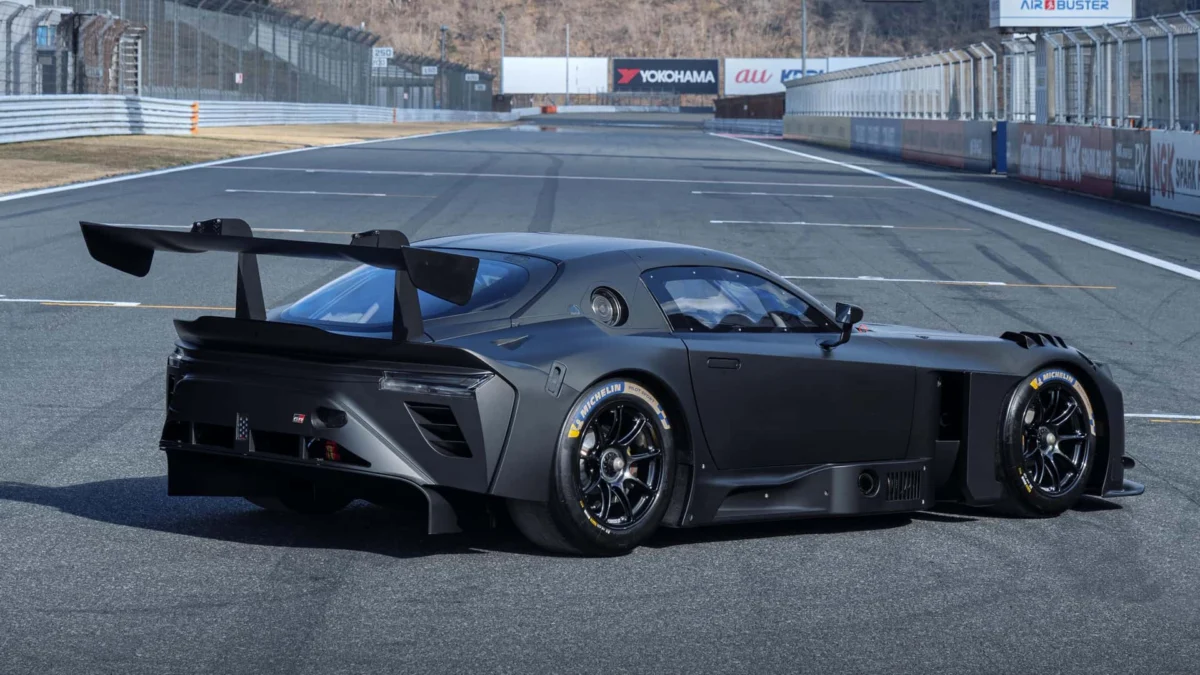
The automotive world is currently bearing witness to one of the most ambitious engineering projects in Toyota’s modern history. As the Japanese giant pivots further into the performance-oriented market, all eyes are locked on the development of the GR GT—a machine Toyota describes as a "road-legal race car." While the prospect of a high-performance production vehicle is exciting, it is the car’s dedicated racing counterpart, the GR GT3, that is capturing the imagination of enthusiasts worldwide. Recent track sightings, featuring the guttural roar of a twin-turbocharged V8, suggest that Toyota is not just participating in the supercar segment; they are looking to dominate it.
The Raw Sound of Engineering: A Trackside Revelation
The anticipation surrounding the GR GT3 reached a fever pitch recently following the emergence of high-definition footage captured by Car Magazine and shared via Instagram user khuritzz. The video offers a tantalizing glimpse into the real-world capabilities of this machine, capturing the car as it performs high-speed bursts on a test circuit, occasionally cruising alongside everyday commuter vehicles—a stark contrast that highlights the raw, predatory nature of the racer.
The audio profile is perhaps the most significant revelation. The GR GT3 emits a menacing, deep-chested growl punctuated by the distinct, high-pitched whine of twin turbochargers. This is the sound of a 4.0-liter twin-turbo V8 engine designed from the ground up to comply with the stringent FIA GT3 technical regulations. The engine note is aggressive, purposeful, and distinctly different from the high-revving, naturally aspirated motors of the past, signaling a shift toward forced-induction dominance in the GT racing landscape.
Chronology: From Concept to Asphalt
The trajectory of the GR GT project has been marked by a deliberate, methodical development process that prioritizes performance metrics over marketing hype.
- Late 2021/Early 2022: Initial whispers and concept renders began circulating, suggesting Toyota was working on a successor to the spirit of the LFA but with a much sharper focus on FIA GT3 competition.
- December 2025: Toyota officially pulled the veil back on the GR GT and the GR GT3. The debut confirmed that the platform would serve two distinct purposes: a race-bred machine for the track and a road-legal supercar for the elite consumer.
- 2026: Throughout the past year, the vehicle has been spotted undergoing rigorous endurance testing at major global circuits, including the Nürburgring and Fuji Speedway, fine-tuning its aerodynamics and cooling systems.
- Late 2027 (Expected): Toyota has slated the commercial release of the road-going GR GT, marking a significant milestone in the company’s history as they move to transition their Gazoo Racing (GR) division into a standalone icon of performance.
Supporting Data: The Anatomy of a Predator
The technical specifications currently attributed to the road-going GR GT suggest a vehicle that will challenge the establishment, including established titans from Porsche, Ferrari, and Aston Martin.
Powertrain and Performance
At the heart of the machine is the aforementioned 4.0-liter V8. Toyota engineers have set an ambitious target of 640 horsepower and 627 pound-feet of torque. These figures are intended to provide linear, relentless power delivery. The power is managed by a newly developed eight-speed automatic transmission in the road car, designed to balance rapid-fire shifts with the comfort required for occasional road use.
Chassis and Materials
To manage such significant power, the GR GT utilizes an all-aluminum frame, providing a rigid yet lightweight foundation. The bodywork is a masterclass in modern material science, incorporating carbon fiber-reinforced plastic (CFRP) alongside aluminum panels. This combination ensures that the vehicle maintains a low center of gravity while maximizing structural integrity—a necessity for a car that experiences the high G-forces of a competitive race track.
The Divergence: Road vs. Track
While the two cars share a chassis, their intended environments necessitate distinct engineering choices.
- The Cabin: The road-legal GR GT focuses on a driver-centric experience, featuring premium, carbon-backed Recaro bucket seats and an interior aesthetic that prioritizes ergonomic function.
- The Aero: The GR GT3 race car takes the design language to the extreme. It features a massive, downforce-generating rear wing, a deep front splitter designed to hug the tarmac, and aggressive fender louvers that manage airflow to reduce lift.
- The Transmission: While the road car utilizes the sophisticated eight-speed automatic, the race car ditches this in favor of a dedicated sequential gearbox, which is optimized for the lightning-fast, high-stress gear changes required during endurance racing.
Implications: A Standalone Identity for GR
The development of the GR GT is more than just a new model launch; it is a strategic maneuver by Toyota to solidify the "GR" brand as a standalone force. By creating a car that is built on the racetrack and adapted for the road, Toyota is attempting to reverse the traditional trend of "trickle-down" technology. In this case, the track experience is the primary driver of the road car’s DNA.
There is, however, some debate within the industry regarding this strategy. Some analysts argue that spinning off the GR brand could dilute the core Toyota identity, which is built on reliability and mass-market appeal. Others suggest that without a halo vehicle like the GR GT, Toyota would struggle to maintain its relevance in an era where performance is increasingly defined by electrification and high-tech aerodynamics.
Ultimately, the implications for the consumer are clear: Toyota is entering a premium tier that it hasn’t occupied since the height of the Lexus LFA. This vehicle serves as a manifesto for the future of the brand—a statement that even in an age of electrification, the internal combustion engine, when engineered to the absolute limit, still holds a place in the hearts of driving enthusiasts.
The Road Ahead
As we approach the late 2027 launch window, the automotive world will be watching closely to see how the production model fares against the real-world challenges of high-end sports car ownership. Can a car born from the brutality of GT3 racing translate into a usable, reliable, and engaging road machine?
If the current track footage is any indication, the sound alone will be enough to sell out the initial production run. Toyota has successfully built a "menacing" machine that commands attention. Whether on the straights of Le Mans or the winding mountain roads of the world, the GR GT is poised to become a benchmark for the next decade of supercars. The roar of that V8 is not just a sound; it is a warning shot to the rest of the industry that Toyota is here to race, and it is here to win.