Executive Summary: A Fragile Corridor in a Nation Under Siege
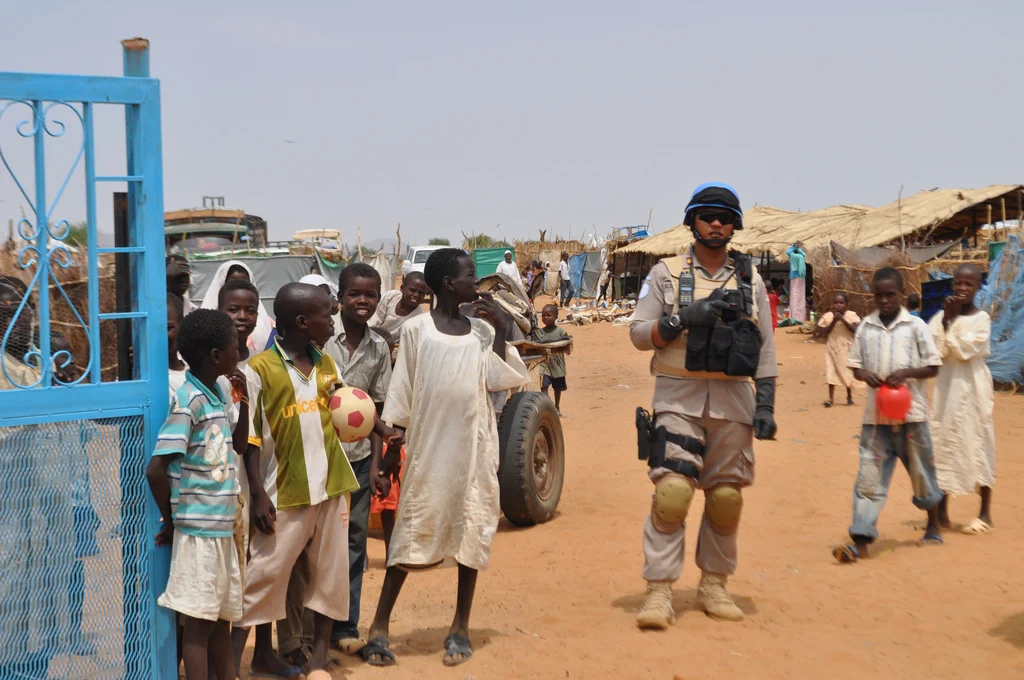
The United Nations has issued a cautiously optimistic response to the Sudanese government’s decision to extend the operational mandate of the Adre border crossing with Chad through September 30, 2026. This critical artery serves as a primary conduit for humanitarian aid reaching millions of Sudanese civilians displaced and starved by the country’s protracted civil war. However, the international body simultaneously issued a grim warning: while the logistics of aid delivery remain open, the environment inside Sudan is becoming increasingly lethal.
Escalating violence in the besieged city of El Obeid, coupled with a surging cholera outbreak in West Kordofan and the systematic collapse of the national healthcare infrastructure, has brought the humanitarian response to a breaking point. As the conflict between the Sudanese Armed Forces (SAF) and the Rapid Support Forces (RSF) enters its third year, the UN warns that the country is teetering on the edge of a total human rights catastrophe.
Chronology: The Deterioration of a Nation
To understand the gravity of the current situation, one must look at the systematic breakdown of stability in Sudan over the past 30 months.
- April 2023: The outbreak of open conflict between the SAF and RSF begins, triggering mass displacement and the immediate need for humanitarian corridors.
- January 2026: Marking 1,000 days of war, the World Health Organization (WHO) characterizes the conflict as the "world’s worst health and humanitarian crisis," as the healthcare system begins a rapid, irreversible decline.
- February 2026: The UN issues an urgent warning regarding the use of aerial bombardment and drone strikes, noting that these attacks are specifically targeting children and vital humanitarian aid facilities.
- April 2026: Top UN aid officials publicly declare that the international community has largely "abandoned" Sudan, citing a dangerous rollback in humanitarian funding and an unchecked influx of foreign weapons into the theatre of war.
- May 2026: UN human rights experts issue a formal condemnation of the deliberate, systematic attacks on Sudan’s healthcare system.
- June 2026: The Sudanese government authorizes the extension of the Adre crossing. Simultaneously, fighting intensifies in El Obeid, forcing humanitarian partners to suspend operations due to localized security threats and communication blackouts.
Supporting Data: The Anatomy of a Crisis
The statistics emerging from Sudan paint a picture of a nation struggling to survive under the weight of a multi-front disaster.
The Infrastructure of Failure
The conflict is no longer just a territorial struggle; it is an assault on the civilian infrastructure necessary for life. The widespread deployment of drones—a recent, devastating escalation—has transformed urban centers into high-risk zones. In North Kordofan, the state capital of El Obeid has seen repeated drone strikes that have crippled civilian movement and paralyzed the local economy.
The Health Emergency
Beyond the immediate threat of explosives, the biological threat is rising. West Kordofan is currently grappling with a severe cholera outbreak. The WHO has been forced to shift its focus toward emergency surveillance and water chlorination—basic life-saving measures that are being severely hampered by the inability to move supplies through active combat zones.
Medical experts note that the "collapsing healthcare system" is not an accidental byproduct of war, but a result of targeted attacks on hospitals, clinics, and pharmacies. This has left the civilian population without access to treatment for not only conflict-related trauma but also preventable diseases.
Official Responses and Diplomatic Stance
UN Spokesman Stéphane Dujarric has been the primary voice articulating the international community’s position. In his recent briefing, Dujarric emphasized that the Adre corridor is not merely a logistical convenience; it is a "lifeline of last resort."
"The decision by the Sudanese government to keep the Adre crossing open is a welcome step," Dujarric stated, "but the benefit of this corridor is nullified if our humanitarian partners cannot move freely or safely once they enter the country."
The UN’s stance is firm: all parties to the conflict, both the SAF and the RSF, have a legal and moral obligation under international humanitarian law to protect civilians and the infrastructure they rely on. The organization has renewed its calls for "immediate restraint," a phrase that, while standard in diplomatic circles, carries a desperate tone given that previous calls have been largely ignored by the belligerents.
Implications: The Abandonment of a Nation
The situation in Sudan carries profound implications for global humanitarian policy and regional security in the Horn of Africa.
The Abandonment Narrative
Perhaps the most stinging indictment of the current situation came in April 2026, when UN officials highlighted that the international community has effectively turned its back on Sudan. As the global spotlight shifts toward other geopolitical flashpoints, the humanitarian response in Sudan has seen a significant "rollback." This lack of international engagement has created a power vacuum that is being filled by the proliferation of weapons, further incentivizing the warring parties to pursue military victory rather than a negotiated peace.
The Risk of Regional Spillover
The conflict in the Kordofan region is not contained. The ongoing insecurity threatens the stability of neighboring Chad and the broader Sahel region. Should the humanitarian crisis continue to spiral—particularly with the unchecked spread of disease and the mass displacement of populations—the potential for a wider regional refugee crisis grows exponentially.
The Human Rights Disaster
The UN has explicitly warned that the current trajectory will culminate in a "human rights disaster." The term refers to more than just the immediate death toll; it encompasses the long-term destruction of the Sudanese social fabric. When hospitals are destroyed, when communication lines are cut, and when the most vulnerable are denied food and medicine, the consequences last for generations.
Conclusion: A Race Against Time
The extension of the Adre border crossing provides a window of opportunity, but it is a narrow one. The international community faces a stark choice: to treat the Sudan crisis as a manageable logistical problem, or to recognize it for what it is—a systemic failure of international protection.
Unless the belligerents in the SAF and RSF can be pressured to stop the targeting of civilian infrastructure and unless the international community re-commits to the region, the Adre crossing will remain a gateway to a country in collapse. The UN’s call for restraint is not just a diplomatic suggestion; it is a plea to prevent an entire nation from disappearing into the void of conflict-induced oblivion. As the September deadline approaches, the eyes of the world remain largely diverted, leaving the people of Sudan to face the "horror and hell" of a war that shows no signs of abating.