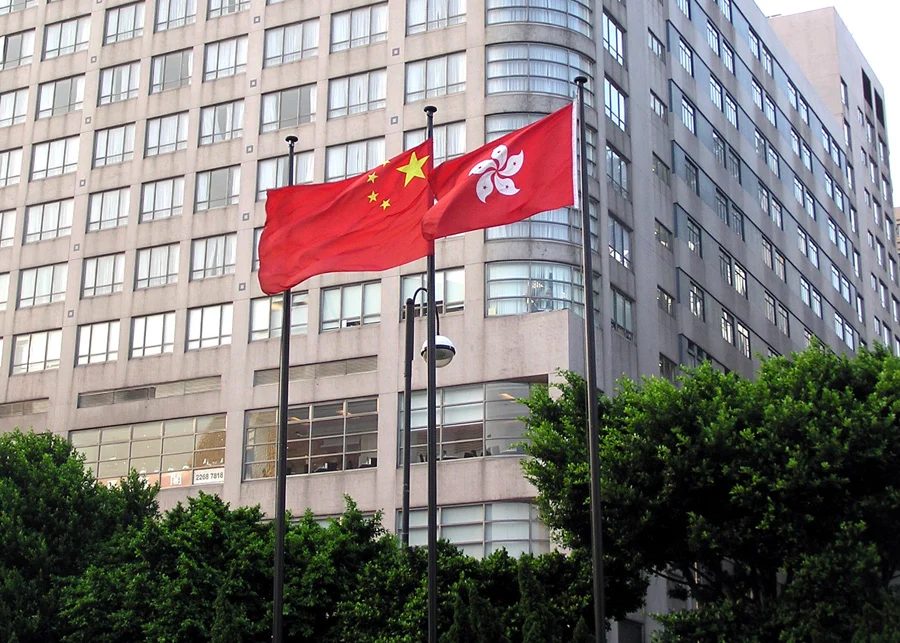
Six years after the imposition of the National Security Law (NSL) in June 2020, Hong Kong stands transformed. What was once a vibrant, pluralistic hub of international commerce and civil society has been fundamentally restructured into a "security fortress," according to a scathing new report from Human Rights Watch (HRW). The report warns that Beijing’s systematic overhaul of the Hong Kong Special Administrative Region’s (HKSAR) governance has not only tightened social control but has effectively dismantled the mechanisms of public accountability, leaving the city’s residents with little recourse against institutional negligence.
The Shift: Consolidating Power Under the CCP
The structural metamorphosis of Hong Kong’s government has moved beyond the mere enactment of laws; it has redefined the personnel, institutions, and ideology governing the city. Under the new framework, the HKSAR’s administrative apparatus no longer primarily answers to its constituents. Instead, the locus of power has shifted definitively toward the Chinese Communist Party (CCP) leadership in Beijing.
At the heart of this restructuring is a Legislative Council (LegCo) stripped of its traditional opposition. The current body is characterized by a heavy presence of individuals with deep ties to the Chinese state, including 45 members associated with state-owned enterprises and a significant cohort of former police officers. This composition ensures that the legislature functions as a rubber-stamp body for the directives of the Chinese presidency, effectively insulating the government from public scrutiny.
"Hong Kong’s highly repressive national security regime and bureaucracy have erased long-protected rights and cast a deeply troubling shadow over its future," said Elaine Pearson, Asia director at HRW. For Pearson, the shift is not merely political—it is existential for the city’s governance.
Chronology: Six Years of Systematic Erosion
The current state of affairs is the culmination of a deliberate, phased strategy initiated in 2020. Understanding this timeline is critical to assessing how quickly the city’s democratic infrastructure was dismantled.
- June 2020: The National Security Law is imposed, criminalizing "subversion, secession, terrorism, and collusion with foreign forces." This serves as the catalyst for a sweeping crackdown on civil society.
- 2021–2022: The electoral system is "reformed" to ensure "patriots govern Hong Kong." Opposition candidates are barred, and the scope of democratic participation is drastically narrowed.
- 2023–2024: The education system undergoes a mandatory curriculum overhaul, prioritizing "patriotism" and national security education over historical inquiry. Pro-democracy news outlets are shuttered, and key figures—including Jimmy Lai and Joshua Wong—are prosecuted under the NSL.
- 2025: The government intensifies its focus on institutional secrecy, increasing national security funding to 5 billion HKD ($638 million USD) without providing mechanisms for public audit or oversight.
- 2026: A series of incidents, most notably the deadly Tai Po housing complex fire, exposes the lack of administrative accountability, as those calling for investigations are detained rather than heard.
Supporting Data: The Cost of Secrecy
The financial aspect of the new regime is particularly alarming to international observers. The allocation of 5 billion Hong Kong dollars to national security operations—an amount that remains opaque in its expenditure—signals a shift toward a state of permanent surveillance.
The HRW report highlights that this lack of transparency is not a bug in the system, but a feature. Without public information regarding how these funds are utilized, the government operates under a shroud of secrecy. This has direct, real-world consequences. The Tai Po fire serves as a grim case study: despite "ample evidence" of government negligence regarding building safety standards, any attempts by residents or activists to demand accountability were met with silence, intimidation, and in some cases, detention.
When a student at a local university spoke out to demand answers regarding the tragedy, they were promptly expelled, illustrating the government’s low tolerance for dissent even in matters of public safety.
The Ideological Apparatus: Education and Censorship
The restructuring of Hong Kong has not been limited to the halls of power; it has permeated the classrooms. The Education Bureau has implemented a curriculum that seeks to redefine the city’s history and identity. By mandating the teaching of national security "values," the state aims to cultivate a generation that views democratic activism not as a right, but as a betrayal of the nation.
History, once a subject of critical analysis, is being rewritten to vilify past protests. Educators who have raised concerns about the long-term damage this indoctrination might cause have been sidelined. One anonymous educator noted, "China has historical problems and existing ones. We need to face up to them for the country to progress." Under the current regime, however, acknowledging these problems is increasingly classified as seditious.
Beyond schools, the cultural sphere has been stifled. Art, film, and media are subject to strict vetting, and businesses deemed to hold "pro-democracy values" are frequently targeted for regulatory harassment or public shaming.
Implications: A City Without a Safety Valve
The implications of this governance overhaul are profound. By stripping away the mechanisms that allow for criticism and correction, the government has created a system that is brittle and prone to failure.
The Myth of the "Small Minority"
The Chinese government has long maintained that the national security regime targets only a "small minority" of agitators. HRW and other human rights organizations, including Amnesty International, argue that this claim is a dishonest obfuscation. The impact of the NSL is universal, affecting the legal rights, educational opportunities, and free speech of every resident in Hong Kong.
The Role of the International Community
HRW is calling on foreign governments to maintain a spotlight on Hong Kong. As the city is turned into a "security fortress," the ordinary citizens—the people who campaigned for universal suffrage and civil liberties—are the ones bearing the heaviest burden. The report suggests that diplomatic pressure, while limited in its immediate ability to force policy reversals, remains essential to document the ongoing erosion of rights and to hold authorities accountable on the global stage.
Official Responses and the Outlook
The HKSAR government and Beijing have consistently characterized these changes as necessary to restore "stability and prosperity" after the social unrest of 2019. From their perspective, the restructuring is a success, having successfully neutralized what they term "anti-China forces."
However, the consensus among human rights monitors is that this stability is superficial and achieved at the cost of the city’s soul. The loss of accountability mechanisms—the ability to sue the government, to protest, or to speak freely about public policy—means that when disasters like the Tai Po fire occur, there is no longer a path for justice.
As Hong Kong continues to align its governance with the rigid, top-down model of the mainland, the prospects for a return to its former status as an open, rule-of-law-based society appear increasingly dim. For the people of Hong Kong, the "new normal" is one defined by silence, fear, and the profound, daily absence of the rights they once took for granted. The challenge for the international community is to ensure that while the city may be silenced, its plight is not forgotten.