We live in a culture obsessed with the "Game of Life." From the literal, century-old Milton Bradley board game that has graced family living rooms since 1860, to the endless shelves of self-help literature promising to reveal the "secret" to winning, the metaphor is pervasive. We are taught, almost from birth, that life is a series of moves, a climb up a ladder, and a pursuit of status.
Yet, as the pursuit of "winning" has shifted from a playful hobby to a primary psychological framework for millions, a disturbing trend has emerged. By viewing life as a competition, we have inadvertently transformed our existence into a zero-sum struggle, prioritizing quantifiable metrics over the intangible, deeply human experiences that actually constitute a "good life."
The Genesis of the "Game" Mentality
The concept of life as a game is rooted in a fundamental misunderstanding of what a game actually is. A game is, by definition, a closed system: it has finite rules, clear parameters for success, and—crucially—opponents. Whether it is professional sports or a tabletop race to retirement, the objective is to outperform others to achieve a victory condition that carries no intrinsic, long-term value.
Chronology of a Cultural Shift
- 1860: Milton Bradley releases "The Checkered Game of Life," the first mass-produced American board game. It codified the idea that life is a linear path toward wealth and virtue, setting the tone for American aspiration for over 160 years.
- Mid-20th Century: The post-war economic boom solidified the "keeping up with the Joneses" mentality, where material acquisition became the primary scoreboard.
- The Digital Age: With the rise of social media, the "Game of Life" was digitized. The metrics of success—likes, followers, job titles, and curated family photos—became constant, real-time indicators of one’s "standing" in the game.
The Objective vs. The Subjective: What We Measure
The primary tragedy of the "life-as-a-game" paradigm is that it forces us to prioritize the measurable over the meaningful.
The Trap of Quantifiable Metrics
In a competitive framework, we naturally gravitate toward what can be tracked. It is easy to compare who has the largest house, the highest salary, or the most prestigious job title. These objective metrics provide a quick, dopamine-inducing sense of progress. However, they are fundamentally "petty" in the grand scope of human existence.
The Irreducibility of the Good Life
True fulfillment is inherently subjective. Consider the pillars of a well-lived life:
- Ethical Integrity: How does one "win" at being a person of character? There is no trophy for kindness or consistent moral fortitude.
- Deep Connection: Relationships are not transactional, yet the competitive mindset attempts to score them based on social prestige or "power couples."
- Vocational Fulfillment: Real satisfaction comes from mastery and contribution, not merely from the external validation of a job title.
Because these elements cannot be ranked on a spreadsheet, those who treat life as a competition often relegate them to the background, focusing instead on the trivial prizes that are easily measured.
Supporting Data: The Cost of Competition
Psychological research into social comparison theory confirms that the "Game of Life" mindset is a direct pathway to chronic dissatisfaction.
When an individual views their peers as competitors, the fundamental nature of their relationships changes. Empathy, which requires rooting for the success of others, is replaced by a defensive posture. In a competitive, zero-sum environment, another person’s success is perceived as a personal loss. This creates a state of perpetual anxiety, where one is only as happy as their relative position to their peers.
Implications of the "Winner-Take-All" Mindset
- Corrosion of Community: If life is a competition, your friends and family are merely rivals in disguise. You may offer polite congratulations on their achievements, but beneath the surface, you are calculating your own relative standing. This prevents the vulnerability necessary for genuine intimacy.
- Surrender of Autonomy: When you play by the "rules" of society—chasing specific milestones like Ivy League schools or high-status career paths—you are essentially outsourcing your values. You are no longer living; you are "performing" for an audience you didn’t choose, chasing a victory that feels hollow upon arrival.
- The Fragility of Self-Worth: If your value is tied to your rank in the game, every setback becomes an existential threat. When you fail, you don’t just experience a disappointment; you experience a "defeat." This turns the inevitable fluctuations of life into a series of terrifying, high-stakes humiliations.
The Pyrrhic Victory: A Crisis of Purpose
A "Pyrrhic victory" is a win that comes at such a great cost that it is tantamount to defeat. This is the ultimate outcome for those who win the game of life by conventional standards but lose their humanity, their peace of mind, and their authentic selves in the process.
For the 99.99% of people who are not in the top tier of wealth, power, or status, the "Game of Life" is a rigged system. By focusing on the scoreboard, we miss the reality: that the vast majority of our life experiences—the small joys, the quiet moments of learning, the slow building of trust—happen entirely outside the boundaries of any competitive arena.
Moving Beyond the Board: A New Philosophy
How do we exit the game? The solution is not to stop striving or to give up on achievement. Rather, it is to decouple our sense of self-worth from the competitive framework.
Redefining Success
- Internalize Your Scorecard: Shift from external metrics to internal ones. Instead of "Who has a better job?", ask "Am I doing work that aligns with my values?"
- Celebrate Others: Actively practice the destruction of the competitive mindset by genuinely celebrating the success of those around you. When you view others as allies rather than opponents, you expand your own capacity for happiness.
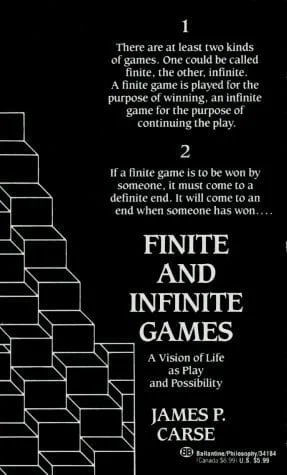
- Accept the Infinite: James Carse, in his seminal work Finite and Infinite Games, argued that there are two types of games. Finite games are played to be won. Infinite games are played for the purpose of continuing the play. Life is an infinite game. The goal is not to "win," but to keep growing, learning, and contributing.
Final Thoughts: The Proper Place of Play
It is important to clarify that games are not evil. Competition is a vital part of human culture; it teaches resilience, teamwork, and the joy of striving. When you step onto a golf course, enter a 5K race, or play a board game with your family, by all means, play to win. Enjoy the thrill of the competition.
However, the moment you step off that course or put the game box away, you must leave the competition behind. Do not bring the scoreboard into your marriage, your parenting, your friendships, or your career. These domains are far too significant to be trivialized by a competitive framework.
The "Game of Life" is a metaphor that has outlived its usefulness. We must stop viewing our existence as a race to be won and start viewing it as a journey to be experienced. By rejecting the arbitrary rules of the competitive world, we reclaim the autonomy to define what success actually means—not by how we compare to others, but by how we align with our own purpose.