WASHINGTON D.C. – In a landmark decision with far-reaching implications for election administration across the United States, the Supreme Court on Monday upheld a Mississippi state law that permits election officials to count mail ballots postmarked by Election Day, even if they arrive up to five days later. The 5-4 ruling, which rejected a challenge from the Republican National Committee (RNC) and the Mississippi Republican Party, effectively validates similar ballot receipt provisions in over two dozen other states and reaffirms the broad authority of states in setting election procedures.
The contentious case, Watson v. Republican National Committee, centered on differing interpretations of federal election law and the very meaning of "Election Day" in the context of modern voting practices. The majority opinion, penned by Justice Amy Coney Barrett, found that existing federal statutes do not mandate that all ballots must be received by Election Day, thereby allowing states the flexibility to account for mail delivery times.
Main Facts: Supreme Court Affirms Post-Election Day Ballot Receipt
Landmark 5-4 Ruling Shapes Election Landscape
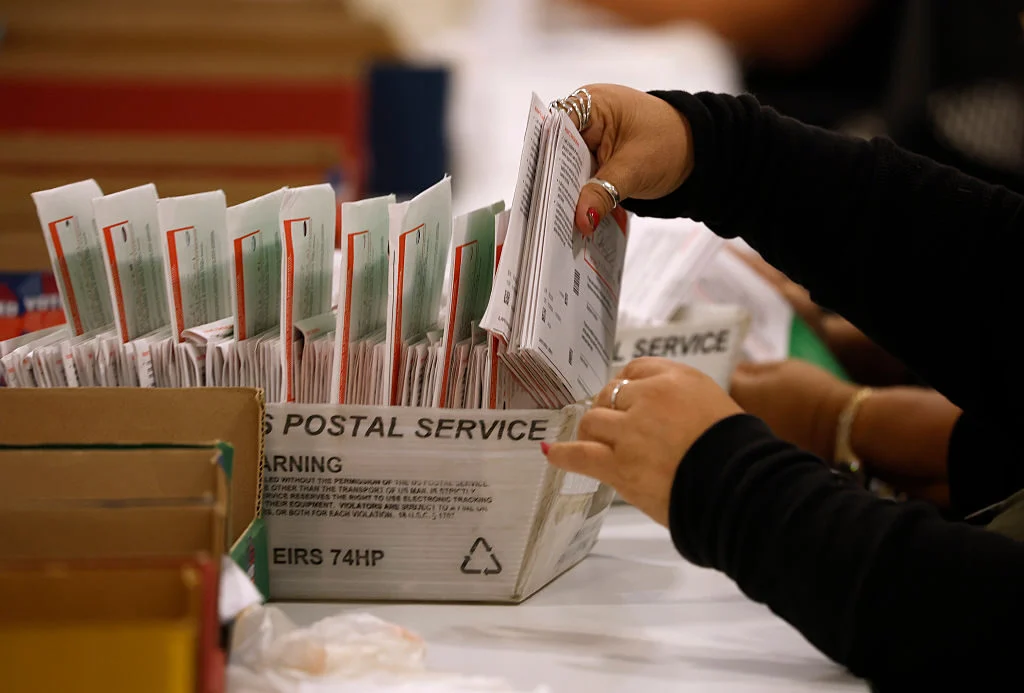
The Supreme Court’s decision delivered a significant victory for proponents of broader voter access and for states seeking to ensure that all validly cast ballots are counted, particularly those submitted by mail. At the heart of the dispute was a Mississippi statute allowing mail-in ballots to be counted if they bear an Election Day postmark and arrive within five days of the election. This practice, common in many states, aims to prevent disenfranchisement due to postal delays or administrative processing times.
The challenge, brought by the Republican National Committee and the state Republican Party, argued that federal law implicitly requires all ballots to be received by the close of polls on Election Day itself. They contended that allowing ballots to arrive days later undermines the integrity of the election calendar and could introduce uncertainty into results. However, the High Court disagreed, overturning a lower court opinion that had previously sided with the Republican plaintiffs.
Justice Amy Coney Barrett, writing for the majority, asserted that the "election-day statutes say nothing about ballot receipt, and we cannot add to the words Congress chose." Her opinion emphasized a textualist approach, focusing on the explicit language of federal law rather than inferring deadlines that are not directly stated. This interpretation is crucial as it avoids imposing a uniform national standard where Congress has not explicitly legislated one.
The majority opinion was joined by Chief Justice John Roberts and Justices Sonia Sotomayor, Elena Kagan, and Ketanji Brown Jackson. The dissenting justices, Samuel A. Alito Jr., Clarence Thomas, Neil M. Gorsuch, and, in part, Brett M. Kavanaugh, argued vehemently that the historical understanding and practical implementation of federal election law dictate that Election Day is indeed the ultimate deadline for ballot submission and receipt.
This ruling solidifies the legal standing of vote-by-mail systems that incorporate grace periods for ballot receipt, practices that gained significant traction and underwent expansion during the COVID-19 pandemic to mitigate public health risks and accommodate unprecedented shifts in voting behavior. While the pandemic spurred many temporary changes, this decision confirms the legality of many permanent state laws designed to facilitate voting via mail.
A Chronology of the Dispute and its Evolution
Historical Precedent and Pandemic-Era Shifts
The debate over ballot receipt deadlines is not new, but it intensified dramatically in recent years. For decades, many states have had provisions allowing for the counting of ballots postmarked by Election Day but received shortly thereafter. These laws were often designed to accommodate specific populations, such as military personnel serving overseas, citizens living abroad, or those facing unforeseen circumstances. The rationale has always been to ensure that individuals who fulfill their civic duty by casting a ballot on or before Election Day are not disenfranchised by factors beyond their control, primarily the vagaries of mail delivery.
The COVID-19 pandemic in 2020 served as a critical inflection point. Faced with widespread public health concerns about in-person voting, numerous states, including many that previously had stricter rules, temporarily or permanently expanded mail-in voting options. This expansion often included extending deadlines for ballot receipt, allowing for several days post-Election Day for ballots to arrive, provided they were postmarked by the election date. This move was largely aimed at managing the surge in mail ballots and the increased strain on postal services, while simultaneously protecting voters’ health.
However, these expanded practices quickly became a flashpoint in the national political discourse. Critics, particularly within the Republican Party, argued that extending receipt deadlines opened the door to potential fraud, delayed election results, and undermined the traditional notion of "Election Day" as a singular event. These concerns, often amplified by former President Donald Trump, fueled a wave of legal challenges across the country, seeking to roll back these extensions.
In Mississippi, the specific law at the center of Watson v. Republican National Committee allowed for this five-day grace period. The Republican National Committee and the state GOP challenged this, arguing in lower courts that such a provision violated the spirit and letter of federal election law, which designates a uniform "Election Day." A lower court had initially sided with the RNC, leading to the appeal to the Supreme Court. The Supreme Court heard arguments in the case earlier this year, delving into historical practices, legislative intent, and constitutional principles governing federal and state election authority.
Supporting Data: Legal Arguments and Constitutional Principles
Justice Barrett’s Majority Opinion: Textualism and State Autonomy
Justice Amy Coney Barrett’s majority opinion articulated a clear and consistent legal philosophy, emphasizing textualism and a deference to state authority in election matters. Her core argument rested on the absence of explicit language in federal law dictating a ballot receipt deadline on Election Day. She wrote, "The election-day statutes say nothing about ballot receipt, and we cannot add to the words Congress chose." This statement underscores a judicial philosophy that prioritizes the written text of the law and resists interpreting additional requirements not explicitly present.
Barrett’s opinion further elaborated on the potential perils of adopting the RNC’s strict interpretation of "Election Day" as an absolute receipt deadline. She argued that such an interpretation would not only invalidate laws like Mississippi’s but could also "endanger many modern election processes." Specifically, she cited common practices such as early voting, which allows ballots to be cast weeks before Election Day; voter registration systems, which often have deadlines separate from Election Day; and provisional ballots, which are cast on Election Day but verified and counted later. If "Election Day" were strictly defined as the final moment for all election-related activities, these widely accepted and constitutionally sound practices could be jeopardized. This pragmatic consideration highlighted the disruption a narrow interpretation could cause to the existing electoral framework.
Crucially, Barrett’s opinion also reinforced the foundational principle that the U.S. Constitution grants states primary power over the administration of elections. Article I, Section 4 of the Constitution states that "The Times, Places and Manner of holding Elections for Senators and Representatives, shall be prescribed in each State by the Legislature thereof; but the Congress may at any time by Law make or alter such Regulations…" This clause, often referred to as the Elections Clause, vests significant authority in state legislatures. While Congress retains the power to "make or alter" these regulations, Barrett noted that in this instance, Congress had not explicitly done so regarding ballot receipt deadlines. Therefore, in the absence of a clear federal directive, states retain their prerogative.
Finally, Barrett reiterated a core tenet of judicial restraint, stating, "As we have said time and again, however, policy arguments are properly directed to legislatures, not courts." This statement serves as a reminder that the Court’s role is to interpret the law as it is written, not to legislate from the bench or to resolve political disputes that are more appropriately addressed by the elected branches of government. The majority clearly signaled that if a change to ballot receipt deadlines is desired at the federal level, it must come through congressional action, not judicial decree.
Justice Alito’s Dissent: Historical Practice and "Election Day" Meaning
Justice Samuel A. Alito Jr., in a fiery dissent joined by Justices Clarence Thomas and Neil M. Gorsuch, and in part by Justice Brett M. Kavanaugh, presented a robust counter-argument rooted in historical practice and a different interpretation of federal election law. Alito contended that "Because federal law requires that the election occur on election day, it preempts Mississippi’s statute." His dissent hinged on the assertion that the very concept of "Election Day" as established by federal statute implies a definitive conclusion to the voting process on that specific date.
Alito meticulously detailed what he argued was two centuries of consistent practice, where states, even when implementing absentee or mail voting, treated Election Day as the ultimate deadline for ballots to be collected and processed. He highlighted historical efforts to collect ballots from soldiers deployed in wars and the complex mechanisms established for overseas voters, noting that these systems were often designed to ensure ballots were received by a certain date or required very early postmarks, thereby reinforcing, rather than undermining, the Election Day deadline. To Alito, these were not exceptions to a general rule but rather elaborations of how to adhere to the Election Day principle under challenging circumstances.
The dissent emphasized that allowing ballots to arrive days after Election Day fundamentally alters the nature of the election process, transforming a single "Election Day" into an "Election Week" or "Election Period." Alito expressed concern that such a shift could erode public confidence in election results by delaying final tallies and creating an extended period of uncertainty. He argued that the majority’s interpretation effectively rewrote federal law by divorcing the act of voting from the day designated for the election.
Alito also criticized the majority for downplaying the historical understanding of "Election Day," suggesting that the Court was ignoring a long-standing tradition in favor of a more recent, pandemic-driven shift. For the dissenters, the federal law setting a uniform Election Day was intended to create a definitive endpoint, and state laws that extend ballot receipt beyond that date inherently conflict with this federal mandate. The dissenting justices warned that the ruling could open the door to further extensions and variations in state election laws, leading to a patchwork of deadlines that could confuse voters and complicate national election administration.
Official Responses and Political Reactions
Republican National Committee and State GOP
The immediate response from the Republican National Committee and the Mississippi Republican Party was one of profound disappointment. RNC Chairwoman Ronna McDaniel issued a statement expressing strong disagreement with the Court’s decision, reiterating concerns that allowing ballots to arrive days after Election Day "erodes public trust in our electoral process and opens the door to potential fraud." While no widespread evidence of fraud linked to extended ballot receipt deadlines has ever been substantiated by election officials or courts, the perception remains a powerful motivator for the GOP base.
Mississippi Republican Party Chairman, Frank Smith, echoed these sentiments, lamenting what he called a missed opportunity for the Court to "clarify and strengthen the meaning of Election Day." Both organizations vowed to continue their efforts to secure what they define as "common sense election integrity measures" through legislative action at both state and federal levels. This commitment signals that the legal battle may be concluded, but the political fight over election rules is far from over. Republicans are expected to push for stricter voter ID laws, limits on mail-in voting, and uniform Election Day receipt deadlines in state legislatures and potentially in Congress.
Democratic Party and Voting Rights Advocates
In stark contrast, Democratic Party leaders and voting rights advocates hailed the Supreme Court’s decision as a crucial victory for voter access and the fundamental right to vote. Senate Majority Leader Chuck Schumer (D-NY) praised the ruling as a "resounding affirmation that every valid vote cast by Election Day deserves to be counted." He emphasized that mail delays are a reality of modern life and that penalizing voters for factors beyond their control would be a form of disenfranchisement.
Organizations like the American Civil Liberties Union (ACLU) and the League of Women Voters celebrated the decision, framing it as a protection for millions of Americans, particularly those in rural areas, military personnel, and individuals with disabilities, who rely on mail-in ballots. They argued that requiring ballots to be received by Election Day, regardless of postmark, would disproportionately affect certain demographics and suppress voter turnout. Voting rights advocates underscored that the decision upholds established practices in many states and reinforces the principle that logistical challenges should not prevent eligible citizens from having their voices heard.
White House and Congressional Figures
The ruling also drew significant attention from the White House, particularly given former President Donald Trump’s vocal and persistent opposition to expanded mail-in voting. Trump, who has frequently asserted an "ability to curtail mail voting" and "ban the counting of late-arriving ballots," has made restricting mail voting a central tenet of his political platform. The Court’s decision directly contradicts his preferred policy and significantly weakens his legal standing on the matter.
Just last week, Trump had canceled the signing of a bipartisan housing bill, reportedly in protest, and his allies in the House of Representatives vowed to stop floor votes in the chamber until the Republican-controlled Senate moved on an "election overhaul bill" backed by Trump. This proposed legislation aimed to impose strict federal mandates on voting, including national voter ID requirements and, critically, an Election Day receipt deadline for all ballots. The Supreme Court’s ruling, by affirming state authority and current practices, deals a blow to the legislative prospects of such a sweeping federal bill, at least in its current form.
Congressional Democrats, while acknowledging the political battles ahead, expressed relief. They pointed to the Court’s decision as a rejection of efforts to undermine democratic processes under the guise of election integrity. The ruling is expected to intensify the partisan divide over election legislation, with both sides now strategizing how to leverage or counter the Court’s guidance in future legislative battles at both the state and federal levels.
Implications: Shaping Future Elections and Legal Battles
National Impact on Ballot Counting Procedures
The Supreme Court’s decision to uphold Mississippi’s law has immediate and significant national implications. By affirming the legality of a grace period for mail ballot receipt, the ruling solidifies the position of "more than two dozen states" that currently have similar laws on their books. For these states, the cloud of legal uncertainty surrounding their ballot counting procedures has been lifted, providing clarity and stability for election administrators. This means that election officials in these states can continue with their established practices, allowing for the counting of all validly postmarked ballots, even if they arrive a few days after Election Day.
The decision may also serve as a precedent or a guide for other states considering adopting similar measures, or for those whose existing laws might have faced future challenges. It reinforces the notion that a postmark by Election Day is a sufficient indicator of timely voter action, rather than requiring physical receipt. This approach acknowledges the realities of postal service capabilities and aims to prevent voter disenfranchisement due to factors outside a voter’s control. Practically, it means that election results, particularly in close races, may continue to be finalized several days after Election Day as these late-arriving, but valid, ballots are processed.
The Ongoing Partisan Divide over Election Rules
While the Supreme Court has ruled on the legality of post-Election Day ballot receipt under current federal law, the decision by no means resolves the broader partisan conflict over election rules. Instead, it largely shifts the battleground back to the legislative arena. The Court’s emphasis on policy arguments being "properly directed to legislatures, not courts" is a clear signal that if changes are to be made, they must come through the democratic process.
This implies an intensified push by Republicans in state legislatures to enact stricter ballot receipt deadlines or to repeal existing grace periods. Conversely, Democrats and voting rights advocates will likely redouble their efforts to protect and expand mail-in voting options, including maintaining or extending ballot receipt deadlines. At the federal level, the ruling makes it harder for a Trump-backed "election overhaul bill" to impose a national Election Day receipt deadline, as it would require Congress to explicitly legislate against the state authority affirmed by the Court. Such a move would likely face significant legislative hurdles, including potential filibusters in the Senate.
The debate will continue to revolve around the balance between election access and election integrity, with each side interpreting the Court’s ruling through their respective lenses. The philosophical divide between viewing Election Day as a single, definitive event versus an "election period" that culminates on Election Day but allows for administrative flexibility, will remain a central point of contention.
Ramifications for Voter Participation and Trust
The Supreme Court’s decision carries significant ramifications for voter participation and public trust in elections. Proponents argue that allowing a grace period for mail ballots encourages higher voter turnout by providing greater flexibility and convenience, especially for working individuals, the elderly, those with disabilities, or those living far from polling places. It ensures that voters who diligently cast their ballots by Election Day are not penalized by postal delays. This can foster greater participation and ensure that a broader cross-section of the electorate has their voice heard.
However, critics maintain that extended receipt deadlines can sow confusion, delay election results, and potentially erode public trust by creating an impression that elections are not definitively concluded on Election Day. While there is no evidence to support claims that these grace periods lead to widespread fraud, the perception of a prolonged counting process can be exploited by those seeking to undermine confidence in the results. The Court’s ruling, by affirming these practices, places the onus on election officials and civic leaders to clearly communicate the rules and process to the public, thereby reinforcing transparency and trust.
Ultimately, Watson v. Republican National Committee is a pivotal moment that reinforces the principle of state autonomy in election administration while clarifying a contentious aspect of mail-in voting. It sets the stage for continued political and legislative skirmishes over the precise mechanisms of voting, ensuring that election procedures will remain a hotly debated topic as the nation approaches future electoral cycles.