By Investigative Desk
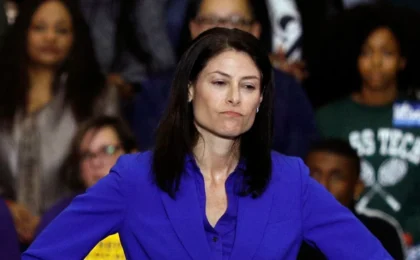
In an escalation of the ongoing legal and political tensions gripping the East African region, Amnesty International has issued a formal call for the Ugandan government to launch an independent, transparent investigation into the detention and summary deportation of Martha Karua, a prominent Kenyan human rights advocate and former Minister of Justice. The incident, which occurred earlier this week, has sent shockwaves through the regional legal community, prompting widespread condemnation from international observers who view the move as a calculated assault on the rule of law.
Karua, who traveled to Kampala to observe the high-stakes trial of Ugandan lawyer Erias Lukwago, was intercepted by security forces before being expelled from the country. Rights groups argue that her treatment serves as a chilling indicator of the shrinking civic space in Uganda as the nation maneuvers toward the 2026 general elections.
The Incident: A Violation of Regional Norms
The detention of Martha Karua was not merely an administrative error; it was a targeted action that has drawn sharp criticism from the highest echelons of human rights advocacy. Tigere Chagutah, Amnesty International’s Regional Director for East Africa, did not mince words when addressing the incident.
“Martha Karua’s detention and subsequent deportation are unlawful and outrageous,” Chagutah stated in a press release. “They are not only a blatant violation of the East Africa Community (EAC) Treaty, which guarantees the free movement of professionals and the right to fair trial observation, but also a shameless attempt to suppress trial observation, which is central to the transparency of court processes.”
Karua, a veteran of Kenyan politics and a respected legal mind, had arrived in Uganda to provide international oversight during the legal proceedings involving Erias Lukwago. Her presence was intended to serve as a beacon of accountability in a trial that many believe is fundamentally flawed. Instead, she found herself the subject of the very state machinery she intended to monitor.
Chronology of Escalating Repression
To understand the gravity of the events surrounding Martha Karua’s deportation, one must look at the broader, deteriorating timeline of judicial integrity in Uganda.
The Abduction of Dr. Kizza Besigye (Late 2024)
The current climate of fear stems largely from the late 2024 abduction of Ugandan opposition leader Dr. Kizza Besigye. After being forcibly taken by state security, Besigye mysteriously resurfaced at a military court in Kampala. The charges initially brought against him—unlawful possession of weaponry—were widely decried by international observers as trumped-up charges designed to neutralize a potent political rival.
The Systematic Targeting of Defense Counsel (2025)
Following his appearance, Besigye was denied bail and subjected to what reports describe as severe physical and psychological torture. The crackdown extended to his legal team. In early 2025, lawyers representing the opposition leader were systematically barred from accessing the defense sections of the military court. This move was flagged by legal societies as a direct violation of Article 14(3)(d) of the International Covenant on Civil and Political Rights (ICCPR), which guarantees the right of every accused person to be tried in their presence and to defend themselves through legal assistance of their own choosing.
The Case of Erias Lukwago (2026)
Erias Lukwago, a lawyer who has been vocal in his defense of opposition figures, was subsequently charged with "misprision of treason." In legal terms, this offense alleges that a person had knowledge of treasonous activity and failed to report it. Human rights organizations contend that these charges are a tactical maneuver by the state to disqualify Lukwago from representing Dr. Besigye, thereby leaving the opposition leader without experienced counsel. It was this specific trial that Martha Karua traveled to Uganda to observe.
Implications for the Rule of Law
The deportation of a legal professional of Karua’s stature sends a clear, if alarming, message to the legal fraternity in East Africa: that courtroom transparency is no longer a protected right, but a privilege subject to state approval.
A Breach of the East African Community (EAC) Treaty
The EAC Treaty is built upon the pillars of democracy, the rule of law, and the protection of human rights. By detaining a lawyer who was acting in her professional capacity, Ugandan authorities have effectively challenged the regional integration agenda. If a lawyer from a partner state cannot enter Uganda to observe a trial without fear of deportation, the cross-border legal cooperation that the EAC seeks to foster is effectively nullified.
The “Misprision of Treason” as a Political Weapon
The use of “misprision of treason” as a charge against defense attorneys represents a dangerous expansion of executive power. By criminalizing the silence of a lawyer or the association of a lawyer with their client, the state effectively turns the defense attorney into an enemy of the state. This creates a “chilling effect,” where attorneys may refuse to take on sensitive political cases for fear of facing similar prosecution.
Official Responses and Civil Society Outcry
The Ugandan Law Society (ULS) has been among the most vocal critics of the administration’s recent actions. In a statement released following the deportation, the society remarked that Karua’s treatment—despite her having entered the country with all necessary documentation—exemplifies a systemic threat against those attempting to uphold the rule of law.
“When lawyers are targeted, the defense of the accused is compromised,” said a spokesperson for the ULS. “When international observers are deported, the credibility of the entire judicial system is called into question. We urge the authorities to respect the sanctity of the legal profession and the rights of those who stand for justice.”
Amnesty International has further called on the Ugandan government to:
- Provide an immediate explanation for the grounds of Martha Karua’s detention.
- Cease the harassment of lawyers and human rights defenders who are performing their professional duties.
- Ensure full compliance with international treaties, specifically the ICCPR and the EAC Treaty.
- Allow for independent, international observation of the trials of Dr. Kizza Besigye and Erias Lukwago to ensure that the requirements of a fair trial are met.
Looking Ahead: The 2026 Election Climate
As Uganda approaches its 2026 general elections, the pressure on the judiciary and legal professionals is expected to intensify. International human rights organizations, including ProtectDefenders.eu, have characterized the current situation as a period of "escalating repression against activists, lawyers, and students."
The incident involving Martha Karua is not an isolated event; it is a symptom of a government increasingly willing to discard international legal norms to maintain political control. Whether the Ugandan authorities will heed the call for an investigation remains to be seen. Historically, the government has dismissed such criticisms as interference in internal sovereign affairs. However, with the regional spotlight now firmly fixed on the treatment of defense counsel in Kampala, the cost of continued suppression may prove to be higher than the administration anticipates.
For now, the international community remains in a state of watchful waiting. The silence from the Ugandan government regarding the specific legal justifications for Karua’s expulsion continues to fuel speculation that the move was purely political. As the trial of Erias Lukwago continues, the world will be watching to see if the courtroom doors remain open to the public, or if the lights of justice in Kampala are being systematically dimmed.
References:
- Amnesty International, “Uganda authorities must investigate unlawful detention and deportation of Kenyan human rights lawyer,” June 2026.
- International Covenant on Civil and Political Rights (ICCPR), Article 14.
- Ugandan Law Society, Press Statements on Judicial Independence, 2026.
- ProtectDefenders.eu, “Uganda: Escalating repression against activists, lawyers and students ahead of 2026 elections.”