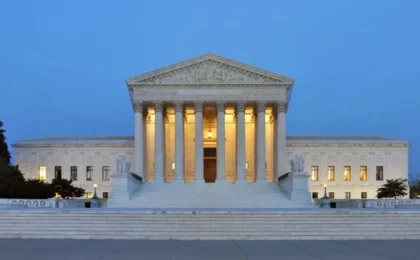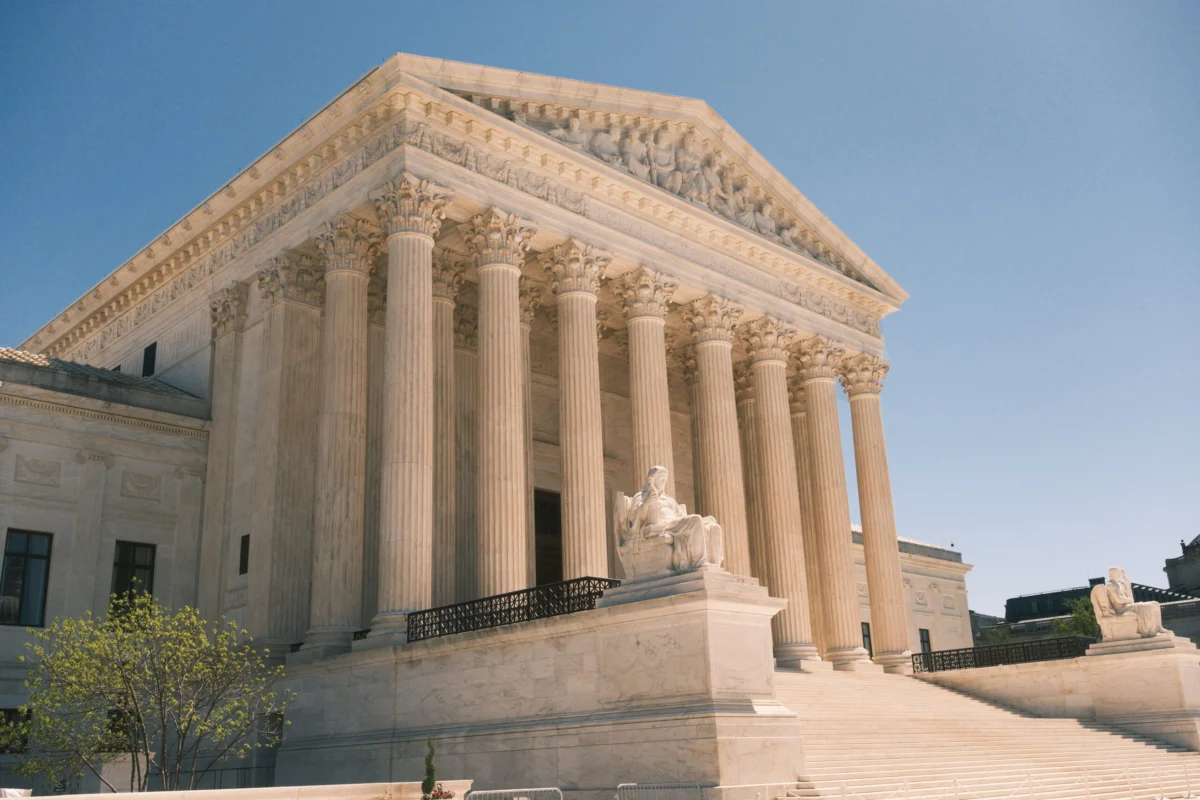
In a landmark ruling that reshapes the landscape of American immigration policy, the United States Supreme Court issued a 6-3 decision on Thursday affirming the Trump administration’s authority to unilaterally end Temporary Protected Status (TPS) for hundreds of thousands of immigrants from Haiti and Syria. The ruling effectively removes federal judicial oversight from the Department of Homeland Security’s (DHS) termination process, signaling a profound shift in the balance of power regarding humanitarian immigration relief.
The decision reverses lower court injunctions in New York and Washington, D.C., that had previously blocked the administration from rescinding the protections. By holding that federal courts are barred from "second-guessing" the executive branch’s determinations on TPS, the Court has not only solidified the current administration’s ability to deport these populations but has also established a sweeping precedent that could pave the way for the cancellation of protections for millions of other foreign nationals currently residing in the United States.
The Legal Foundation and Majority Opinion
Writing for the conservative majority, Justice Samuel Alito asserted that the governing TPS statute, enacted by Congress in 1990, expressly prohibits judicial review of the Homeland Security secretary’s findings. The Court’s opinion emphasized that the administration’s authority to determine whether a country remains "unsafe" for the return of its citizens is a matter of executive discretion, shielded from the scrutiny of the judiciary.
Justice Alito further dismissed the plaintiffs’ constitutional arguments, specifically the claim that the terminations were motivated by racial bias. The majority opinion argued that the administration’s justifications for ending the program—which included claims of improved conditions in the affected nations—rested on "race-neutral grounds" that the Court was not empowered to challenge. In a concurring opinion, Justice Clarence Thomas went a step further, arguing that non-citizens possess no constitutional equal-protection rights against the federal government, a position that legal scholars suggest could have far-reaching consequences for future immigration litigation.
A Sharp Dissent: Allegations of Animus
The ruling prompted a vigorous dissent from Justice Elena Kagan, who was joined by Justices Sonia Sotomayor and Ketanji Brown Jackson. Justice Kagan argued that the Court’s refusal to allow for judicial oversight effectively grants the executive branch a blank check, exempting it from the procedural requirements established by Congress.
Most notably, the dissent confronted the underlying atmosphere of the administration’s policy. Justice Kagan pointed to a documented history of inflammatory rhetoric from President Trump, including derogatory epithets regarding Haiti, the propagation of false claims regarding the conduct of Haitian migrants, and assertions that immigrants were "poisoning the blood" of the country. Kagan characterized these statements as "repellent and racially inflected," lamenting that the majority had chosen to ignore them entirely. She warned that the decision would result in the immediate uprooting of hundreds of thousands of lives, leaving families in a state of precarious uncertainty as their cases wind through lower courts—protections effectively stripped away before the legal process can reach a resolution.
Chronology: The Erosion of Protections
The TPS program, created three decades ago, was designed as a humanitarian safeguard for individuals from countries suffering from war, natural disaster, or extreme political instability. It allows these individuals to live and work in the U.S. legally, though it does not provide a path to permanent residency or citizenship.
- 1990: Congress establishes the TPS statute, intended to be a temporary measure for those unable to safely return home.
- 2025: Amidst a broader push to tighten immigration, the Trump administration announces its intent to terminate TPS designations for several nations.
- Late 2025: Then-Homeland Security Secretary Kristi Noem certifies that conditions in Haiti and Syria have sufficiently improved to warrant the termination of status, despite ongoing warnings from international observers.
- Early 2026: Federal judges in New York and Washington, D.C., issue injunctions, blocking the administration’s move and citing procedural irregularities.
- February 2026: Reports emerge of four Haitian women who were deported under the administration’s early enforcement efforts, only to be killed shortly after their arrival back in their home country.
- June 2026: The Supreme Court issues its ruling, vacating the injunctions and allowing the administration to proceed with terminations.
Supporting Data and Real-World Impact
The scale of the decision is immense. TPS currently shields approximately 1.3 million people from 17 nations. With the Supreme Court’s blessing, the administration has already moved to terminate protections for 13 of those countries. Previously, the Court had cleared the way for the government to rescind protections for 600,000 Venezuelans, a decision that set the stage for the current ruling.
The administration’s assertion that conditions in Haiti and Syria have improved stands in stark contrast to the official stance of the U.S. State Department. Both nations remain on the State Department’s "do not travel" list, which cites pervasive violence, kidnapping, and state-sponsored terrorism. Critics argue that the administration’s rationale for termination is not based on facts on the ground, but rather a narrow political agenda. Attorneys for the plaintiffs allege that the administration failed to properly consult with the State Department—a procedural requirement—and that the actions taken by the DHS were driven by a discriminatory motive rather than an objective assessment of national stability.
Official Responses and Political Polarization
The reaction to the ruling has been sharply divided along partisan lines, reflecting the broader volatility of the American immigration debate.
The White House hailed the ruling as a victory for the rule of law and the administration’s sovereignty. A spokesperson reiterated the administration’s long-standing position that "TPS was never intended to be a pathway to permanent status," and that the government maintains the right to determine who is permitted to remain within the country’s borders.
Congressional Republicans generally applauded the decision. Rep. Tom Tiffany (R-Wisc) celebrated the ruling, stating that the administration was finally "putting the ‘T’ back in TPS," implying that the program had been abused for years by those seeking long-term residency. However, the move did not receive uniform support within the GOP. Rep. Mike Lawler (R-NY), while acknowledging the administration’s legal authority, publicly disagreed with the termination of Haitian TPS, citing the potential for massive disruptions to the healthcare sector, where many TPS holders serve as essential staff in nursing homes and hospitals.
Conversely, Democratic lawmakers and advocacy groups were scathing in their criticism. Rep. Ayanna Pressley (D-Mass), co-chair of the House Haiti Caucus, labeled the ruling "a rubber stamp for a cruel and callous administration." Senator Ed Markey (D-Mass) went further, describing the decision as "one of the most immoral things" the Court has ever authorized.
Implications for the Future of Immigration
The long-term implications of this ruling are profound. By shielding the executive branch from judicial oversight on humanitarian programs, the Court has effectively shifted the mechanism of immigration policy from the deliberative process of the legislature and the fairness standards of the judiciary to the unilateral discretion of the White House.
For the 350,000 Haitians and 6,000 Syrians directly impacted by this specific decision, the future is now one of immediate instability. While the litigation will technically continue in the lower courts, the "temporary" protections that have defined their lives for years have been effectively dismantled. Immigrant-rights groups and legal experts fear that this ruling will serve as a template for the future, enabling a systematic removal of various protected groups across the country.
As the administration prepares to implement these terminations, the human cost remains the focal point for opponents of the policy. With the legal avenues for relief now severely restricted, the lives of hundreds of thousands of residents—who have built homes, careers, and families within the United States—hang in the balance, as the country prepares for a massive transition in its immigration demographics and enforcement priorities.