In the rolling, oak-studded hills just 45 miles south of San Francisco, a quiet ecological transformation has been unfolding. For years, the Jasper Ridge Biological Preserve—a protected pocket of land known as ‘Ootchamin ‘Ooyakma—was viewed by some as a mere fragment of nature, too small and too close to human development to host the complex, wild dynamics found in expansive national parks. However, a landmark study published in the journal Ecology and Evolution has shattered that assumption, revealing that even sporadic visits from apex predators like mountain lions (Puma concolor) can trigger a sweeping "trophic cascade" that ripples through the entire food web.
The findings suggest that small, suburban preserves are far more than just patches of green; they are critical nodes in a larger, interconnected landscape. When mountain lions enter these spaces, the environment undergoes a fundamental shift, influencing everything from the browsing habits of deer to the growth of young oak trees.
The Mechanics of a Trophic Cascade
A trophic cascade occurs when the presence of a top-tier predator suppresses the population or behavior of prey, which in turn releases vegetation or lower-level species from the pressure of overconsumption. While such phenomena are well-documented in vast wilderness regions—most notably the reintroduction of wolves to Yellowstone National Park—the Stanford University-led study is among the first to demonstrate that these powerful ecological processes can occur in much smaller, human-impacted areas.
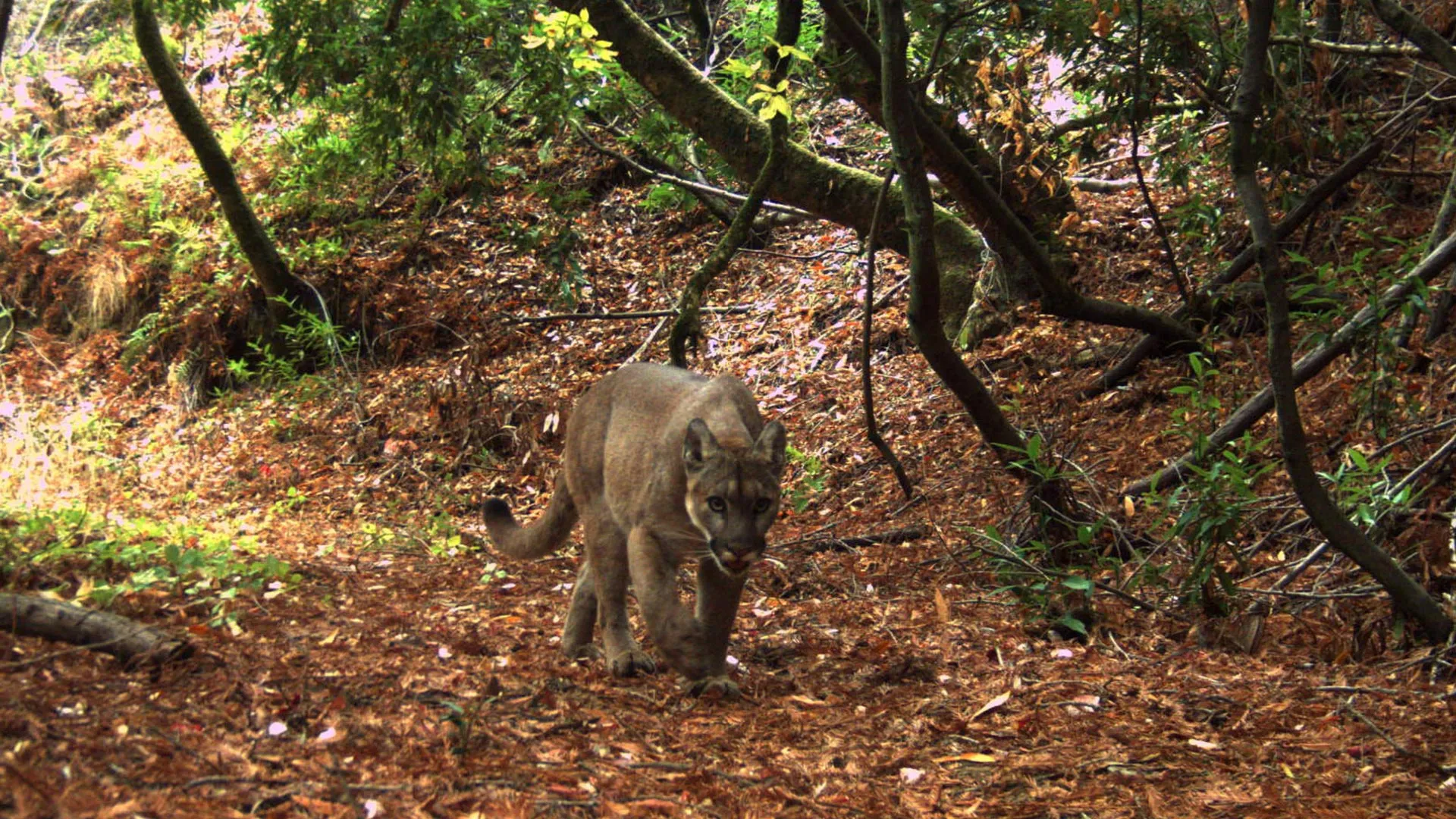
Between 2015 and 2020, researchers utilized motion-activated trail cameras to monitor the activity of pumas within Jasper Ridge. During this five-year window, they noted a marked increase in mountain lion appearances. The data was unequivocal: as puma activity rose, deer activity plummeted.
The cascading effect was immediate. Without the constant pressure of deer grazing, the local flora began to recover. Vegetation surveys indicated that woody plants, including young oak trees—previously decimated by deer foraging—showed significant signs of regrowth and health. This suggests that the mere presence of the "ghost of the forest" provides a protective canopy for the landscape, allowing plant life to flourish in the predator’s wake.
Chronology of the Study: Monitoring the Invisible
The research process relied on a longitudinal approach, comparing periods of low or zero puma presence with the heightened activity observed between 2015 and 2020.
- Pre-2015 Baseline: During this period, mountain lions were rarely documented within the preserve, and deer populations were consistently high, exerting heavy pressure on the local vegetation.
- 2015–2020 Observation Phase: Researchers intensified their camera-trap monitoring and vegetation surveys. They captured images of mountain lions, including females with kittens, using the preserve as a corridor or temporary sanctuary.
- The Data Synthesis: By correlating the camera-trap logs with botanical survey data, the team identified a clear inverse relationship: where pumas were active, deer were scarce, and where deer were scarce, woody plants thrived.
- Post-2020 Implications: The findings have since shifted the perspective of conservationists regarding the "minimum size" required for an ecosystem to function naturally.
The "Ecology of Fear" and Multi-Tiered Interactions
The study’s most compelling revelation is the concept of the "ecology of fear." This theory posits that predators exert influence not just by killing prey, but by altering the behavior of every creature in the ecosystem. Animals that know a predator is near will change their foraging patterns, their movement routes, and even the times of day they are active.
A Domino Effect Among Predators
The impact of the mountain lion reached far beyond the deer. The researchers identified two distinct types of trophic cascades:
- The Tri-Trophic Cascade: The direct link between pumas, deer, and vegetation.
- The Secondary Predator Shift: As mountain lion activity increased, smaller predators such as coyotes and bobcats were observed less frequently. These smaller carnivores, likely sensing the risk posed by the much larger pumas, either vacated the preserve or shifted their own activity cycles to avoid direct competition or confrontation.
Interestingly, this "clearing out" of coyotes and bobcats created a vacuum that allowed fox populations to increase. With fewer coyotes to compete with or prey upon them, foxes thrived. This, in turn, may have suppressed the rabbit population, illustrating how a single apex predator can reorganize the entire hierarchy of a suburban woodland.
Official Perspectives: Rethinking Small Preserves
The implications of this study are profound for land managers and urban planners. With approximately 82% of protected areas in the United States covering less than 5 square kilometers (roughly 2 square miles), the "Jasper Ridge Model" offers a blueprint for how to value and manage these spaces.
"In the past, small preserves like Jasper Ridge have often been dismissed for holding very little ecological value," said Chinmay Sonawane, the study’s lead author and a doctoral student in biology at Stanford’s School of Humanities and Sciences. "But this study shows that when these small preserves are connected to large wilderness like the Santa Cruz Mountains, you can still see magnificent ecological phenomena like trophic cascades."
Rodolfo Dirzo, a co-author and professor of biology at Stanford, emphasized the danger of fragmentation. "Maintaining sites where there is an entire community of animals, from predators to prey to the prey’s resource base, is very important," Dirzo stated. "When one piece is missing—and it’s typically the top predators that require larger areas and are more sensitive to human impact—we will no longer have fully functioning ecosystems."
The Human-Puma Interface
One of the most pressing questions raised by the study is why these mountain lions are choosing to visit Jasper Ridge, a site clearly too small to support a permanent, resident population. Researchers hypothesize that female pumas may view the preserve as a secure, relatively quiet nursery for their kittens, given the surrounding connectivity to the broader Santa Cruz Mountain range.
However, the proximity to human settlements remains a constant factor. While sightings occasionally cause public anxiety, the study’s senior author, Professor Emerita Elizabeth Hadly, noted that mountain lions are masters of avoidance.
"Pumas are afraid of our smell and our sounds; they don’t like to see us moving," Hadly explained. "They use all of their senses to avoid humans."
The researchers underscored a sobering reality: while humans fear mountain lions, the reverse is far more accurate. Human-driven threats, such as vehicle collisions and hunting, remain the leading cause of death for pumas in the region. "Clearly, we exert our own ecology of fear," Hadly added. "Humans are the ultimate predator on almost every landscape."
Broader Implications and Future Research
While the study provides robust evidence for the impact of pumas on deer, coyote, and bobcat behavior, the researchers remain cautious regarding lower-level ecological ripples. Factors such as regional fog patterns and fluctuating temperatures—climate variables—could also play a role in the health of vegetation and the distribution of smaller mammals like foxes and rabbits.
Nonetheless, the study provides a compelling argument for the importance of "wildlife corridors." By keeping small patches of land connected to larger, wilder tracts, urban areas can support complex ecological functions that were previously thought to be the exclusive domain of vast, remote wilderness.
As urban development continues to expand across the globe, the lessons from Jasper Ridge suggest that we do not necessarily need to recreate the scale of Yellowstone to protect biodiversity. Instead, we must protect the connectivity between our urban preserves and the wild, ensuring that the "ghosts" of the forest—our apex predators—have the space they need to roam, hunt, and, in doing so, maintain the delicate balance of the natural world.
For the residents of the San Francisco suburbs, this research serves as a reminder that their backyards are part of a much larger, living system. The mountain lion is not an intruder; it is an essential architect of the landscape, keeping the ecosystem functioning in ways we are only just beginning to fully understand.