In an era defined by the awe-inspiring scale of “Big Astronomy”—where multibillion-dollar projects like the James Webb Space Telescope and the upcoming Extremely Large Telescope promise to rewrite the textbooks of astrophysics—a quiet, vital tradition risks being overshadowed. As the field scales toward massive data pipelines and automated survey missions, the tactile, hands-on experience of collecting light from the universe is being relegated to the periphery.
Yet, there remains a sanctuary where the flame of observational astronomy continues to burn bright: the modest college observatory. These facilities, often tucked away on university campuses, serve as the essential training grounds where the next generation of scientists learns not just how to analyze data, but how to listen to the stars.
The Human Connection to the Infinite
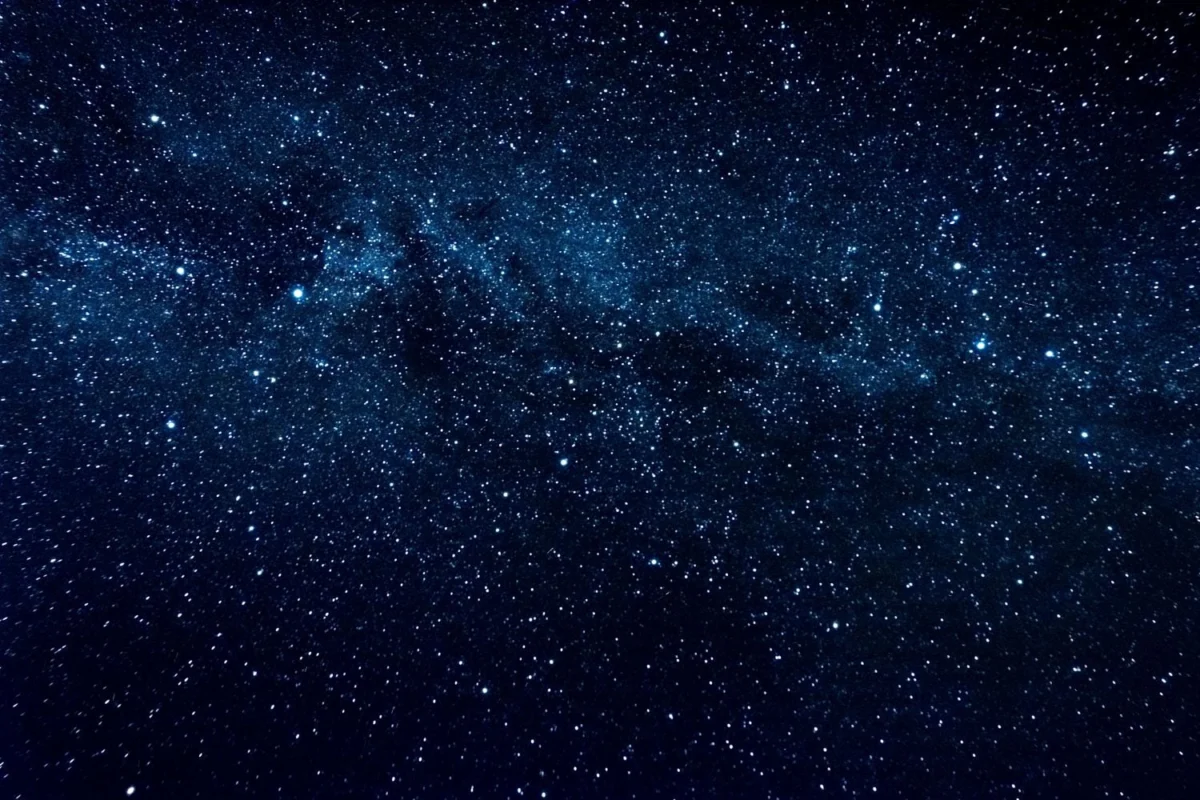
For most astronomers, the journey begins not in a clean-room laboratory or behind a high-performance computer terminal, but under the vast, unpolluted expanse of a dark night sky. Astronomy is, by its very nature, a uniquely accessible science. Any child standing in a backyard, shielded from the encroaching glare of urban light pollution, can look up and trace the luminous band of the Milky Way. It is a primal connection that has defined our species for millennia.
However, professional astronomy is often a distant, abstract affair. Unlike biologists who handle specimens or chemists who mix reagents, astronomers rarely interact with their subjects in a physical sense. We are separated from the stars by millions of light-years. Consequently, the act of operating a telescope—of capturing the photons that have traveled across the void to strike a sensor—is the only tangible bridge we have to the cosmic bodies we study.
Chronology: From First Light to Modern Frontiers
My own trajectory into this field was cemented by the promise of this physical connection. When choosing a graduate school, the deciding factor was not a ranking or a stipend, but a guarantee from my future thesis adviser at the Université de Montréal: I would be sent to Arizona to observe during my first semester.
That trip in September 2003 was transformative. I recall the visceral thrill of watching the first stream of raw data materialize on a computer monitor, confirming that the equipment was successfully “drinking” the light from distant targets. Stepping outside the dome to view a sky I had never seen before—a horizon-to-horizon tapestry of stars—I realized that while I was already committed to the science of astronomy, I had just fallen in love with the process of observation.
This tradition of hands-on learning has been the bedrock of the field for decades. During my time as a graduate student, I spent over 100 nights at the Observatoire du Mont-Mégantic. These nights were rarely perfect; they were fraught with the realities of variable weather, equipment recalibrations, and the sheer fatigue of long hours. Yet, those challenges were precisely where the education happened. By planning, executing, and troubleshooting my own observations, I learned the fundamental principles of instrumentation that remain applicable today, even as we transition to the complex, automated architectures of modern, multi-billion-dollar observatories.
Supporting Data: The Vital Role of Small-Scale Facilities
The recent shift toward “Big Astronomy” is undeniably monumental. All-sky surveys and expansive public databases provide data sets that were inconceivable twenty years ago. These resources are essential for discovery, allowing us to map the universe with unprecedented precision. Yet, there is a legitimate concern that these massive, automated systems may unintentionally distance students from the craft.
Small college observatories, typically equipped with telescopes costing less than $100,000, act as the “primary schools” of the astronomical community. These facilities allow students to:
- Master Fundamental Optics: Learning how to align a telescope and calibrate an instrument remains the best way to understand the limits and capabilities of any observational hardware.
- Develop Data Literacy: By collecting their own data, students gain an intuitive understanding of signal-to-noise ratios, atmospheric interference, and the inherent messiness of real-world observations.
- Bridge the Theory-Practice Gap: Concepts taught in lecture halls are solidified when a student has to manually guide a telescope or manage an imaging run.
At Connecticut College, where I currently teach, we faced a defining moment in 2023. Our primary telescope, nearly three decades old, was nearing the end of its operational life. We stood at a crossroads: sink funds into a legacy system or invest in a modern successor. The latter path was made possible through the generosity of an anonymous donor, culminating in the installation of a state-of-the-art system in June 2025. This project did more than upgrade our hardware; it revitalized the local scientific community and underscored the enduring value of the campus observatory as an intellectual hub.
Official Perspectives and Educational Implications
The scientific community recognizes the tension between the push for massive, data-driven research and the need for pedagogical grounding. Organizations like the Kavli Foundation have highlighted the necessity of public engagement, noting that understanding the nuances of science is critical to maintaining public support.
When we invite the public to look through an eyepiece at the rings of Saturn, we are not just showing them a celestial body; we are showing them that science is an active, ongoing process. The “oohs and ahhs” of a visitor seeing the cosmos for the first time are the fuel that justifies the significant public funding required for professional space research. If we lose the ability to connect the public to the heavens, we risk losing the broader support system upon which all of astronomy depends.
The Future: A Dual-Track Approach
The future of astronomy is not a choice between the large and the small; it is a synthesis of both. We must continue to push the boundaries of our knowledge with the next generation of space-based and ground-based giants. These tools will unveil the mysteries of dark matter, exoplanetary atmospheres, and the early universe.
However, we must simultaneously advocate for the continued health of small, college-operated observatories. These facilities are the incubators of curiosity. They are where the next 5-year-old gazing at the stars finds the spark of scientific inquiry that will eventually lead them to lead the next mission to Mars or the next deep-space telescope project.
As we move forward, we must ensure that our progress does not come at the cost of our connection to the night sky. We must continue to teach our students to operate the tools of the trade, to value the nights spent under the dome, and to understand the light they are gathering. In doing so, we ensure that the next generation of astronomers remains not just technicians of data, but true stewards of the night.
In the words of the ancient tradition, it is time for us to carpe noctem—seize the night. Whether through a billion-dollar lens or a modest campus telescope, the universe is waiting, and there is no better way to learn about our place in it than by looking up, and seeing it for ourselves.
Alex Gianninas is an associate teaching professor of astronomy and campus director for the CT Space Grant at Connecticut College. He also hosts the monthly online video series "Celestial Happenings," which explores the beauty and complexity of our changing night sky.