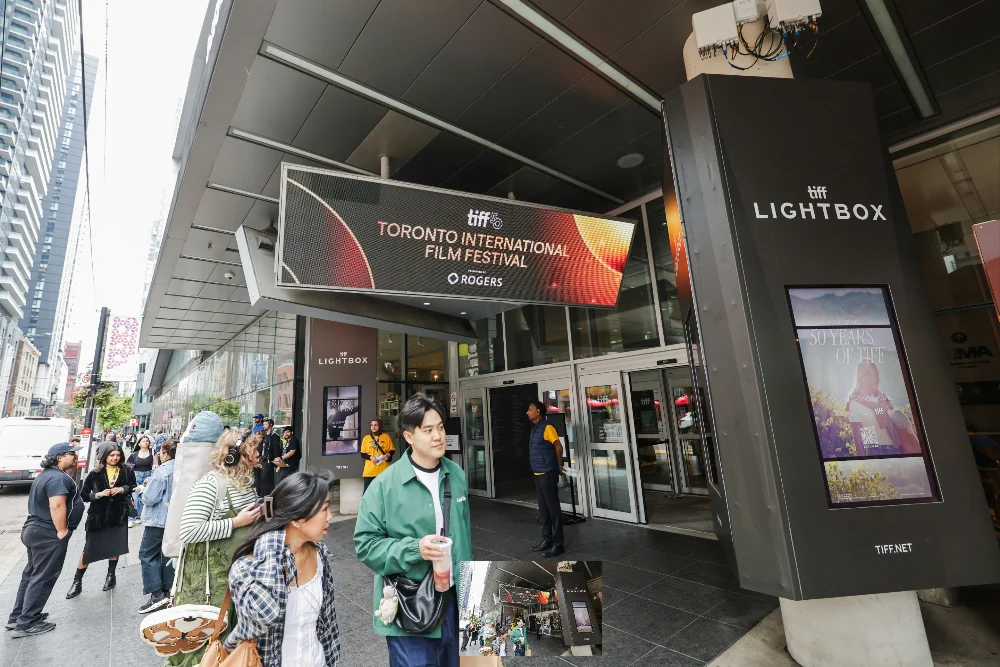
The global film industry is bracing for a tectonic shift in the way independent cinema is bought, sold, and packaged. As the Toronto International Film Festival (TIFF) prepares for its annual September gala, the organization has unveiled its most ambitious structural evolution in decades: the inaugural launch of TIFF: The Market.
Running from September 10 to 16, this dedicated bazaar marks a departure from Toronto’s historical role as a pure festival-and-premiere hub. By formalizing a centralized marketplace, TIFF is positioning itself to compete directly with the world’s legacy film markets, such as the European Film Market (EFM) in Berlin and the Marché du Film in Cannes. With over 150 sales companies and promotional bodies already signed on, the move signals a strategic bid to consolidate the North American distribution pipeline under the TIFF banner.
The Architecture of the Market: Bridging the Gap
The debut of TIFF: The Market is not merely an add-on; it is a calculated response to the fractured landscape of post-pandemic film sales. For years, the Toronto festival has served as the unofficial "unofficial market"—a sprawling, decentralized event where deals were hammered out in hotel suites and lobby bars. By creating a formalized, physical space, TIFF aims to bring the "wild west" of Toronto dealmaking into a structured, high-efficiency environment.
The roster of confirmed exhibitors reads like a "who’s who" of international cinema powerhouses. Industry titans including Goodfellas, Anton, Playtime, AGC Studios, CAA, Pyramide, XYZ Films, WME, FilmNation, and UTA have confirmed their presence. This level of early buy-in suggests that the major talent agencies and independent sales agents (ISAs) are eager for a centralized hub that minimizes the frantic travel typically required to navigate the festival’s disparate venues.
Chronology and Scope: A Seven-Day Power Play
The market is scheduled to run concurrently with the festival’s peak activity period, ensuring that the frenzy of world premieres feeds directly into the transactional engine of the market.
- Pre-Launch Phase: Throughout the summer, TIFF organizers conducted a global outreach campaign, securing the participation of 130 buyers from 49 countries.
- The Buyer Base: The attendee list includes heavyweights such as Metropolitan Film Export (France), Tobis (Germany), Eagle Pictures (Italy), and A Contracorriente (Spain). The presence of these specific buyers indicates a high demand for international content, suggesting that TIFF: The Market will serve as a vital gateway for non-English language cinema to reach North American and global screens.
- The Market Week (Sept 10-16): The core of the event will feature high-end screening facilities, localized exhibition booths, and a "compact footprint" design. The goal is to minimize the "commute time" that has historically plagued Toronto attendees, who often found themselves caught in traffic between screenings in the Entertainment District and meetings in Yorkville.
The Strategic Vision: Efficiency as a Commodity
Charles Tremblay, the newly appointed head of TIFF: The Market, has been vocal about the logistical philosophy driving this initiative. For Tremblay, the market is a product designed to solve the "fatigue" of the festival circuit.
"We designed the market to meet the needs of a global sales community seeking more buyer engagement through access to premium screening facilities, cost-effective exhibition solutions, and a compact footprint that reduces travel time and maximizes opportunities for face-to-face meetings," Tremblay stated.
His focus on "cost-effective exhibition solutions" is particularly salient. In an era of tightening budgets and rising production costs, sales agents are increasingly wary of the overhead associated with massive film festivals. By providing a centralized, efficient marketplace, TIFF is attempting to lower the barrier to entry for mid-sized independent production companies that might otherwise be priced out of the Cannes or Berlin markets.
Supporting Data: A Global Gathering of Agencies and Associations
The breadth of the market’s reach is perhaps best illustrated by the sheer diversity of the organizations in attendance. Beyond the major sales agencies, the market has secured the participation of national film bodies and cultural institutes, which act as the backbone for regional film financing and promotion.
Confirmed entities include:
- European Powerhouses: Unifrance, BFI (UK), Screen Ireland, German Films, Polish Film Institute, and the Czech Film Centre.
- Asian Market Leaders: The Korean Film Council, Unijapan, and TAICCA (Taiwan).
- Southern Hemisphere: Screen Australia.
- Specialized Organizations: The Association of Film Commissioners International (AFCI) and European Film Promotion (EFP).
The inclusion of these bodies ensures that the market will not just be a site for finished film sales, but also a hub for co-production meetings and international collaboration. When paired with returning industry stalwarts like Lionsgate, Black Bear, Gaumont, Pathé Films, and Embankment Films, the market effectively captures the entire spectrum of the industry, from high-budget studio-adjacent projects to auteur-driven world cinema.
The Financial Backbone: Government Investment
The creation of TIFF: The Market is a project of national importance for Canada. The venture is backed by a CAD 23 million ($16.4 million) investment from the Canadian federal government, with additional support from Telefilm Canada.
This financial infusion highlights the government’s commitment to cementing Toronto’s status as a primary global nexus for the creative economy. By investing in the infrastructure of the market, Canada is aiming to capture a larger share of the global film trade, effectively forcing the international community to treat Toronto not just as a cultural destination, but as a mandatory stop for the global distribution of intellectual property.
Implications for the Future of Film Festivals
The launch of TIFF: The Market carries significant implications for the festival circuit at large. If the event succeeds in creating a seamless, high-volume transactional environment, it may force other festivals to rethink their own models.
1. The Death of Decentralized Dealmaking
For decades, the "Toronto model" was characterized by informal dealmaking. By bringing this under a singular, regulated roof, TIFF is attempting to capture data—who is talking to whom, what films are drawing the most interest, and how capital is flowing. This formalization creates a more transparent market, which may benefit smaller distributors but could disrupt the high-stakes, "hush-hush" environment that some major studios prefer.
2. A Shift in Global Alliances
The heavy concentration of European and Asian promotional bodies suggests that Toronto is becoming the preferred North American landing zone for international films. By providing a direct pipeline to a room full of global buyers, TIFF is making a play to become the preeminent "North American Market." This could, in the long term, put pressure on the Sundance Film Festival, which has historically held the title for North American independent acquisitions.
3. Sustainability and Scale
Tremblay’s emphasis on a "compact footprint" addresses one of the most common criticisms of the modern film festival: the massive carbon footprint and logistical waste associated with sprawling, city-wide events. If TIFF can prove that a concentrated market is more efficient for both the environment and the bottom line, it could set a new standard for how film festivals operate in the 2020s.
Conclusion: A New Bar for Success
As September 10 approaches, all eyes are on the Metro Toronto Convention Centre and the surrounding venues that will house the market. For the sales agents, buyers, and producers, the stakes are high. They are being asked to pivot from a decades-old habit of navigating Toronto’s chaotic streets to participating in a curated, high-efficiency bazaar.
If the attendance figures are any indication, the industry is hungry for this change. The infusion of government capital and the overwhelming response from global sales companies suggest that TIFF: The Market is not a temporary experiment, but a permanent recalibration of the festival landscape. Toronto is no longer just inviting the world to watch movies—it is inviting the world to do business. And in an industry defined by its ability to adapt, this evolution may be exactly what the doctor ordered.