
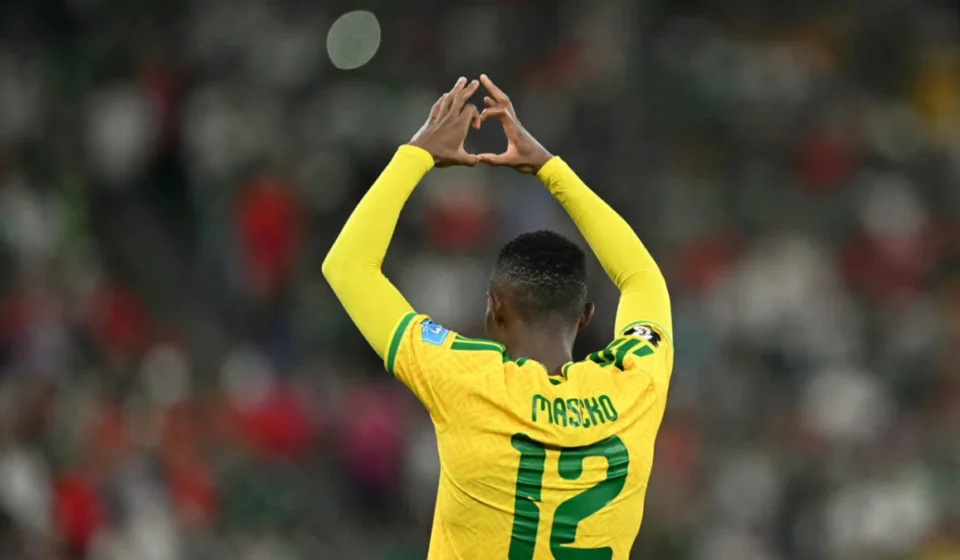
Historic Breakthrough: South Africa Stuns South Korea to Seal First-Ever World Cup Knockout Spot

Main Facts: A New Chapter for Bafana Bafana
In a defining moment for South African football, the national team, affectionately known as Bafana Bafana, secured their place in the World Cup knockout rounds for the first time in their history. The 1-0 victory over South Korea in Monterrey serves as the crowning achievement of a remarkable turnaround, transforming a squad that many had written off after a disastrous tournament opener into a side now preparing for a high-stakes Round of 32 clash against co-hosts Canada.
The match, which functioned as a de facto playoff for the second spot in Group A, was decided by a clinical 63rd-minute strike from Thapelo Maseko. While South Korea entered the fixture as the favorites, the tactical gamble of leaving star captain Son Heung-min on the bench proved costly, ultimately leaving the Asian side unable to overcome the disciplined, high-energy South African defensive block.
Chronology of a Dramatic Evening
The atmosphere in Monterrey was palpable, with both nations aware that a draw favored South Korea, forcing South Africa to play with a desperation that bordered on reckless.
The First Half: Tension and Missed Opportunities
South Korea began the contest with an aggressive intent, clearly aiming to settle the game early. Stand-in captain Kim Min-jae nearly opened the scoring with a towering header, only to be denied by a desperate, goal-line clearance from Aubrey Modiba. Moments later, Lee Kang-in sent a curling effort just wide of the post, signaling that the South African backline was under significant pressure.
As the half progressed, South Africa adjusted, finding their rhythm through quick transitions. By the 30th minute, they began to carve out openings. A powerful strike from Thalente Mbatha was parried by South Korean goalkeeper Kim Seung-gyu, falling directly into the path of Evidence Makgopa. In what appeared to be the golden opportunity of the half, Makgopa’s timid poked effort was easily smothered by the keeper, leaving the scores locked at 0-0 heading into the interval.
The Second Half: The Turning Point
Recognizing the danger of his side’s lack of output, South Korean manager Hong Myung-bo introduced Son Heung-min at the start of the second half. The arrival of the Tottenham superstar immediately shifted the momentum, as the Koreans began to dominate possession. However, the South African defense, marshaled by goalkeeper Ronwen Williams, held firm.
The turning point arrived in the 63rd minute. Tshepang Moremi, having tracked back to recover possession, delivered a pinpoint cross into the box. This time, Thapelo Maseko displayed the composure his teammate had lacked earlier, firing a low drive inside the near post.
The final 20 minutes were characterized by frantic South Korean attacks and resolute South African defiance. As news filtered through from Mexico City—where Mexico was dismantling the Czech Republic—the realization set in: a win for South Africa would secure passage to the knockout stage. Despite the relentless pressure from the South Korean front line, South Africa withstood the storm to clinch a historic victory.
Supporting Data and Group A Standings
The group dynamics were finalized on a night of high-scoring drama. Mexico, the tournament co-hosts, solidified their dominance by sweeping their group matches with a perfect 9-point record.
- Group A Final Table:
- Mexico: 9 points (Qualified)
- South Africa: 4 points (Qualified)
- South Korea: 3 points (Eliminated)
- Czech Republic: 1 point (Eliminated)
The disparity in performance between the first and final rounds was stark for South Africa. After an opening 2-0 defeat to Mexico, the squad faced intense criticism from domestic media. However, their grit in drawing against the Czech Republic and their tactical discipline against South Korea underscored a shift in maturity.
For Mexico, the 3-0 victory over the Czechs at the Estadio Azteca was a masterclass in controlled football. Goals from Mateo Chavez, Julian Quinones, and a stoppage-time strike from Alvaro Fidalgo ensured they finished their group stage with an unblemished record.
Official Responses: The Emotional Aftermath
The reaction from the South African camp was one of profound relief and historic pride. Belgian manager Hugo Broos, who has been at the helm for five years, struggled to contain his emotions during the post-match press conference.
"We scored that goal, and it was 20 minutes of heartbeating and hoping that the game should be finished as soon as possible," Broos admitted. "So yes, we are in the second round. It’s historic. But I’m very happy for the guys. I’ve worked with them for five years. And what we did in those five years is amazing. We started with a group of young players, and today, they showed they belong on the biggest stage in the world."
Conversely, the atmosphere in the South Korean camp was one of somber introspection. The decision to bench Son Heung-min—a player frequently cited as the greatest Asian footballer of all time—will undoubtedly face scrutiny from the South Korean press and fan base. While coach Hong Myung-bo’s attempt to manage the fitness of his captain was likely driven by tactical concerns, the failure to secure a result in a winnable match has cast a shadow over their tournament exit.
Implications for the Knockout Stages
The landscape of the 2026 World Cup has shifted significantly following the conclusion of Group A.
The Rise of the Veteran: Guillermo Ochoa
Beyond the qualification of South Africa, the night saw a landmark personal achievement. The introduction of goalkeeper Guillermo Ochoa in the 3-0 win against the Czech Republic marked his appearance in a sixth World Cup finals. At 40 years old, the Mexican icon continues to defy expectations, serving as a pillar of experience for a Mexican side that is now widely considered a genuine dark horse for the title.
Road to Los Angeles: The Canada Challenge
South Africa’s reward for their historic campaign is a daunting Round of 32 clash against co-hosts Canada in Los Angeles on June 28. For a South African side that has spent years rebuilding, playing in one of the most iconic stadiums in the United States represents the pinnacle of their journey.
The implications for South African football are massive. The influx of revenue, the increased interest from domestic sponsors, and the validation of Hugo Broos’ long-term project could provide the necessary momentum to elevate the national team from a regional competitor to a consistent global presence.
For the South Korean team, the introspection will be severe. The tournament served as a reminder that even the most talented rosters are vulnerable to tactical miscalculations. As the team returns home, questions regarding the future of the coaching staff and the transition period for their star-studded generation will dominate the national discourse.
As for the tournament at large, the elimination of a perennial contender like South Korea and the emergence of an underdog story in South Africa reinforces the unpredictability that makes the World Cup the most watched sporting event on the planet. The stage is set for the knockout rounds, where the margin for error evaporates and legends are born.