
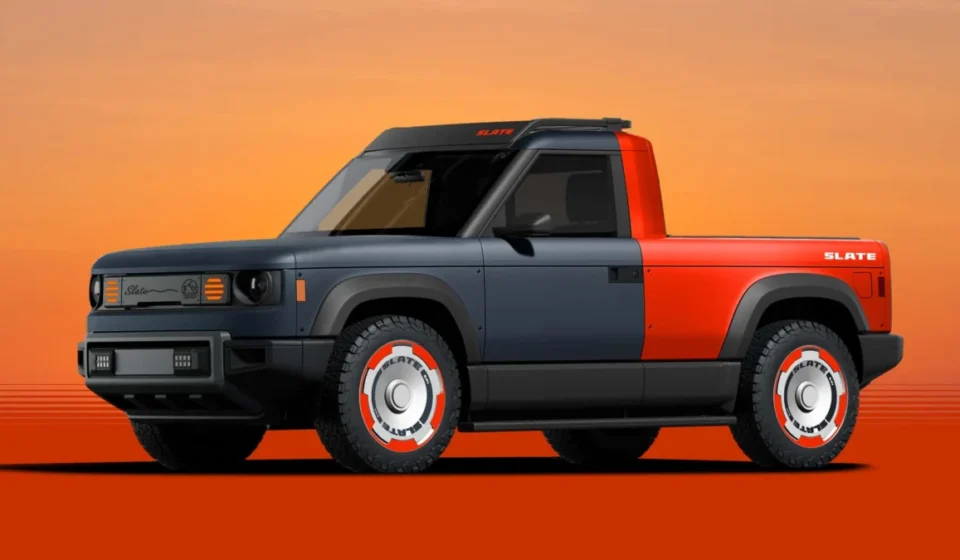
The Evolution of Slate: Navigating the New Reality of Affordable Electric Mobility

Since its ambitious debut in April 2025, the automotive startup Slate has been at the center of a spirited debate regarding the feasibility of low-cost electric vehicles (EVs). Positioned as a disruptor designed to offer "hardworking people" a practical, modular, and repairable alternative to legacy automotive giants, Slate has quickly learned that the road from concept to production is paved with significant economic hurdles.
As the company nears its projected delivery window in the fourth quarter of 2025, it has been forced to recalibrate its expectations, resulting in a shift in pricing, performance specifications, and overall vehicle strategy.
The Price of Reality: A Shift in Market Strategy
When Slate first introduced its vision to the public, the promise of a sub-$20,000 electric truck—bolstered by federal tax incentives—captured the imagination of a market desperate for affordable electrification. However, the automotive landscape has proven volatile. Due to a complex combination of supply chain pressures, inflationary manufacturing costs, and shifting legislative environments, the entry-level pricing has seen a necessary adjustment.
The Slate Truck will now carry a starting price of $24,950, while its sibling, the Slate SUV, is set to retail at $29,950. While these figures represent a departure from the "sub-$20k" goal, they still position the brand as one of the most accessible EV manufacturers in North America. The adjustment reflects a move toward financial sustainability, ensuring that the company can maintain production quality while managing the overhead of building a new automotive entity from the ground up.
Technical Refinements: More Power, More Range, Different Dynamics
In tandem with the pricing update, Slate has overhauled the technical foundation of its vehicles. The most significant upgrade is the transition to a larger 65.0-kilowatt-hour (kWh) lithium-iron-phosphate (LFP) battery pack. This decision replaces the originally planned 52.7-kWh unit, providing a tangible boost in utility.
Performance and Capability Metrics
The new battery architecture allows the pickup to achieve an estimated range of 205 miles, a substantial improvement over the initial 150-mile projection. While the increased capacity adds weight, it addresses the "range anxiety" that typically plagues budget-oriented EVs.
Interestingly, the engineering team has opted for a subtle recalibration of the powertrain. The single electric motor now produces 181 horsepower—a slight reduction from the initial 201-hp figure—though the torque output remains anchored at 195 pound-feet. This shift suggests a priority on efficiency and longevity over raw speed.
Key Technical Specifications:
- 0–60 mph: 8.0 seconds (estimated)
- Top Speed: 90 mph
- Curb Weight (Truck): 4,048 lbs
- Curb Weight (SUV): 4,335 lbs
- Payload (Truck): 1,550 lbs
- Towing (Truck): 2,000 lbs
By bolstering the payload and towing capacities, Slate is signaling that it intends for its vehicles to serve as genuine work tools, not just commuter curiosities. The SUV, while slightly less capable in terms of raw hauling due to its geometry, still offers a respectable 1,263-lb payload and 1,824-lb towing capacity.
A Philosophy of Modularity and Repairability
At the heart of Slate’s brand identity is a rejection of the "disposable tech" trend that has permeated the modern auto industry. Slate vehicles are built with approximately half the number of components found in a standard pickup truck. This reductionist approach is not merely about cost-cutting; it is a calculated effort to increase the longevity of the vehicle and simplify the repair process for the owner.
The "Build-Your-Own" Ecosystem
One of the most innovative aspects of the Slate business model is the modularity of its platform. The company plans to allow Truck owners to upgrade their vehicles to an SUV configuration post-purchase, offering both "Squareback" and "Fastback" design styles. This flexibility means a customer’s investment can evolve as their lifestyle changes, rather than necessitating a trade-in.

Furthermore, Slate is launching with an extensive catalog of over 175 accessories. From functional roof racks and durable seat covers to modular stereo systems, the vehicles are essentially blank canvases. Because every vehicle rolls off the assembly line finished in a utilitarian grey, Slate has leaned into the trend of full-vehicle wraps. With over 100 designs available at launch, the company claims that professional-grade customization will be available for under $500, a massive savings compared to traditional automotive paint and wrap services.
Chronology of Development
The journey of Slate has been a whirlwind of rapid iteration:
- April 2025: Initial unveiling of the Slate Truck and SUV with a highly competitive sub-$20,000 target price.
- Mid-2025: Surge in public interest leads to over 100,000 reservations, validating the demand for low-cost, functional electric utility vehicles.
- Q3 2025: Engineering review leads to the implementation of the 65.0-kWh battery pack and updated weight/towing specifications.
- Q4 2025: Anticipated commencement of vehicle deliveries to initial reservation holders.
Supporting Data and Warranty Commitments
Slate’s commitment to reliability is underscored by its warranty policy. Every vehicle, whether it is the base-model Truck or the premium SUV, comes with a 10-year, 110,000-mile warranty covering the battery and powertrain. This aggressive warranty program is designed to instill confidence in a brand-new automaker, directly addressing the skepticism that often follows startups entering the automotive space.
The decision to exclude a standard touchscreen in favor of physical controls is a bold design choice that aligns with the brand’s "repairability" ethos. By avoiding complex, proprietary infotainment systems, Slate reduces the likelihood of expensive software-related failures and caters to a demographic that prioritizes tactile control and mechanical longevity.
Implications: Can an Upstart Sustain the Vision?
The automotive industry is notoriously difficult to enter, characterized by massive capital requirements and razor-thin margins. Slate’s pivot to a higher price point is a necessary response to the harsh realities of global manufacturing. However, the true challenge lies ahead: execution.
The "Right to Repair" Movement
Slate’s success may hinge on the growing movement of consumers who want to service their own vehicles. By creating a truck that is intentionally less complex than its competitors, Slate is positioning itself as the "mechanical" alternative to the high-tech, software-locked vehicles from established giants like Tesla or Rivian. If the company can successfully foster a community of owners who can order parts and perform their own maintenance, they may create a level of brand loyalty that transcends price.
Market Viability
Critics argue that the $25,000 price point puts Slate in direct competition with used internal combustion vehicles and entry-level compact cars, which may offer more "creature comforts." Conversely, proponents point to the staggering 100,000-plus reservations as proof that the market is starving for a no-nonsense, utilitarian electric vehicle.
The primary risk for Slate is the "scaling trap." As they move toward mass production, maintaining the cost of the 65.0-kWh battery while ensuring build quality will be the ultimate test of their supply chain management. If they can deliver a reliable, rugged vehicle at the $25,000-$30,000 price point, they will have achieved what many legacy manufacturers have failed to do: make the EV a practical tool for the average working household.
Conclusion: A New Chapter for Affordable EVs
Slate has undoubtedly moved beyond its "dreamer" phase. The transition from the original $20,000 promise to the current reality is a maturation of the brand. While the price has increased, the vehicle has become more capable, more flexible, and—by virtue of the larger battery—more practical for real-world use.
As we look toward the final quarter of 2025, the automotive world is watching closely. If Slate can fulfill its promise to deliver these vehicles to its massive backlog of reservation holders, it may well prove that there is a viable, sustainable path for independent automakers to compete in the electric age. The question is no longer just about whether the truck is cheap, but whether it is a vehicle that can endure the rigors of everyday life—a question that will finally be answered when the first units hit the road.