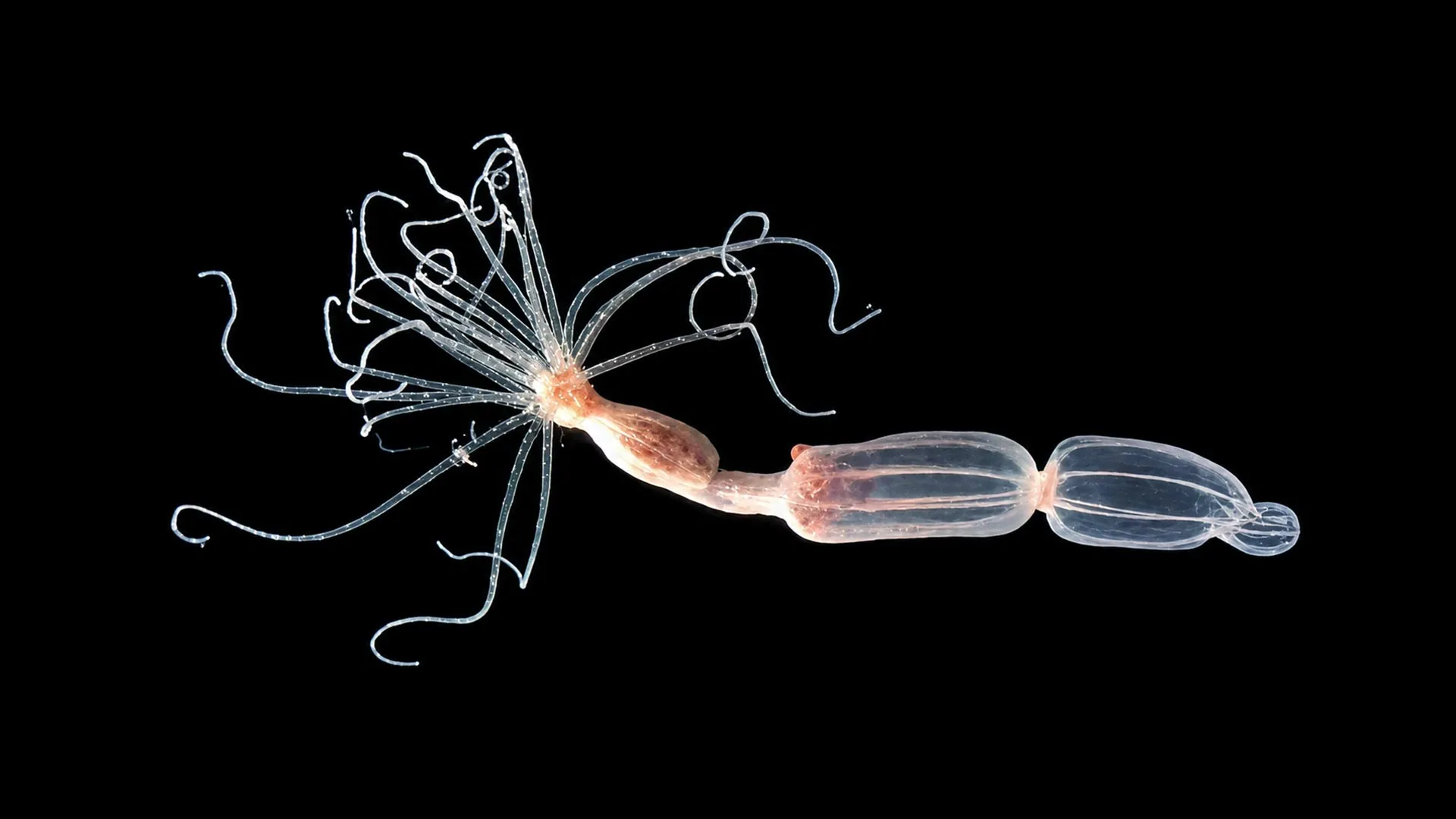
In the vast, silent theater of the ocean, a molecular arms race has been unfolding for hundreds of millions of years. While scientists have long operated under the assumption that the animal kingdom relies on a conserved, singular blueprint for antiviral defense, a groundbreaking study has shattered this paradigm. By examining the humble sea anemone—a creature that diverged from the human lineage over 600 million years ago—researchers have uncovered a novel immune strategy that functions as a "molecular brake," fundamentally different from the antiviral systems found in humans and other vertebrates.
The findings, published in the prestigious journal Nature Ecology & Evolution, were spearheaded by PhD candidate Ton Sharoni and Professor Yehu Moran of the Hebrew University of Jerusalem, in collaboration with an international team of scientists from the University of North Carolina at Charlotte. The study suggests that evolution is far more creative and diverse in its problem-solving than previously imagined, revealing that nature has developed multiple, distinct strategies to combat the eternal threat of viral infection.
A Legacy of Defense: The MAVS Paradigm
To understand the significance of this discovery, one must first look at the traditional model of immunity. In humans and other vertebrates, the immune system is a sophisticated, multi-layered apparatus. A cornerstone of this defense is the Mitochondrial Antiviral-Signaling protein, or MAVS.
When a virus invades a vertebrate cell, it is detected by specialized sensors. These sensors recruit MAVS, which acts as a molecular "on" switch, triggering a cascade of signals that alert the body to mount an inflammatory response and neutralize the invader. For decades, biologists viewed MAVS-like pathways as a fundamental inheritance—a core component of the immune system passed down from a common ancestor to all subsequent animal life. However, this assumption relied heavily on data from modern model organisms, leaving the deeper, more ancient branches of the tree of life largely unexplored.
The Evolutionary Deep Dive
The research team turned their attention to sea anemones, which, alongside corals and jellyfish, represent some of the earliest diverging lineages of animals. These organisms exist in a state of evolutionary stasis, preserving biological structures that date back to the Ediacaran period. By studying these marine cnidarians, researchers hoped to peer through a 600-million-year-old window into the origins of immunity.
The journey began with a surprising discovery: a protein the team named CARDIB (CARD Inhibitor Binding protein). Structurally, CARDIB bore a striking resemblance to the human MAVS protein. In the world of molecular biology, structure often dictates function. Based on the protein’s architectural profile, the researchers initially hypothesized that CARDIB functioned exactly like its human counterpart—as a signal-booster for the immune response.
The "Counterintuitive" Mechanism: A Molecular Brake
The initial hypothesis, however, was quickly dismantled by experimental reality. As the team observed the protein in action, they discovered that CARDIB performs the diametric opposite of its structural cousin.
"Everything about CARDIB suggested it should function like MAVS," explained Professor Yehu Moran. "Instead, we discovered that it does the exact opposite. Rather than activating antiviral defenses, CARDIB normally suppresses them."
This finding posed a profound biological paradox: Why would an animal evolve a system that seemingly hinders its own protection? To resolve this, the team employed CRISPR-Cas9, the revolutionary gene-editing technology, to knock out the CARDIB gene in a population of sea anemones. They then exposed these modified animals to viral pathogens.
The results were as surprising as they were instructive. Without CARDIB, the sea anemones did not become "super-defenders"; instead, they became highly vulnerable. The viruses proliferated rapidly, and the animals’ immune systems failed to coordinate an effective response.
"The results were completely counterintuitive," noted Ton Sharoni, the lead researcher on the project. "Although CARDIB acts as a brake on the immune system under normal conditions, that brake turns out to be essential for mounting an effective antiviral response."
The researchers hypothesize that by keeping the immune system "dampened" during quiescent periods, the anemone prevents the potential damage of chronic inflammation. When a viral threat is detected, the removal of this brake allows for a rapid, calibrated, and highly efficient surge of antiviral activity.
Bridging the Lab and the Wild
A common criticism of molecular biology is the "laboratory artifact" problem—the idea that a protein might behave in a certain way under sterile petri dish conditions but act differently in the chaotic, high-pressure environment of the real world.
To validate their findings, the team took the research from the sterile confines of the laboratory to the unpredictable waters of the Atlantic coast. Using marine mesocosms—controlled outdoor enclosures supplied with raw, unfiltered estuarine water—the researchers exposed their genetically modified sea anemones to the full spectrum of natural viral and microbial threats found in the wild.
The findings were unequivocal. In the natural environment, the sea anemones lacking the CARDIB gene were decimated by viral infections, showing significantly higher viral loads than their unmodified counterparts. Furthermore, the study revealed that certain immune genes, which appeared only marginally useful in the lab, became critical survival factors when the animals were faced with the diverse "virome" of the ocean. This confirmed that the CARDIB pathway is not merely a biological curiosity, but a vital, evolutionary-tested survival mechanism.
Implications for Evolutionary Biology
The implications of this discovery ripple through the field of evolutionary biology. The "single core system" theory of animal immunity is now largely considered outdated. Instead, the scientific community is shifting toward a model of "convergent evolution"—the idea that nature has independently arrived at multiple, distinct solutions to the same existential problem of viral infection.
This study suggests that while humans and sea anemones both require robust antiviral defenses, the underlying "software" for these defenses can be radically different. By focusing so heavily on vertebrates and traditional model organisms like mice or fruit flies, science may have inadvertently developed a blinkered view of the immune system’s true potential.
Why Ancient Organisms Matter
The success of this research highlights the critical importance of non-traditional model organisms in modern science. By looking at ancient lineages that sit far from the human branch, scientists can uncover evolutionary innovations that have been lost, modified, or hidden in more "advanced" species.
"Humans and sea anemones both need protection from viruses, but this work shows that evolution can organize those defenses in fundamentally different ways," Professor Moran noted.
As we continue to navigate a world increasingly aware of viral threats—from seasonal influenza to zoonotic spills—understanding these diverse strategies offers more than just academic satisfaction. It provides a new roadmap for immunology. By studying the "molecular brakes" of the sea anemone, researchers may gain new insights into how to modulate the human immune system, potentially opening doors to novel treatments for autoimmune diseases or chronic inflammatory conditions where the immune system, lacking a proper "brake," becomes overactive.
Conclusion: A New Era of Discovery
The discovery of CARDIB serves as a humbling reminder of the vast, uncharted territory remaining in the biological sciences. It forces us to reconsider our place in the evolutionary narrative, moving away from a human-centric view of biological "perfection" toward a more nuanced appreciation of the diversity of life.
As the research team moves forward, they intend to further investigate the signaling pathways connected to CARDIB, hoping to map the full breadth of the sea anemone’s antiviral repertoire. For now, the sea anemone stands as a testament to the fact that, even after 600 million years of evolutionary divergence, nature’s capacity for innovation remains as potent and surprising as ever. The secret to our future health may well lie in the ancient, rhythmic tides of the ocean, hidden within the microscopic defense systems of a creature that has been quietly fighting off viruses since long before the first mammal ever took a breath.