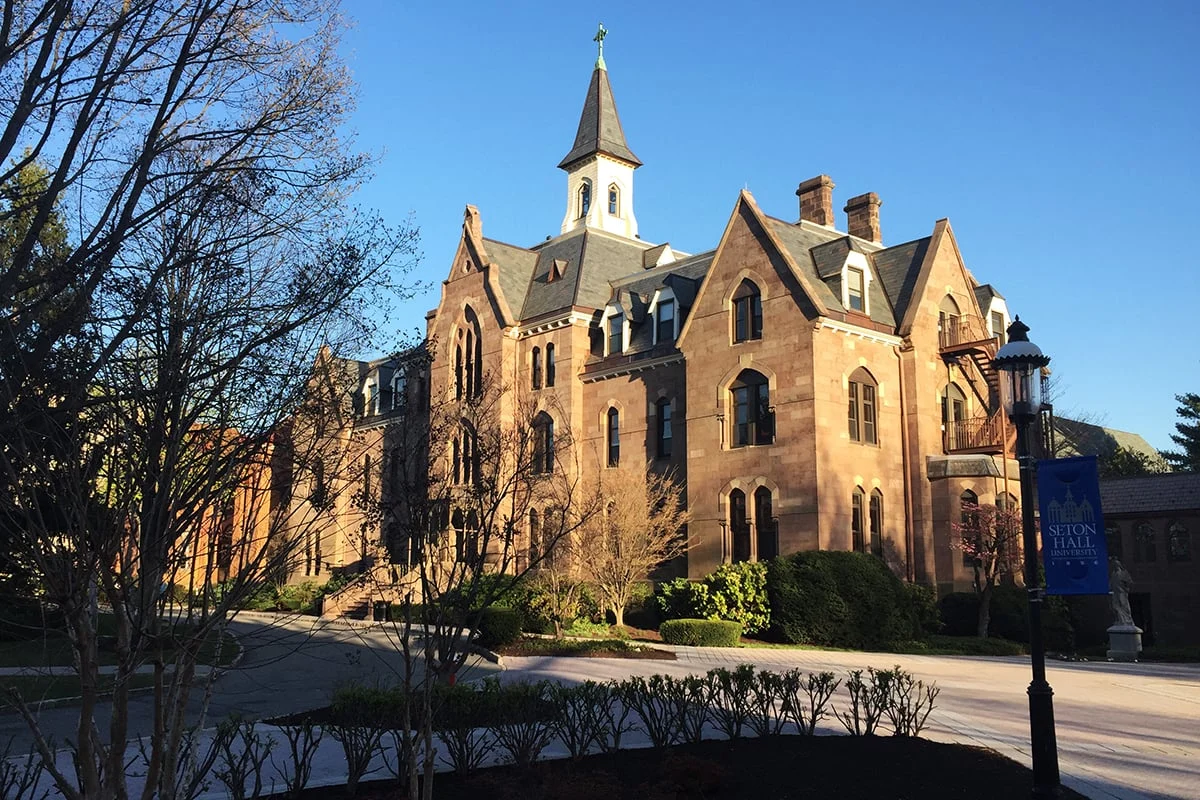
In a landmark legal development that pits the sanctity of attorney-client privilege against the public’s right to transparency in clergy abuse litigation, a panel of New Jersey appellate judges has handed Seton Hall University a partial victory. The ruling, issued last week, effectively shields the first two sections of a controversial 2019 investigative report concerning the late Theodore McCarrick, the former cardinal whose decades-long history of sexual abuse remains a deep wound in the Catholic Church.
While the appellate court’s decision offers a reprieve to the university regarding the most sensitive portions of the investigation, it simultaneously mandates the release of the report’s third section. The judges concluded that this final portion, which critiques the university’s own Title IX compliance and institutional policies, holds significant "public interest" that outweighs the university’s desire for confidentiality.
The Genesis of a Legal Conflict
The controversy stems from a massive 2020 lawsuit in which the Superior Court of New Jersey consolidated approximately 450 individual sexual abuse complaints into a single, high-stakes case against Seton Hall University. As the university braced for the litigation, it engaged the law firm Gibbons PC, which in turn retained the global powerhouse Latham & Watkins LLP to conduct an independent investigation into the university’s relationship with Theodore McCarrick.
The resulting document—widely referred to as the "Latham Report"—was completed in 2019. However, the report’s existence remained shielded from the plaintiffs involved in the consolidated litigation for years. It was only through a 2024 investigative report by Politico that the existence of the document was brought to light, prompting a frantic legal scramble by the plaintiffs’ attorneys to obtain what they argue is critical evidence in their quest for justice.
Chronology: A Timeline of Concealment and Court Battles
The trajectory of the Latham Report reveals a tense struggle between institutional defense strategies and the pursuit of accountability:
- 2019: Seton Hall University commissions an internal investigation via Gibbons PC and Latham & Watkins LLP into the McCarrick allegations. The report is finalized but kept private.
- 2020: The Superior Court of New Jersey consolidates roughly 450 sexual abuse cases against Seton Hall.
- 2024: Politico exposes the existence of the Latham Report, leading plaintiffs to formally demand its production in discovery.
- November 2025: Superior Court Judge Avion Benjamin orders Seton Hall to release the full document, citing the importance of transparency in the litigation.
- June 2026: A three-judge panel of the New Jersey Appellate Division—Judges Thomas Sumners, Mark Chase, and Lorraine M. Augostini—reverses much of Judge Benjamin’s order, granting the university protection over the first two parts of the report while upholding the disclosure of the third.
Legal Reasoning: Privilege vs. Public Interest
The core of the Appellate Division’s decision rests on the interpretation of the attorney-client privilege. In their written opinion, the judges were explicit: “There is undoubtedly an attorney-client relationship between Gibbons and SHU, and the court’s analysis failed to consider that Latham was acting as an agent of Gibbons when it conducted the investigation.”
By framing the Latham investigation as a service rendered by an agent to counsel, the court effectively cloaked the bulk of the report in the traditional protections afforded to legal strategy. This interpretation suggests that because the investigation was conducted to aid legal counsel in representing the university, it constitutes privileged work product.
However, the panel took a different approach regarding the third section of the report. This segment includes a "self-critical analysis" that scrutinized whether the university’s historical and current policies were in compliance with Title IX and how those policies would have interacted with the McCarrick allegations.
In a move that surprised many observers, the court ruled that this portion must be released. The judges noted that the "chilling effect" often cited by organizations to prevent the disclosure of internal reviews is "minimal" in this specific case, particularly because the report does not identify individual witnesses and relies on an anonymous survey of fifty-nine seminarians. “Thus,” the court wrote, “it is in the public interest to disclose self-critical analyses of SHU’s policies and procedures.”
The Implications for Survivors and Institutional Accountability
The legal implications of this ruling are profound. For the plaintiffs, the decision is a double-edged sword. While they have secured a "win" regarding the analysis of the university’s failures, the loss of the first two sections of the report—which presumably contain the most direct findings regarding the McCarrick allegations—is a significant setback.
Gabriel Magee, an attorney representing the survivors, signaled that the legal battle is far from over. In a statement to Politico, Magee noted, “We appreciate that the Appellate Division agreed that parts of the Latham Report must be produced. But we are still digesting the rest of the decision and considering our appeal options.”
The ruling raises a critical question for the future of institutional abuse cases: to what extent can an organization hide behind "attorney-client privilege" to shield internal investigations from the public eye? By treating the report as a legal strategy document rather than an independent inquiry, the court has reinforced a barrier that survivors of abuse often find insurmountable.
Examining the "Self-Critical Analysis"
The third part of the report, now slated for public release, is expected to provide a rare, unvarnished look at how a major institution evaluated its own systemic failures. The inclusion of the Title IX analysis is particularly notable. Title IX, a federal law prohibiting sex-based discrimination in educational programs, is a cornerstone of campus safety. If the report indicates that Seton Hall was aware of policy gaps or failures to protect students from clergy misconduct yet failed to act, that information could serve as a "smoking gun" in the ongoing litigation.
Furthermore, the appellate court’s focus on the "public interest" provides a narrow but significant opening for future cases. By establishing that "self-critical analyses" regarding student safety are not automatically shielded by privilege, the court has set a precedent that other plaintiffs may use to pry open the internal records of universities and religious institutions across the country.
The Road Ahead
As the legal teams prepare their next moves, the atmosphere surrounding the Seton Hall litigation remains fraught with tension. The university maintains that it has cooperated with the discovery process within the bounds of the law, while survivors argue that the institution’s primary goal has been the preservation of its reputation at the expense of those it was meant to protect.
The next phase of this battle will likely involve an appeal to the New Jersey Supreme Court, where the tension between institutional privilege and the public’s need for the truth will be tested at the highest level. Until then, the release of the third section of the Latham Report will be closely watched by legal experts, advocates for abuse survivors, and the broader academic community.
This saga serves as a reminder that for many victims, the path to justice is not merely a matter of proving the abuse occurred, but of forcing institutions to surrender the records they have worked so diligently to keep in the shadows. As the survivors weigh their options, they are not just fighting for their own day in court; they are fighting to ensure that the internal mechanisms of universities are held accountable to the public they serve. The final verdict on whether the Latham Report will truly lead to transparency or remain a protected secret will echo long after this specific lawsuit concludes.