
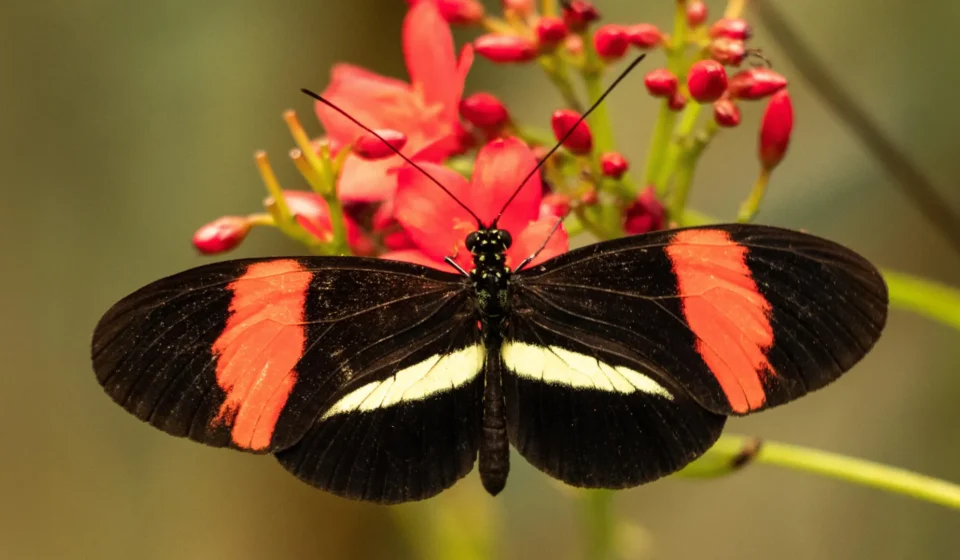
The Fountain of Youth in the Rainforest: How Heliconius Butterflies Are Redefining the Biology of Aging

In the lush, verdant canopy of the Central and South American rainforests, a biological anomaly is unfolding. While the vast majority of adult butterflies are ephemeral creatures, existing for mere weeks before succumbing to the natural erosion of time, the Heliconius tribe has defied the standard evolutionary script. A groundbreaking study, led by the University of Bristol and published in the journal Nature Communications on June 16, suggests these vibrant insects have evolved an extraordinary physiological defense: they appear to have slowed the very process of aging itself.
This discovery positions the Heliconius butterfly not just as a fascinating subject for lepidopterists, but as a pivotal new model for the global scientific community in the study of longevity and healthy aging. By effectively bypassing the typical decline associated with senescence, these insects may hold the keys to understanding how life can be extended, and health span preserved, in the face of time.
The Main Facts: A Biological Outlier
The core revelation of the study is that Heliconius butterflies do not merely live longer than their counterparts; they age differently. Most butterflies are constrained by a life cycle that demands rapid reproduction followed by a swift physical collapse. However, the Heliconius group—often referred to as “longwings”—consistently shatters these expectations.
Researchers documented staggering differences in lifespan among closely related species. For instance, the species Heliconius hewitsoni has been observed living up to 348 days. In stark contrast, its relative, Dione juno, survives for a mere 14 days. This 25-fold disparity in maximum lifespan is not merely a quirk of survival in the wild; it represents a fundamental divergence in evolutionary strategy. The study suggests that Heliconius butterflies have successfully bypassed the "live fast, die young" paradigm, opting instead for a sustained physiological robustness that allows them to remain physically active and reproductively viable for nearly a year.
Chronology of the Investigation
The journey to this discovery was a multi-year effort that synthesized field biology with rigorous laboratory testing. The research team, a collaboration between the University of Bristol and the Smithsonian Tropical Research Institute in Panama, approached the mystery of butterfly longevity through a three-pronged methodological strategy.
Phase 1: Observational Fieldwork
The initial phase involved extensive "mark, release, and recapture" studies within the tropical ecosystems of Panama. By tagging individual butterflies, researchers were able to track their movements and survival rates in their natural habitat. This provided the raw data showing that Heliconius species consistently exhibited lower baseline mortality rates compared to their non-pollen-feeding relatives.
Phase 2: Controlled Insectary Experiments
To strip away the environmental variables of the rainforest, the team moved the study into controlled insectary environments. This allowed for precise monitoring of diet, activity levels, and mortality. In these controlled settings, the longevity gap remained consistent, confirming that the extended lifespan was an intrinsic biological trait rather than merely an outcome of superior predator avoidance.
Phase 3: Physiological Performance Testing
Perhaps the most crucial phase involved the development of a "grip strength test" for butterflies. By assessing the physical performance of aging H. hecale individuals against younger cohorts, scientists were able to quantify physical decline. The results were startling: while shorter-lived species showed a rapid, predictable drop in motor function as they aged, the H. hecale individuals maintained high levels of physical performance throughout their lives, suggesting that they are largely immune to the standard physical deterioration of senescence.
Supporting Data: The Pollen Paradox
A central question for the researchers was identifying the "why" behind this longevity. For decades, entomologists have suspected that the Heliconius tribe’s unique ability to feed on pollen—a rare trait among adult butterflies, which typically rely on nectar—was the engine driving their long lives.
Pollen is a rich source of proteins and amino acids, providing a nutritional profile far superior to the sugar-heavy, nutrient-poor nectar consumed by most other butterflies. The study confirmed that pollen feeding is indeed a major contributor to their success. When compared with Dryas iulia—a species that does not feed on pollen—the H. hecale butterflies displayed superior maintenance of body mass and muscle performance.
However, the researchers discovered a nuanced truth: the longevity advantage is not solely dependent on pollen. Even when the pollen was removed from the diets of H. hecale during the experiment, the butterflies continued to live significantly longer than their shorter-lived relatives. This indicates that while pollen is a vital nutritional catalyst, the Heliconius tribe has undergone profound evolutionary adaptations that go beyond diet. Their longevity is hard-wired into their biology, suggesting a complex interplay between evolutionary selection and metabolic efficiency.
Official Responses and Insights
Dr. Jessica Foley, the study’s lead author from the University of Bristol’s School of Biological Sciences, believes the implications of these findings extend far beyond the field of entomology.
"Insects are the most species-rich class of animals on Earth, and they exhibit extreme variation in longevity," Dr. Foley noted. "We see lifespans ranging from a few days in adult mayflies to several decades in the reproductive castes of certain ants and termites. This represents a 5,000-fold difference within the class, compared to only a 100-fold difference in mammals. Heliconius butterflies occupy a unique space in this spectrum."
Dr. Foley emphasized that the significance of this study is the decoupling of aging from lifespan. "What makes these butterflies truly remarkable is that they appear to have evolved not only longer lifespans but also slower aging," she said. "They are essentially running a natural evolutionary experiment. By comparing the long-lived Heliconius with their short-lived relatives, we have a blueprint to investigate the mechanisms that underpin the slowing of the aging process."
Implications for Future Research
The discovery that Heliconius butterflies can maintain physical performance into old age without the typical hallmarks of decay offers a "holy grail" for aging research. If the genetic and metabolic pathways responsible for this protection can be mapped, they may provide clues for human medical research.
A New Model for Aging
Currently, much of aging research relies on mice or fruit flies. While these models are useful, they often do not capture the complexity of long-term healthy aging. Heliconius butterflies, by virtue of their extreme longevity and lack of age-related physical decline, provide a novel, highly effective system for identifying the mechanisms that prevent biological degradation.
Ecological Context
The study also highlights how ecological changes—specifically the transition to pollen feeding—can act as a catalyst for evolutionary shifts in life history. This raises questions about how other species might adapt to environmental pressures by altering their fundamental life cycles. Future research will likely focus on the genomic sequences of these butterflies to identify the specific genes that allow them to mitigate oxidative stress and preserve cellular integrity.
Closing the Gap
As the scientific community continues to grapple with the complexities of an aging global population, the humble Heliconius butterfly serves as a poignant reminder that nature has already solved many of the problems we are currently working to understand. Whether through the regulation of protein synthesis, the optimization of metabolic energy, or the enhancement of cellular repair, these butterflies have mastered the art of living well, for longer.
The path forward will involve deep-dive genomic studies and further comparative physiological testing. But for now, the Heliconius tribe has secured its place in the annals of science as a primary model for understanding how life can defy the conventional limits of time, proving that in the deep, humid corridors of the rainforest, the secret to longevity may have been flying in plain sight all along.