
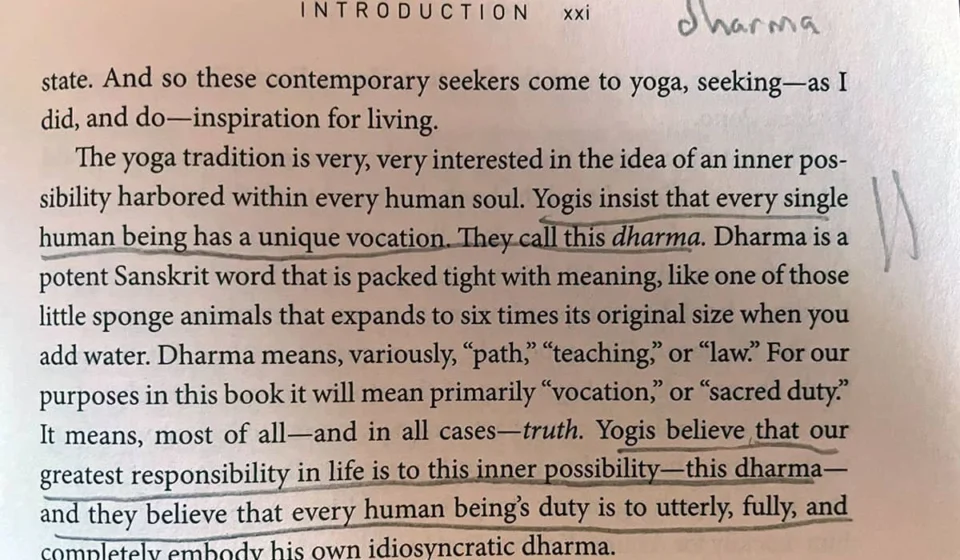

In an era defined by rapid technological shifts and economic uncertainty, the perennial question—"What do you want to be when you grow up?"—has evolved into something far more complex. It is no longer just about career pathing; it is about the holistic architecture of one’s existence. Recently, I began a transformative journey through Designing Your Life by Stanford professors Bill Burnett and Dave Evans, a book that applies rigorous design-thinking principles to the messy, non-linear reality of human experience.
To move beyond the theoretical, I invited two close confidants—my long-term partner, Kim, and my former college classmate, Craig—to join me in a structured exploration of these exercises. What follows is a chronicle of our initial findings, the profound intersections of our personal philosophies, and the implications of building a "compass" for a life of purpose.
The Foundation: Starting Where You Are
The first tenet of the Burnett-Evans methodology is deceptively simple: "Start where you are." While this serves as the bedrock of the design process, it is a philosophy that resonates deeply with those of us in the personal finance community. Much like a net worth assessment or a credit-score audit provides a cold, hard snapshot of your financial reality, the initial step in life design requires an unflinching, honest evaluation of four critical pillars: Health, Love, Play, and Work.
This assessment is not intended to be immediately actionable. Instead, it serves as a baseline—a geographic coordinate on the map of your life. By rating each of these four domains, you begin to see the "gap" between your current state and your aspirations. This exercise strips away the aspirational veneer of how we wish our lives looked and forces us to confront the structural reality of our daily existence. Once this snapshot is captured, the path toward a more intentional future becomes not just a possibility, but a logistical necessity.
Building the Compass: Workview and Lifeview
If "starting where you are" provides the location, the second chapter of Designing Your Life acts as the compass. Readers are tasked with crafting two foundational documents: a "Workview" and a "Lifeview." These are not merely career objectives or bucket lists; they are personal manifestos that define what we value, what we find meaningful, and how we interpret our place in the world.
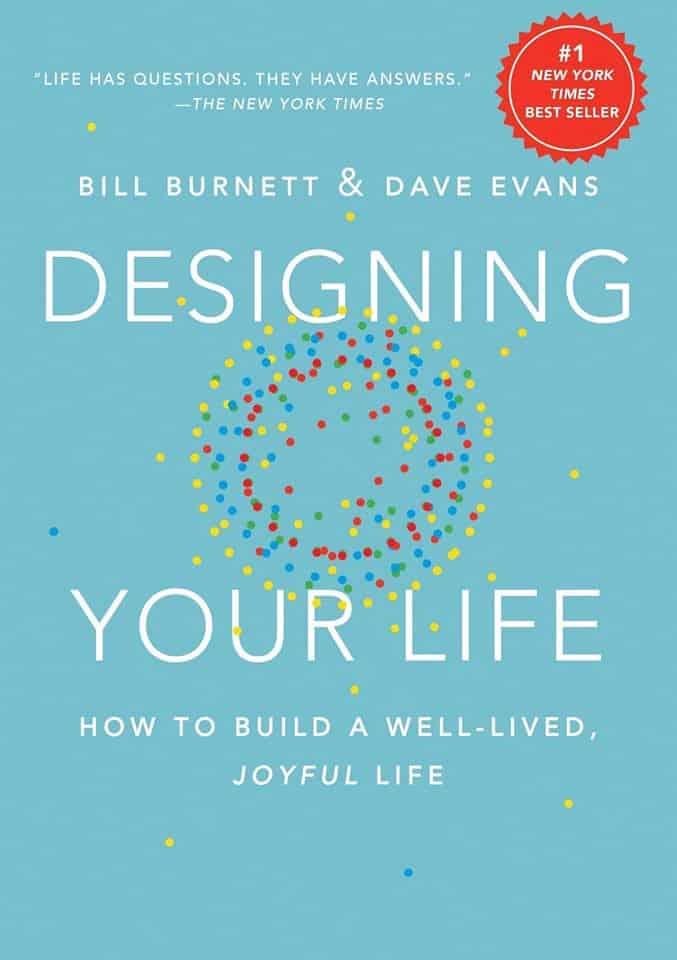
To better understand these concepts, Craig and I conducted a remote deep dive into our own reflections. The process was revelatory. Despite having followed different paths since our graduation from Willamette University, our values showed a striking, almost eerie, alignment.
The Philosophy of Labor: Defining Workview
Craig’s perspective on work centers on the concept of "right livelihood"—a Buddhist ideal that emphasizes work that is ethically grounded and avoids harm. For Craig, work is a mechanism for growth and a way to interact with the tangible world. As he noted:
"I work for money happily for a while… but experience, learning, and growth are essential if I am to remain happy for long. Confidence that the work I am doing is fair, supports life, and does not do permanent harm to natural systems, is important to me."
My own Workview mirrors this sentiment, though it is framed through the lens of ikigai—the Japanese concept of finding one’s purpose at the intersection of passion, mission, vocation, and profession. My objective is to ensure that my digital presence serves as a bridge for others, providing utility and clarity in an cluttered financial landscape. We both reached a common conclusion: while money is a necessary byproduct of labor, it is an insufficient driver of long-term fulfillment. We are both seeking work that fosters abundance—for ourselves, our communities, and the environment.
The Architecture of Meaning: Defining Lifeview
The "Lifeview" essay is an even more intimate reflection on the nature of existence. When Craig and I compared our responses, the symmetry was profound. Craig views the human experience through a lens of humility:

"The sublime fact that the entire earth is an insignificant dot in the vastness of space… is somehow comforting. In the meantime, if stewarded, nature will shower us with abundance beyond belief."
My own Lifeview posits that meaning is not an inherent trait of the universe, but a construct we must build ourselves. I reject the idea that morality is dictated by external dogma, arguing instead that it is measured by our capacity to treat others—especially those with whom we disagree—with dignity and kindness. Both of us independently arrived at the same conclusion: we are "social animals" who feel a responsibility to contribute to the greater good.
The Legacy of Shared Values: "Non Nobis Solum"
Why did two people, separated by two decades of professional experience, arrive at such similar conclusions? The answer may lie in our shared academic roots. Both of us attended Willamette University, an institution guided by the motto non nobis solum nati sumus—"not unto ourselves alone are we born."
This ancient principle serves as a powerful anchor for anyone attempting to design a life of purpose. It suggests that personal success, while necessary, is hollow if it does not contribute to the "social capital" of our communities. In our discussion, Craig and I lamented the erosion of this social capital in modern America. We agreed that the rise of digital isolation has, in many ways, diminished our capacity to connect with those outside our ideological bubbles.
By defining our Workview and Lifeview, we are not just creating goals; we are creating a framework for resisting this isolation. We are establishing a set of values that will act as a moral compass when we encounter the inevitable forks in the road of our careers and personal lives.
Implications and Future Steps
The beauty of the Designing Your Life approach is that it treats life as an iterative process. It acknowledges that we are constantly in flux. By formalizing these views, we have created a standard against which to measure future opportunities. If an opportunity does not align with our Workview—if it causes harm or offers no growth—we now have the structural clarity to reject it, regardless of the financial incentive.
However, this is only the beginning. The transition from theory to practice requires constant maintenance. As we move into the next phase of this experiment, Craig and I will be implementing the "Good Time Journal" exercise. Over the coming weeks, we will log our daily activities, rating each one based on levels of engagement and energy. This will allow us to move from the abstract "Lifeview" to the granular reality of our daily schedules. By using mind-mapping techniques to analyze these journals, we hope to identify patterns of behavior that truly fuel our sense of purpose versus those that merely drain our energy.
Conclusion
The exercise of designing your life is not a one-time project; it is an ongoing commitment to intentionality. By defining where we are, creating a compass of values, and committing to the "right livelihood," we move away from the passive consumption of our own time and toward the active creation of a life well-lived.
Whether you are a student just starting your career or a professional looking to pivot, the questions posed by Burnett and Evans remain the most vital ones you can ask. As I continue this journey with Kim and Craig, I am reminded that while we may be born alone, we are not meant to live unto ourselves alone. Our growth is inherently tied to our ability to build, share, and contribute.
Stay tuned as we continue this process. In our next installment, we will delve into the findings of our Good Time Journals and explore how data-driven reflection can help us refine our designs even further. The map is drawn, the compass is set, and the journey toward a more intentional existence is well underway.