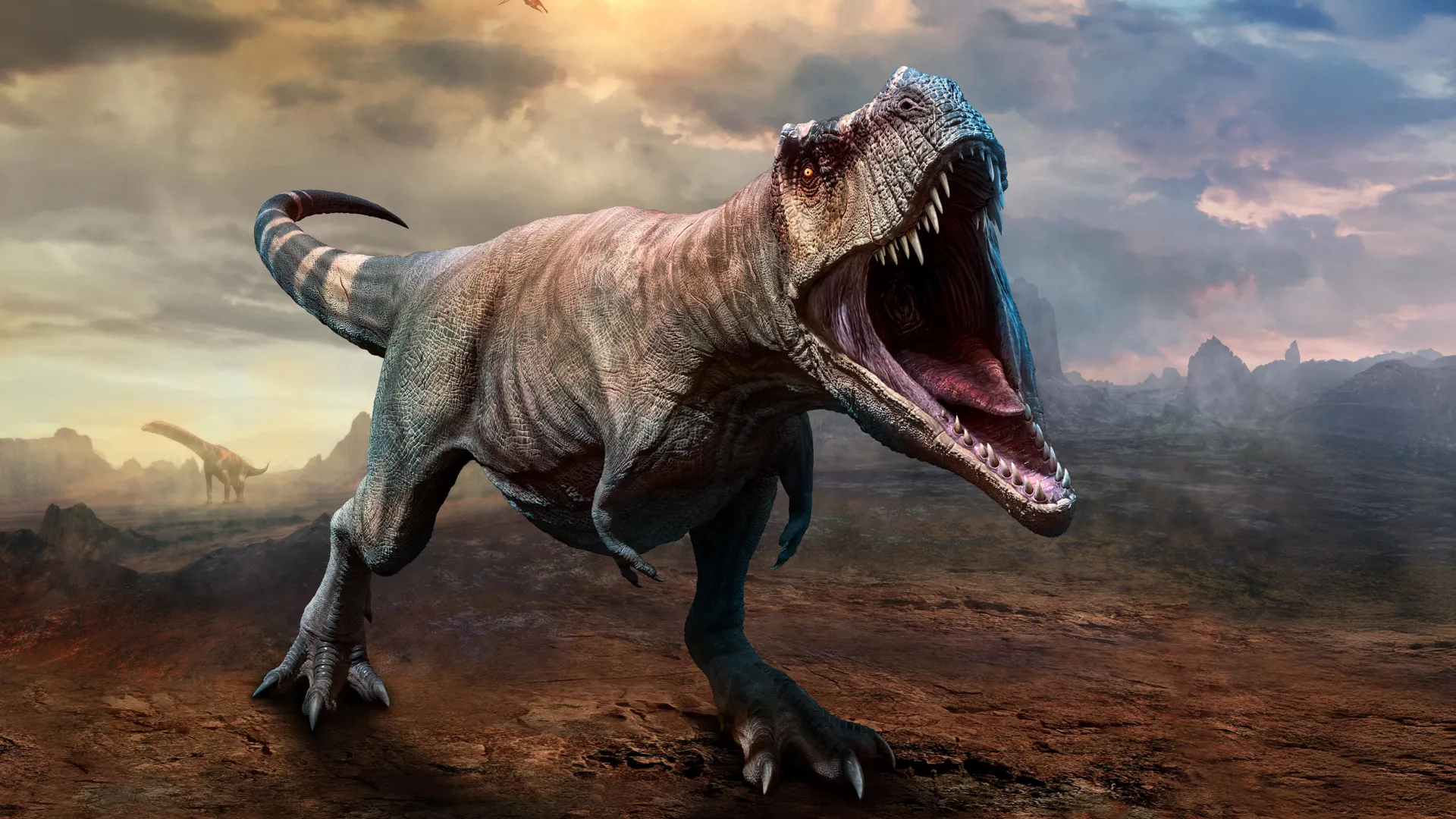
For over a century, the Tyrannosaurus rex has occupied the cultural and scientific imagination as the ultimate apex predator—a terrifying, unstoppable engine of destruction that dominated the twilight of the Cretaceous Period. Yet, for all its fame, the life history of this biological titan has remained shrouded in mystery. For years, the prevailing consensus among paleontologists was that T. rex reached its formidable adult size at approximately 25 years of age. However, a landmark study published in the journal PeerJ has fundamentally challenged this narrative, suggesting that the "King of Dinosaurs" may have taken significantly longer to reach maturity—stretching its growth phase to as many as 40 years.
This revelation, the result of the most comprehensive analysis of tyrannosaur fossils ever conducted, offers a fresh perspective on how these creatures lived, thrived, and ultimately dominated their ecosystems. By employing cutting-edge imaging and sophisticated statistical modeling, an international team of researchers has effectively "deciphered" the hidden chronologies etched into the bones of these ancient giants.
The Science of Bone Histology: Reading the Rings of Time
To understand how an animal grows, paleontologists often turn to paleohistology—the study of fossilized bone microstructure. Much like the dendrochronology used to date trees, dinosaur bones contain growth rings. As a dinosaur matures, its bones undergo cycles of rapid growth during favorable seasons and slower growth during leaner times, leaving behind concentric markers similar to tree rings.
Historically, scientists have relied on these markers to estimate the age and growth rates of various dinosaurs. However, the methodology has long been plagued by the inherent limitations of bone preservation. Because the internal structure of a bone is constantly being remodeled as the animal grows—a process known as resorption—the earliest, innermost rings of a T. rex are often obliterated by the marrow cavity as the creature matures. Consequently, a cross-section of a femur from an adult T. rex usually only captures the final 10 to 20 years of its life, leaving a massive "blind spot" in the animal’s developmental history.
To overcome this, the research team, led by Dr. Holly Woodward of Oklahoma State University, utilized a groundbreaking approach. By analyzing a massive dataset of 17 distinct tyrannosaur specimens—ranging from juveniles to fully grown adults—and applying advanced statistical "stitching" techniques, the team was able to synthesize these partial records into a coherent, composite growth curve that spans the entire life cycle of the species.
Chronology of a Titan: A Steady Path to Power
The new research suggests that the life history of T. rex was far more nuanced than the "live fast, die young" model previously proposed. Instead of a rapid, exponential spurt that concluded in the mid-twenties, T. rex likely pursued a more temperate, sustained growth trajectory.
The Developmental Phases
- Juvenile Phase: Early growth was characterized by rapid skeletal development, allowing younger individuals to maintain agility and speed.
- The Extended Maturity Phase: Contrary to previous beliefs, the study indicates that T. rex continued to add mass well into its fourth decade. This prolonged growth phase suggests that the transition from a nimble juvenile to an eight-ton behemoth was a gradual, multi-decadal process.
- The Senior Years: By the time a T. rex reached its fourth decade, it had achieved its maximum biological potential, weighing in at roughly eight tons.
This "extended childhood" implies that the metabolic and physiological demands on the dinosaur were distributed over a longer period, potentially reducing the strain on the animal’s cardiovascular and skeletal systems during its most vulnerable developmental stages.
Supporting Data: The "Species Complex" Controversy
Perhaps the most provocative aspect of the study is its potential to upend the taxonomy of the Tyrannosauridae family. The researchers deliberately categorized their 17 samples as the " Tyrannosaurus rex species complex," a term that signals a growing skepticism regarding the homogeneity of fossils currently labeled as T. rex.
Central to this debate are two famous specimens: "Jane" and "Petey." These fossils have long been subjects of contention; some paleontologists argue they represent juvenile T. rex individuals, while others contend they belong to a distinct, smaller genus known as Nanotyrannus.
The new study provides compelling, if not definitive, evidence for the latter. When the growth patterns of Jane and Petey were plotted against the composite growth curve of the other specimens, they diverged significantly. Their internal bone structures suggested that they were reaching biological maturity at sizes far smaller than would be expected for a juvenile T. rex. This suggests that either T. rex exhibited extreme biological plasticity—growing at vastly different rates depending on environmental factors—or that the fossil record is currently hiding a distinct, separate species that lived alongside the T. rex.
Official Perspectives: Expert Commentary
The significance of this study has sent ripples through the paleontological community. Dr. Holly Woodward, the study’s lead author, emphasized the importance of the new imaging techniques: "Examining the growth rings preserved in the fossilized bones allowed us to reconstruct the animals’ year-by-year growth histories. By combining these records, we have created a more realistic view of how Tyrannosaurus grew and how much they varied in size."
Dr. Nathan Myhrvold, a mathematician and paleobiologist at Intellectual Ventures who spearheaded the statistical analysis, noted the necessity of the team’s new methodology: "We came up with a new statistical approach that stitches together growth records from different specimens to estimate the growth trajectory of T. rex across all stages of life in greater detail than any previous study. Our composite growth curve provides a much more realistic view of how Tyrannosaurus grew."
Coauthor Jack Horner, a veteran of dinosaur research, focused on the ecological implications of the findings. "A four-decade growth phase may have allowed younger tyrannosaurs to fill a variety of ecological roles within their environments," Horner noted. This concept of "niche partitioning" is vital to understanding why T. rex was so successful. By growing slowly, a young T. rex would have occupied a different ecological niche—perhaps hunting smaller, faster prey—than the lumbering, eight-ton adult. This ensured that different age classes of the same species were not necessarily competing for the same resources, effectively allowing the tyrannosaurs to dominate their environment from the time they hatched until they reached their terminal size.
Implications: A Paradigm Shift in Dinosaur Research
The findings from this study have implications that reach far beyond the T. rex itself. The discovery that circularly polarized and cross-polarized light can reveal previously invisible growth markers suggests that many of our past interpretations of dinosaur growth rates may be inaccurate.
Key Implications for the Field:
- Revised Protocols: The study provides strong evidence that the standard protocols for bone histology need to be updated to account for the hidden, closely spaced growth rings that standard lighting fails to reveal.
- Ecological Re-evaluation: If other large theropods also experienced similarly prolonged growth phases, it would necessitate a total re-evaluation of how these ecosystems were structured. The competition between juveniles and adults may have been far less intense than previously thought.
- Taxonomic Clarity: The research bolsters the argument for a more granular approach to dinosaur classification. If bone structure can distinguish species more effectively than skeletal measurements, we may find that the "dinosaur family tree" is far more crowded and complex than currently understood.
Conclusion: The King Reconsidered
More than a century after the first T. rex was unearthed in the Hell Creek Formation, the "King" continues to demand our attention. By looking not just at the size of the bones, but at the microscopic records of time etched within them, researchers have peeled back a layer of mystery that has persisted for generations.
The image of the T. rex as a creature that rapidly ballooned into a giant is being replaced by the image of a long-lived, slow-growing predator that evolved to dominate its world through a unique, multi-decadal developmental strategy. As we continue to refine our tools and our questions, the T. rex serves as a humbling reminder: in the study of deep time, the most profound secrets are often hidden in the smallest details. The king did not simply appear; it grew into its power, one year at a time, for forty years.