FAA Launches Investigation After Delta Flight Executes Last-Minute Go-Around Due to Runway Conflict at Boston Logan

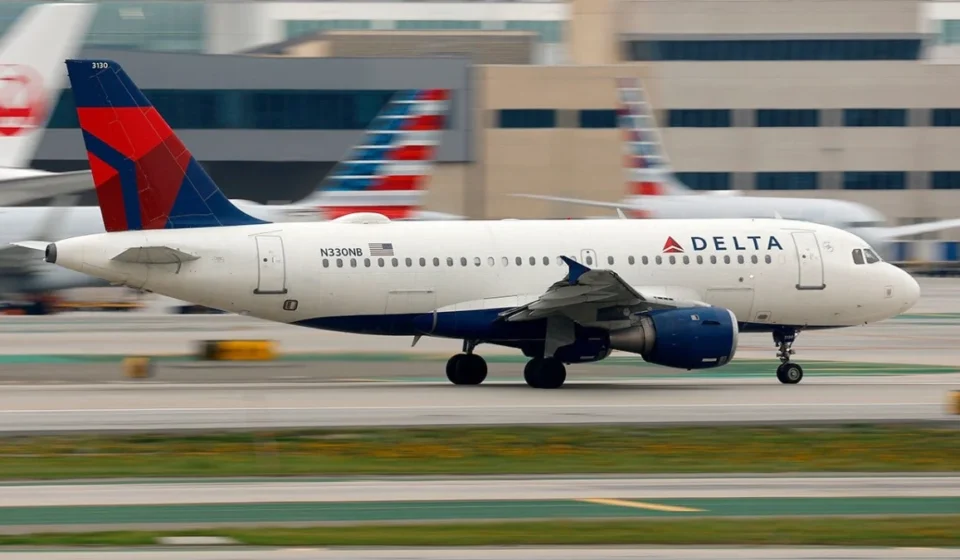
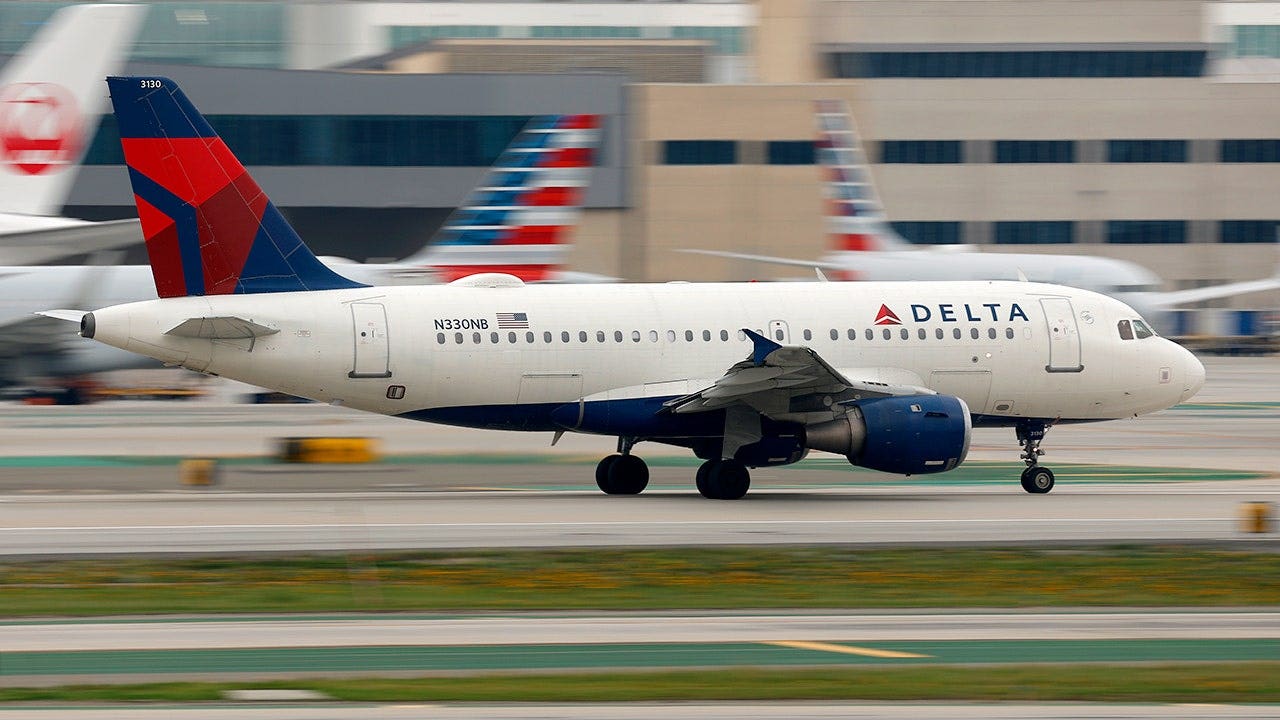
The Federal Aviation Administration (FAA) has initiated a formal investigation into a weekend aviation incident at Boston Logan International Airport (BOS), where a Delta Air Lines commercial flight was forced to abruptly abort its landing sequence. The maneuver, known as a "go-around," was executed after air traffic controllers and onboard warning systems detected another aircraft departing from an intersecting runway, presenting a potential conflict.
The incident, which occurred on the morning of Saturday, June 20, highlights ongoing concerns regarding runway safety and close-call incidents at major domestic airports. Fortunately, due to the swift action of the flight crew and coordination with Air Traffic Control (ATC), the aircraft landed safely without injury to the passengers or crew.
Main Facts of the Incident
On Saturday, June 20, at approximately 11:30 a.m. local time, Delta Air Lines Flight 2351 was on its final approach to Boston Logan International Airport. The flight, which originated from Dallas Fort Worth International Airport (DFW) in Texas, was carrying 129 passengers and six crew members.
As the aircraft neared the runway, the flight crew received an automated advisory from the plane’s onboard traffic alert systems, indicating another aircraft was departing from a runway that intersected their landing path. In response to the alert and in immediate coordination with air traffic controllers, the Delta flight crew executed a standardized missed approach, climbing away from the airport to climb back into the traffic pattern.
The FAA confirmed shortly after the incident that it was actively investigating the event. The agency’s probe will focus on the separation standards maintained between the two aircraft, the sequence of commands issued by ATC, and the operational factors that led to two aircraft being cleared on intersecting paths simultaneously.
Detailed Chronology of Flight 2351
To understand the sequence of events, investigators are reconstructing a minute-by-minute timeline of the flight’s arrival sequence.
Departure and Routine Cruise
Delta Flight 2351 departed Dallas Fort Worth International Airport on schedule, embarking on a routine domestic flight to Boston. The cross-country flight proceeded without incident through its cruise phase, with the aircraft functioning normally and the flight crew maintaining standard communication with regional air traffic control centers.
The Descent into Boston Airspace
As the aircraft entered the busy airspace of the Northeast corridor, air traffic controllers at Boston Logan began vectoring Flight 2351 toward its designated landing runway. Boston Logan is known for its highly complex layout, featuring multiple intersecting runways that require precise scheduling and spacing, especially during peak daytime operational hours.
The Critical Moments (Approx. 11:30 a.m.)
As the Delta flight descended below 1,000 feet on its final approach, the situation developed rapidly:
- The Conflict: Another aircraft was cleared for departure—or was in the process of departing—on a runway that crossed the path of the runway assigned to Delta Flight 2351.
- The Alert: Onboard avionics systems detected the presence of the departing aircraft and issued a traffic advisory to the Delta flight crew.
- The Decision: Recognizing the potential for a loss of safe separation, the pilots coordinated instantly with ATC. The flight crew applied takeoff thrust, pitched the aircraft up, retracted landing gear and flaps, and initiated a standard go-around maneuver.
- The Resolution: After climbing safely away from the runway intersection, the aircraft was vectored back into the landing queue by ATC. The flight landed safely on its subsequent attempt, taxiing to the gate without further incident.
Supporting Data and Technical Context
To understand the severity and context of the incident, it is essential to examine the technical mechanisms of go-arounds, the unique geography of Boston Logan, and the technology that prevented a potential collision.
+------------------------------------------------------------+
|                  TYPICAL GO-AROUND SEQUENCE                |
+------------------------------------------------------------+
|  1. Conflict Detected (Onboard systems / ATC / Visual)     |
|                          v                                 |
|  2. Decision Made to Abort Landing                         |
|                          v                                 |
|  3. Engine Thrust Increased to Maximum                     |
|                          v                                 |
|  4. Pitch Angle Increased to Establish Positive Climb      |
|                          v                                 |
|  5. Landing Gear and Flaps Retracted to Reduce Drag        |
|                          v                                 |
|  6. Aircraft Re-enters ATC Pattern for Second Approach     |
+------------------------------------------------------------+
Understanding the "Go-Around" Maneuver
A go-around is a routine, highly practiced safety procedure where pilots abort a landing and climb back to a safe altitude. Go-arounds can be triggered by a variety of factors, including:
- Unstable wind or weather conditions.
- Debris or wildlife on the runway.
- Inadequate spacing between landing aircraft.
- Runway incursions or conflicts on intersecting runways.
Aviation safety experts emphasize that a go-around should not be viewed as an emergency or an operational failure. Rather, it is a proactive safety measure designed to prevent accidents before they occur. Commercial pilots undergo rigorous simulator training to perform go-arounds smoothly at any point during an approach.
The Complexity of Intersecting Runways
Boston Logan International Airport (BOS) occupies a relatively small footprint of land surrounded by Boston Harbor. To maximize operational capacity, the airport relies on a configuration of six runways, several of which intersect:
| Runway Designation | Length (Feet) | Role / Configuration |
|---|---|---|
| 4L/22R | 7,861 | Often used for regional departures/arrivals |
| 4R/22L | 10,006 | Main runway for heavy international arrivals |
| 9/27 | 7,001 | East-West operations intersecting multiple runways |
| 14/32 | 5,000 | Secondary runway for light aircraft |
| 15R/33L | 10,083 | Major runway intersecting Runway 9/27 and 4L/22R |
| 15L/33R | 2,557 | Short runway, primarily auxiliary |
When runways intersect, air traffic controllers must maintain precise longitudinal and lateral spacing. A departure on one runway cannot cross the intersection point if an arriving aircraft on another runway is within a specific safety window. If a departing aircraft takes longer than expected to roll down the runway, or if an arriving aircraft is flying faster than anticipated, the safety margin can shrink, necessitating a go-around.
Onboard Traffic Collision Avoidance Technology
Modern commercial aircraft are equipped with highly sophisticated safety technology. Chief among these is the Traffic Collision Avoidance System (TCAS), which monitors the airspace surrounding an aircraft by communicating with the transponders of other planes.
If TCAS or related ground-proximity warning systems detect a potential conflict, they provide visual and auditory advisories to the flight deck. This technology serves as an independent safety net, ensuring that even if air traffic controllers make an error or experience a communication delay, the pilots remain fully aware of nearby traffic.
Official Responses and Statements
Following the incident, both the federal oversight agency and the airline issued statements clarifying their positions and emphasizing their commitment to safety.
The Federal Aviation Administration (FAA)
The FAA, which regulates all aspects of civil aviation in the United States, released a brief statement confirming the launch of an investigation:
"The crew of Delta Air Lines Flight 2351 executed a go-around at Boston Logan International Airport because another aircraft was departing from an intersecting runway. The FAA is investigating the event which occurred around 11:30 a.m. local time on Saturday, June 20."
The FAA’s investigation will involve reviewing radar data, flight data recorders, and audio recordings of the communications between the flight deck and the tower.
Delta Air Lines
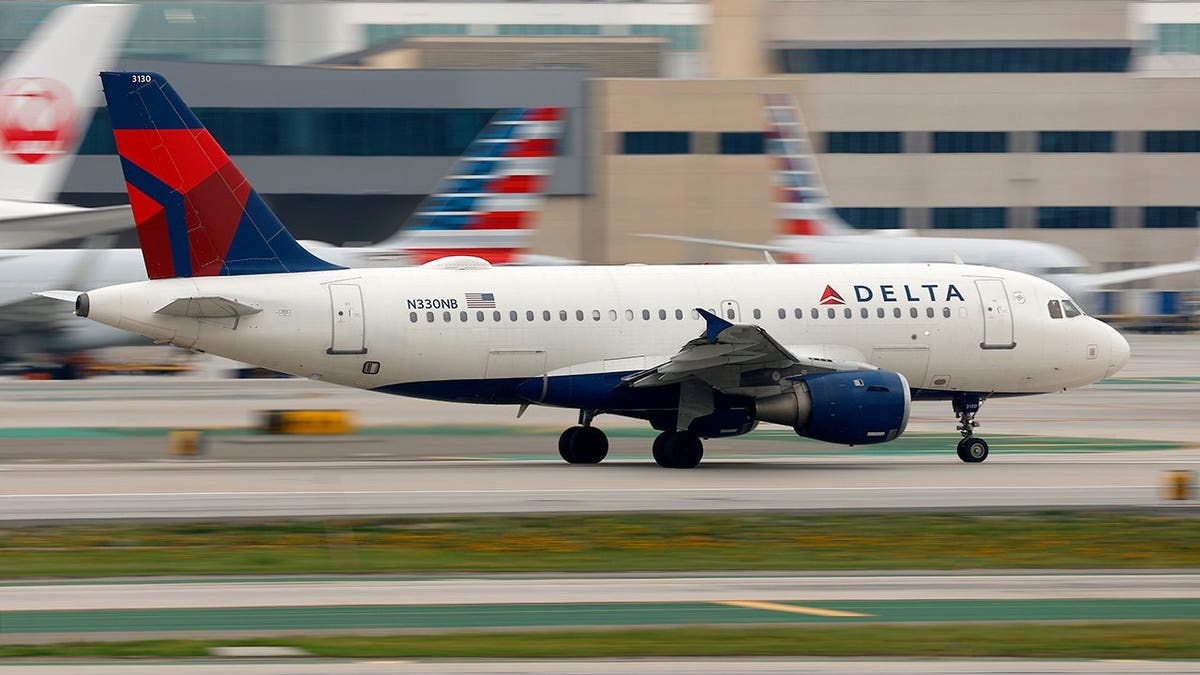
Delta Air Lines corporate communications emphasized the professionalism of their crew and the routine nature of the safety maneuver. In a statement provided to the media, a Delta spokesperson remarked:
"As nothing is more important than safety, the flight crew of Delta flight 2351 followed established procedures in coordination with Air Traffic Control and performed a go around on approach into Boston-Logan and landed safely."
Delta confirmed that the aircraft landed without further delay, and passengers deplaned normally at the terminal. The airline is cooperating fully with the FAA’s inquiry.
Broader Implications for National Aviation Safety
The incident at Boston Logan is not an isolated event; rather, it occurs against a backdrop of heightened scrutiny surrounding close calls, runway incursions, and operational safety in the United States aviation system.
       NATIONAL RUNWAY SAFETY FRAMEWORK
  +-----------------------------------------+
  |              FAA Oversight              |
  |  - Audits, Safety Summits, Policy       |
  +--------------------+--------------------+
                       |
        +--------------+--------------+
        |                             |
  +-----+-----+                 +-----+-----+
  | Technology|                 |   Human   |
  | - ASDE-X  |                 |  Factors  |
  | - TCAS II |                 | - Fatigue |
  | - ASSC    |                 | - Training|
  +-----------+                 +-----------+
The Rising Concern of Runway Incursions
Over the past several years, the aviation industry has witnessed a series of high-profile near-misses at major airports, including New York’s John F. Kennedy International Airport, Austin-Bergstrom International Airport, and San Francisco International Airport. These events prompted the FAA to convene an extraordinary "Safety Summit" in 2023, bringing together airlines, labor unions, airport operators, and air traffic controllers to address systemic vulnerabilities.
While the overall safety record of U.S. commercial aviation remains exceptionally strong—with no fatal crashes involving major U.S. carriers since 2009—the frequency of close calls has raised concerns that the system is operating near its capacity limits, eroding traditional safety margins.
Air Traffic Control Staffing and Fatigue
A primary focus of recent safety discussions has been the critical shortage of certified air traffic controllers. Many major ATC facilities, including those in high-density areas like New York and Boston, are understaffed, forcing controllers to work mandatory overtime and six-day workweeks.
Industry advocates and safety boards, such as the National Transportation Safety Board (NTSB), have warned that chronic controller fatigue and high-stress environments increase the probability of operational errors, such as clearing two aircraft onto intersecting runways simultaneously.
Technological Solutions and Future Safeguards
To mitigate the risk of runway incursions, the FAA has been deploying advanced ground-tracking technologies:
- Airport Surface Detection Equipment, Model X (ASDE-X): A multi-sensor surveillance system that integrates data from surface radar, multilateration sensors, and ADS-B to track vehicles and aircraft on the ground.
- Airfield Surveillance System Capability (ASSC): A similar system deployed at mid-sized airports to provide controllers with real-time ground tracking.
- Runway Status Lights (RWSL): Red warning lights embedded directly in the runway pavement that automatically illuminate when it is unsafe to enter or cross a runway.
The FAA’s investigation into Delta Flight 2351 will assess whether these ground-based safety systems performed as intended at Boston Logan, and whether additional technological safeguards or procedural changes are required to prevent similar conflicts in the future.