
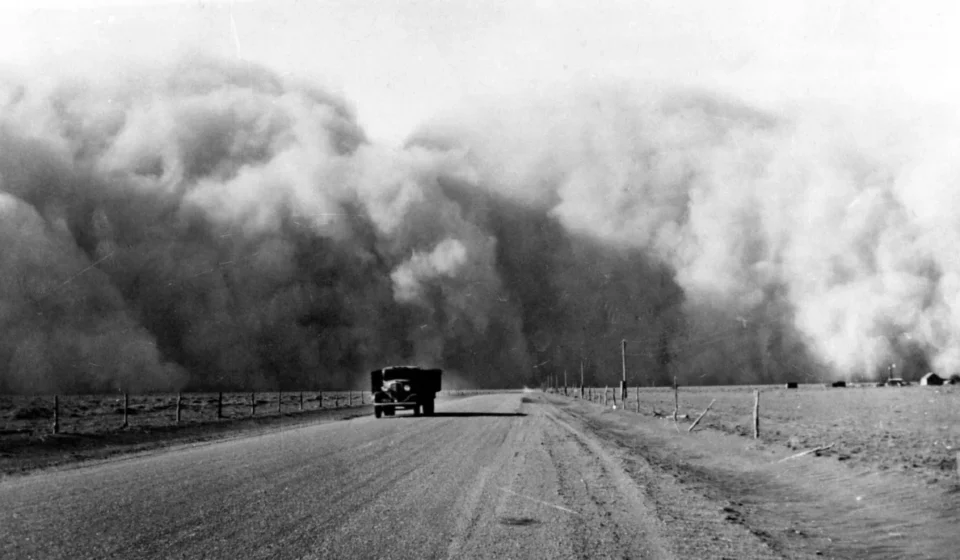
The Gathering Storm: U.S. Agriculture Faces a Multi-Front Crisis and the Specter of a ‘Mini-Dust Bowl’

The American agricultural heartland, long considered the backbone of the nation’s economic stability, is currently navigating a convergence of catastrophic pressures that experts warn could rival the darkest days of the 1930s. A "perfect storm" of geopolitical conflict, aggressive monetary tightening, trade volatility, and a looming "Super El Niño" has pushed the U.S. farm economy to a breaking point.
While the industry has weathered individual crises before, the simultaneous arrival of these threats has created a systemic vulnerability. With farm bankruptcies surging and the climate turning hostile, the prospect of a "mini-Dust Bowl" is no longer a fringe theory but a warning issued by some of the nation’s leading meteorological and economic analysts.
Main Facts: A Convergence of Crises
The current state of the U.S. farm economy is defined by a "cost-price squeeze" of historic proportions. Farmers are being hit by record-high input costs—fuel, fertilizer, and financing—while simultaneously facing plummeting prices for their primary exports.
The most pressing facts of the current crisis include:
- The Climate Threat: AccuWeather has issued a formal warning regarding a "Super El Niño" event. This phenomenon is expected to bring a multi-year drought to the Plains states, potentially lasting through 2027.
- The Bankruptcy Surge: Chapter 12 family farm bankruptcies rose by 46% in 2025. This trend has accelerated in 2026, with April alone seeing a 130% year-over-year increase in filings.
- Export Collapse: U.S. soybean exports to China, once a cornerstone of agricultural trade, have collapsed from a peak of $18 billion in 2022 to a projected $3 billion in 2025/2026.
- Financial Strain: Interest rates on agricultural loans have more than doubled in four years. For loans exceeding $100,000, rates are hovering near 7%, significantly increasing the debt service burden on already strained operations.
- Energy and Inputs: Geopolitical tensions, specifically the recent conflict with Iran, have sent diesel and fertilizer prices to levels that threaten the viability of the 2026 and 2027 planting seasons.
Chronology: The Path to the Current Crisis (2022–2027)
To understand the gravity of the current situation, one must trace the sequence of events that dismantled the post-pandemic recovery.
2022–2024: The Inflationary Spark and Monetary Tightening
Following the global pandemic, a spike in inflation forced the Federal Reserve to embark on an aggressive rate-hiking campaign. While intended to cool the broader economy, these hikes hit the capital-intensive farming sector particularly hard. Farmers, who rely on revolving lines of credit to purchase seeds and equipment, saw their interest expenses skyrocket.
2025: The Trade War and the Export Cliff
The situation worsened in 2025 when the Trump administration escalated a trade war, imposing significant tariffs on imported metals. This move backfired on the agricultural sector in two ways: it increased the cost of domestic machinery (tractors, combines, and harvesters) and triggered a devastating retaliatory boycott from China. By the end of 2025, soybean exports—the crown jewel of U.S. ag-trade—had plummeted by over 80% from their 2022 highs.
Early 2026: Conflict in the Middle East
Just as the U.S. and China reached a tentative ceasefire, a military conflict between the U.S. and Iran disrupted global energy markets. Though active hostilities have subsided, the shockwaves remain. Diesel prices spiked, and the production of nitrogen-based fertilizers—which is highly energy-dependent—became prohibitively expensive.
Late 2026 and Beyond: The Arrival of Super El Niño
As of mid-2026, the focus has shifted from man-made crises to a natural one. Forecasters identified a "Super El Niño" formation. Unlike standard cycles, this event is predicted to be unusually intense and long-lasting, setting the stage for a prolonged drought in the American West and Plains that could persist into 2027 and 2028.
Supporting Data: The Economics of Collapse
The statistical reality of the farm crisis paints a grim picture of a sector under siege.
The Bankruptcy Pandemic
According to data from the Kansas City Fed and Farm Aid, the financial safety net for many family farms has shredded.
- 2025 Totals: 315 Chapter 12 filings, a 46% increase from the previous year.
- Q1 2026 Acceleration: In the first four months of 2026, 158 filings were recorded.
- The April Spike: April 2026 saw 62 filings. To put this in perspective, this represents a 130% increase compared to April 2025.
The Debt Trap
The Kansas City Fed’s agricultural finance updates highlight the rising cost of capital. Four years ago, a typical farm loan might carry an interest rate of 3% to 3.5%. Today, those rates are near 7%. For a medium-sized operation with $1 million in debt, this represents an additional $35,000 to $40,000 in annual interest payments alone—often the difference between a profit and a loss.
The Soybean Deficit
Soybean growers are facing their fourth consecutive year of negative margins in 2026. The price of soybeans has dropped by approximately one-third since 2022. This is compounded by the fact that South American competitors (Brazil and Argentina) often see increased yields during El Niño years, allowing them to flood the global market and further depress prices while U.S. yields suffer from drought.
Official Responses: Safety Nets and Warnings
The government and scientific communities have responded with a mixture of financial aid and dire warnings.
The One Big Beautiful Bill Act
In response to the 2025 trade disruptions, the Trump administration passed the "One Big Beautiful Bill Act." This legislation allocated $66 billion to the agricultural sector, with $59 billion specifically earmarked for "farm safety-net enhancements." While this infusion of cash has prevented a total systemic collapse, critics argue it is a "band-aid on a bullet wound," as it does not address the underlying issues of high input costs and lost market share.
AccuWeather’s Scientific Alarm
Joel Myers, the founder and Executive Chairman of AccuWeather, has been vocal about the meteorological risks. In a recent statement, Myers highlighted the potential for a "mini-Dust Bowl."
"If the long-term drought is as bad as it could be, and you are starting off already with severe drought, this raises the real possibility of a ‘mini-Dust Bowl,’" Myers warned. He clarified that while modern farming techniques (such as no-till farming and improved irrigation) would likely prevent a total repeat of the 1930s disaster, the economic impact of crop failure and water shortages would still be devastating.
The Federal Reserve’s Dilemma
The Federal Reserve remains in a difficult position. While the agricultural sector is desperate for rate cuts, the energy price spikes caused by the Iran conflict have kept core inflation sticky. There is a lingering fear that the Fed may be forced to raise rates again in late 2026 to prevent a wage-price spiral, which would be a death knell for many struggling farms.
Implications: A Transformed Agricultural Landscape
The consequences of this multi-year crisis extend far beyond the farm gate. The implications for the U.S. and the world are profound.
1. Food Inflation and National Security
If the "mini-Dust Bowl" yields significant crop failures in the Plains, the immediate result will be a spike in food prices. Corn and soy are not just exports; they are the primary feed for the U.S. livestock industry. Higher grain prices inevitably lead to higher prices for beef, pork, and poultry, further straining the budgets of American consumers already weary from years of inflation.
2. The Consolidation of the Heartland
As family farms succumb to Chapter 12 bankruptcy, the land is rarely left fallow. Instead, it is typically purchased by large corporate agricultural conglomerates or investment firms. This leads to a further consolidation of the American food supply, the hollowing out of rural communities, and a loss of the "family farm" heritage that has defined the Midwest for over a century.
3. Shift in Global Trade Power
The collapse of the U.S.-China soybean trade has permanently altered global supply chains. China has aggressively diversified its sourcing, moving toward Brazil and African nations. Once trade patterns shift, they are difficult to reverse. The U.S. may find itself a "supplier of last resort" rather than the primary partner for the world’s largest commodity importers.
4. Environmental and Infrastructure Strain
A multi-year drought will place an unsustainable burden on the Ogallala Aquifer and other critical water sources. As water supplies are "harmed," as Joel Myers noted, the conflict between agricultural water use and municipal needs will intensify. This could lead to a "water war" between states and regions, necessitating massive federal intervention and infrastructure spending.
Conclusion
The U.S. farm economy is at a historic crossroads. The combination of the "Super El Niño" and the lingering effects of trade and military conflicts has created a period of unprecedented risk. While the 1930s Dust Bowl was exacerbated by poor land management, the "mini-Dust Bowl" of the 2020s is being driven by a complex web of global economics and shifting climate patterns.
The coming months will be a test of American resilience. Whether the "One Big Beautiful Bill Act" and modern technology are enough to stave off a total agricultural depression remains to be seen. For now, the farmers of the Great Plains are looking to the skies and their balance sheets with equal amounts of trepidation.