
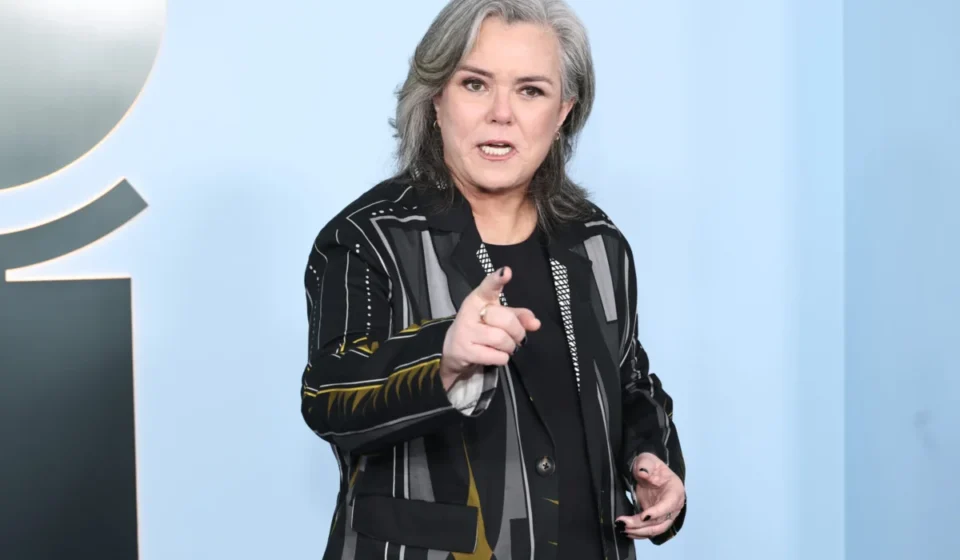

In the landscape of American daytime television, few programs have cultivated a history as volatile, influential, and headline-grabbing as ABC’s The View. Created by the legendary Barbara Walters, the show was designed to foster "civil discourse" among women of varying political and social stripes. Yet, it is often the moments where that discourse turned into explosive conflict that remain etched in the public consciousness.
Most recently, former co-host Rosie O’Donnell, a figure synonymous with the show’s most dramatic eras, reignited speculation about her future with the program. During a candid appearance on Bravo’s Watch What Happens Live with Andy Cohen, O’Donnell addressed whether she would ever consider returning to the roundtable as a guest host. Her response was one of cautious openness, tempered by her signature wit and a lingering sense of historical irony.
The Call to Return: O’Donnell’s Stance on Guest Hosting
The topic arose during an audience Q&A segment on Watch What Happens Live. When asked by a fan if she had tuned in to watch the return of former co-host Elisabeth Hasselbeck—who recently made a guest appearance on The View—and whether she would follow suit, O’Donnell did not mince words.
"I did catch her on The View," O’Donnell confirmed, acknowledging the network’s current penchant for inviting back polarizing figures from the show’s past. Regarding her own potential return, she stated, "I would be up to guest host, but they haven’t asked me. So we’ll see what happens."
However, O’Donnell quickly pivoted to the political subtext of the show’s current iteration. Reflecting on the network’s strategy of inviting conservative voices, she remarked, "In the time of Trump, I think she [Hasselbeck] is the perfect person they want on TV spouting their rhetoric."
Her commentary highlights the fundamental tension that has defined The View since its inception: the delicate balance between entertainment, genuine debate, and the increasingly polarized nature of American political discourse. By positioning herself as willing to return while simultaneously critiquing the show’s current direction, O’Donnell proved that she remains as sharp and combative as she was during her tenure as a permanent fixture on the show.
A Grudge Still Held: The Shadow of 2007
The conversation inevitably veered toward the most infamous moment in the show’s history: the 2007 on-camera collision between O’Donnell and Hasselbeck. The argument, which centered on the Iraq War and George W. Bush’s administration, became a viral sensation long before the term "viral" was a standard media metric.
Andy Cohen, never one to shy away from the past, pressed O’Donnell on a technical detail that still clearly stings: the director’s decision to switch to a split-screen format during the heat of the argument. "Are you still annoyed that the director went to the split screen?" Cohen asked.
O’Donnell’s response was immediate and dry: "Yeah, I’m still annoyed. Believe me, a mommy knows how to hold a grudge."
This admission serves as a microcosm of the friction that defined O’Donnell’s time on the show. It was never just about policy; it was about the mechanics of television, the optics of conflict, and the feeling of being trapped in a narrative frame—quite literally, in the case of the split screen—that she felt misrepresented the gravity of the discourse.
A Chronology of Conflict and Contribution
To understand why O’Donnell’s potential return carries such weight, one must examine her complex, two-part history with the talk show.
The First Stint (2006–2007)
O’Donnell joined The View in September 2006, replacing Meredith Vieira. Her arrival was transformative for the show’s ratings. She brought a celebrity profile and a willingness to engage in aggressive, unscripted political debate that turned The View into a must-watch program for news junkies and pop-culture enthusiasts alike.
However, her tenure was short-lived. The aforementioned clashes with Elisabeth Hasselbeck became a recurring theme. The "split-screen" moment in May 2007, which saw O’Donnell leave the table shortly after, marked the beginning of the end. By the end of that month, it was announced that O’Donnell would be departing the show permanently.
The Return (2014–2015)
Seven years later, in a move that surprised many, O’Donnell returned to the roundtable. The television landscape had changed, and The View was struggling to regain the cultural dominance it once enjoyed. O’Donnell’s return was seen as a bold attempt to recapture the lightning-in-a-bottle energy of her first season.
Yet, the 2014–2015 season was marked by internal restructuring and creative friction. In February 2015, only five months into her 11-month contract, O’Donnell once again exited the show. The departure was framed as a personal decision necessitated by significant life changes, including her divorce from Michelle Rounds.
The Health Mandate: Why She Left
The reasons for O’Donnell’s second exit were framed not by professional failure, but by a pragmatic approach to personal health. As a heart attack survivor, O’Donnell was acutely aware of the physiological toll that high-stress environments can take on the body.
In a candid video posted to her personal YouTube channel following her exit, she explained the logic: "Stress is very bad for heart attack survivors. You should minimize your stress, maximize your exercise and control your diet. That’s what you need to do for a healthy heart. So that’s what I’m doing. I’m minimizing my stress by leaving The View."
This statement remains one of the most honest reflections on the dangers of high-pressure broadcast media. It serves as a reminder that the persona of a daytime television host is subject to the same human limitations as the audience watching at home. Her choice to prioritize her health over a high-profile contract remains a defining moment of her career, demonstrating a boundary that many in the industry find difficult to set.
Implications for Future Programming
The question of whether ABC would ever invite O’Donnell back is complicated by the show’s current operational model. The View now relies on a rotating panel of guest hosts and permanent co-hosts who must navigate a landscape of social media scrutiny and political sensitivity.
The "Trump Effect" on Daytime TV
As O’Donnell noted, the current era of political discourse—what she termed the "time of Trump"—has fundamentally changed how The View manages its panel. The show’s production team often looks for voices that represent a specific ideological cross-section of the country. While O’Donnell is a ratings draw, her presence on the show creates a specific, highly charged energy that might not align with the current production goals of the network.
The Brand of The View
The View is a brand that thrives on friction. It is a show built on the premise that viewers want to see intelligent, strong-willed women disagree. However, there is a fine line between "good television" and "toxic workplace dynamics." The network must weigh the potential for high ratings against the potential for burnout and the logistical challenges of managing strong, opinionated personalities.
Conclusion: The Door Remains Ajar
Rosie O’Donnell’s recent comments suggest that while she is not actively campaigning for a return, the door is not closed. Her acknowledgment that "they haven’t asked me" is the key. In the world of television, the balance of power often rests with the producers. If the ratings for The View were to dip, or if the show required a "legacy" moment to celebrate an anniversary or a major political event, O’Donnell remains one of the few figures capable of instantly moving the needle.
For now, the audience is left with the memory of a chaotic, passionate, and often difficult era of daytime television. Whether or not O’Donnell ever takes a seat at the table again, her impact on the show’s legacy is undeniable. She helped turn a mid-morning talk show into a political force, a feat that continues to shape the program’s identity to this day. As the media landscape continues to shift, one thing remains certain: if Rosie O’Donnell were to return, the screen would likely be as crowded—and as divided—as it was in 2007. And, for better or worse, the viewers would be watching.