

By Investigative Desk, FRANCE 24
For generations, Canada has prided itself on being the tranquil neighbor to the United States—a nation defined by its social safety nets, vast wilderness, and a culture that historically viewed gun ownership through a lens of sport and hunting rather than self-defense or constitutional right. However, the last decade has shattered this perception. A staggering 90 percent increase in gun-related homicides has forced a national reckoning, shifting the conversation from localized crime management to an existential crisis of border security and international policy.
At the heart of this surge lies a persistent, lethal pipeline: a flood of illegal firearms crossing the longest undefended border in the world, originating from the highly permissive gun markets of the United States.
Main Facts: A Decade of Escalation
The statistical reality of Canadian gun violence has undergone a grim transformation. Between 2014 and 2024, the rate of firearm-related homicides climbed at a trajectory that has alarmed criminologists and law enforcement agencies alike. While Canada’s overall crime rates remain lower than those of many other G7 nations, the lethality of the violence has shifted dramatically.
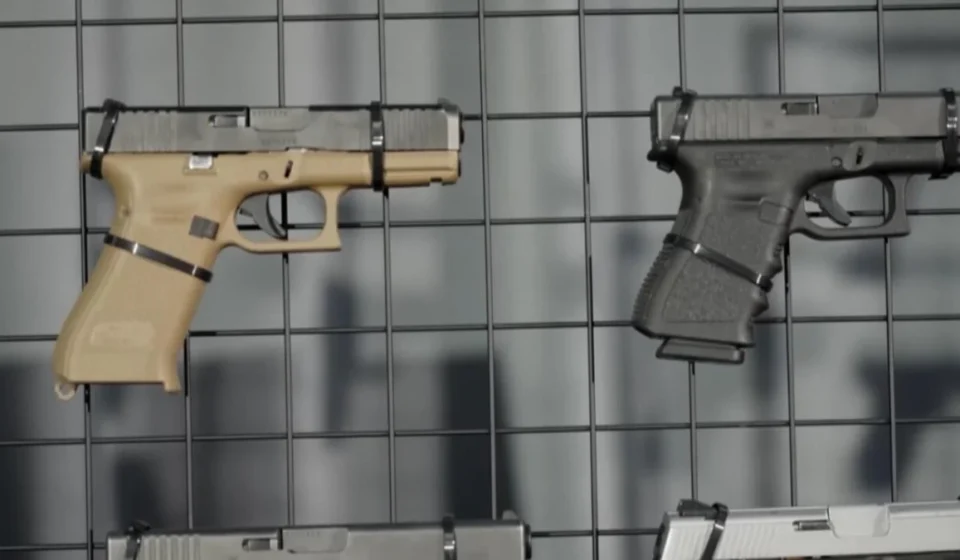
The primary driver, according to provincial and federal police reports, is the illicit trafficking of handguns. Unlike domestic thefts—where legally owned rifles or shotguns are occasionally stolen—the majority of firearms seized at crime scenes in major Canadian urban centers are modern, semi-automatic handguns that were never intended for the Canadian market. These weapons, manufactured and sold legally in the US, are smuggled into Canada via complex criminal networks, often concealed in commercial transport or transported through remote, unmanned border crossings.
A Chronology of the Crisis
The erosion of Canada’s firearm safety environment did not happen overnight. It is a story of compounding factors.
- 2014–2016: Law enforcement agencies began noticing a shift in the "ballistic signature" of street crime. The prevalence of high-capacity handguns began to outpace traditional long guns in seizures.
- 2017–2019: The "iron pipeline" becomes a buzzword in Canadian legislative circles. Intelligence reports confirm that criminal gangs in cities like Toronto, Montreal, and Vancouver had streamlined their supply chains, relying almost exclusively on US-sourced weapons to consolidate control over local drug markets.
- 2020–2022: The COVID-19 pandemic, while restricting human movement, created new vulnerabilities. With border resources diverted to public health mandates, traffickers found gaps in surveillance. Simultaneously, US gun sales reached record highs, creating a surplus of inventory that eventually trickled into the black market.
- 2023–2024: The crisis hit a tipping point. Major Canadian cities recorded record numbers of "targeted" shootings. The public outcry became deafening, leading to the federal government’s implementation of tougher, albeit controversial, handgun freeze legislation.
- 2025–2026: The current era. Law enforcement is now locked in a reactive cycle, where the volume of illegal weapons entering the country exceeds the capacity of border patrol to intercept them.
Supporting Data: The Anatomy of a Flow
The numbers provided by the Toronto Police Service (TPS) offer a damning indictment of the status quo. In their most recent annual report, the TPS confirmed that 88 percent of all firearms seized in connection with criminal activity originated in the United States.
This data point is not an outlier. Across the border-adjacent provinces of Ontario, Quebec, and British Columbia, the trend holds steady. The process is largely driven by "straw purchasers"—individuals who legally purchase weapons in US states with lax background check requirements and then transfer them to organized crime syndicates for a significant markup.
Consider the following breakdown:
- Source States: A disproportionate number of traced firearms originate from states with "constitutional carry" or minimal oversight, specifically those along the Great Lakes region and the Eastern Seaboard.
- Traceability: While the US Bureau of Alcohol, Tobacco, Firearms and Explosives (ATF) works with the Royal Canadian Mounted Police (RCMP), the "trace success rate"—the ability to identify the original purchaser—is often hampered by the speed at which these weapons are moved through multiple hands, obscured by falsified paperwork or erased serial numbers.
- Economic Impact: The cost to the Canadian taxpayer for policing, judicial processing, and social services related to gun violence has surged by an estimated 40 percent in the last five years, diverting funds from other critical infrastructure.
Official Responses: A Diplomatic Tightrope
The Canadian federal government, led by Prime Minister Justin Trudeau’s administration, has faced intense pressure to act. The legislative response has been two-pronged: domestic restrictions and international diplomacy.

Domestic Policy
Canada has implemented a "national freeze" on the sale, purchase, and transfer of handguns. While critics argue that this only penalizes law-abiding collectors, the government maintains that reducing the total number of handguns in circulation is the only way to prevent domestic theft and ensure that any handgun found in a public space is, by default, an illegal one.
The Diplomatic Challenge
The elephant in the room remains the relationship with Washington. Canadian officials have frequently raised the issue of gun trafficking in bilateral meetings with US counterparts. However, the political sensitivity of the Second Amendment in the US makes meaningful legislative cooperation—such as universal background checks or stricter export controls—highly unlikely.
"We are essentially living in the shadow of a neighbor whose gun policy is a public health hazard for us," noted a senior official from Public Safety Canada on condition of anonymity. "We cannot tell the US how to govern its own citizens, but we can demand that they recognize the cross-border consequences of their legislative choices."
Implications: The Social and Structural Cost
The proliferation of illegal US guns has profound implications for Canadian society.
The Erosion of Trust
When citizens no longer feel safe in public spaces—subways, parks, and city centers—the social contract begins to fray. The perception of Canada as a "safe harbor" is being replaced by a sense of vulnerability, which in turn fuels populist rhetoric and demands for harsher, sometimes reactionary, policing methods.
Law Enforcement Burnout
Canadian police officers are increasingly outgunned. The realization that every traffic stop could result in an encounter with a suspect armed with a military-grade handgun has forced a change in tactical training and equipment. This, unfortunately, has also led to a more militarized police presence, further straining community-police relations in marginalized neighborhoods where the violence is most concentrated.
The Future of Border Security
The Canada-US border is the longest in the world, stretching over 8,800 kilometers. Patrolling every inch is an impossibility. The implication is that Canada must move toward a more "technologically dense" border. This includes the increased use of drones, AI-driven surveillance, and enhanced intelligence sharing with US agencies. Yet, as long as the supply-side pressure—the sheer volume of guns produced and sold in the US—remains constant, technological solutions will only act as a temporary dam against an rising tide.
Conclusion: A Border Without End
The crisis of gun violence in Canada is not merely a domestic law enforcement challenge; it is a profound failure of North American policy integration. As long as illegal weapons remain as easy to procure as consumer goods in the United States, Canadian streets will remain the unintended destination for the overflow of a foreign market.
The road ahead requires more than just stricter laws or more border guards. It necessitates a frank, uncomfortable conversation between Ottawa and Washington about the true cost of unregulated firearm circulation. Until then, Canada’s fight against the "iron pipeline" will remain a high-stakes game of whack-a-mole—one that, at present, the criminal syndicates are winning.
As we look toward the remainder of the decade, the question is not just how to stop the guns, but how to preserve the unique, peaceful character of a nation that finds itself unwillingly caught in the crossfire of its neighbor’s domestic political divide.