
Amnesty International Demands Justice for Anti-Racism Activists Amidst Tunisia’s Widening Crackdown on Civil Society

Introduction: A Human Rights Crisis in Tunis
Amnesty International has issued an urgent call to the Tunisian authorities, demanding the immediate and unconditional release of prominent anti-racism activist Saadia Mosbah and five of her colleagues. The organization has formally urged the Tunis appellate court to overturn the convictions of these human rights defenders, who were sentenced earlier this year in a trial that international observers have labeled a "shocking and profound" miscarriage of justice.
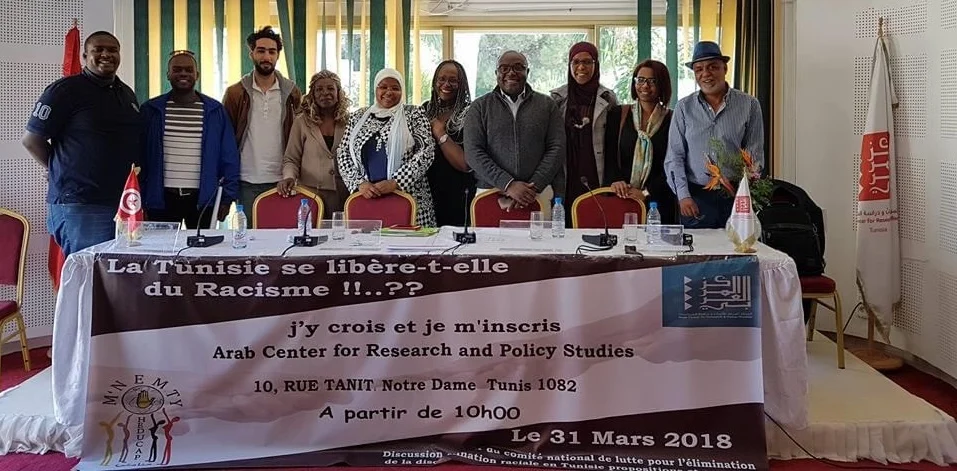
Mosbah, the president of the influential anti-racism organization Mnemty ("My Dream"), has become a focal point in what activists describe as a systemic campaign by the Tunisian state to dismantle civil society. The case, which involves allegations of money laundering and “illicit enrichment,” has drawn intense scrutiny from global human rights bodies, who view the proceedings not as a legitimate anti-corruption effort, but as a politically motivated assault on those who challenge the status quo regarding racial equality and human rights in Tunisia.
Chronology: From Landmark Legislation to Criminalization
The trajectory of Saadia Mosbah’s struggle reflects the broader volatility of Tunisia’s political environment.
- 2018: A watershed moment for human rights in the region, as Mnemty and other activists successfully lobbied for the adoption of Organic Law 2018-50. This legislation criminalized racial discrimination, marking Tunisia as the first country in the Middle East and North Africa (MENA) to take such a bold, progressive step toward equality.
- May 2024: The tide turned sharply against Mosbah and her team. Tunisian authorities arrested the activists, citing financial irregularities. The charges—specifically "money laundering" and "illicit enrichment"—were met with immediate skepticism by international legal observers who noted the timing coincided with a broader crackdown on NGOs and independent media.
- March 2026: The Tunis Court of First Instance delivered a devastating verdict. Mosbah was sentenced to eight years in prison and hit with a fine of TND 122,000 (approximately US $36,000). Her colleagues received prison terms ranging from one to three years, alongside heavy financial penalties.
- June 2026: Following months of arbitrary detention and reports of deteriorating conditions, Amnesty International formally called for the quashing of these convictions, highlighting the lack of evidence presented by the prosecution.
- July 2026: Appellate hearings, which were initially scheduled for the previous month, are now set for mid-July, serving as a critical juncture for the survival of independent anti-racism work in the country.
Supporting Data: The Case Against the Prosecution
The core of the legal controversy rests on the evidentiary void within the government’s case. According to human rights organizations that monitored the trial, the presiding judge failed to provide any concrete documentation or financial audit proving that Mnemty staff had engaged in illegal activities.
The "Illicit Enrichment" Ambiguity
Amnesty International has been particularly vocal regarding the statutory provisions used to convict the activists. The term "illicit enrichment" is defined in Tunisian law with dangerously vague language, specifically regarding an "important increase in the fortune of the person." Legal experts argue that such ambiguity allows for the weaponization of the judicial system. By failing to provide a threshold or clear definition, the law becomes a "blank check" for the state to target individuals whose financial growth—often the result of international grants or legitimate NGO funding—can be arbitrarily labeled as illicit.
Reports of Abuse in Detention
The humanitarian concerns extend beyond the courtroom. Reports have emerged suggesting that Saadia Mosbah has been subjected to treatment amounting to torture, including physical assault and racist verbal abuse while in custody. These allegations are particularly damning given that her life’s work has been the protection of the Black Tunisian community—a population that constitutes 10% to 15% of the nation and remains a primary target of both societal and state-sponsored xenophobia.
Official Responses and International Condemnation
The international community has watched the erosion of Tunisian democratic norms with increasing alarm. Safia Rayan, a North Africa researcher for Amnesty International, summarized the sentiment of the global human rights community, stating:
"The initial verdict… is shocking and profoundly unjust. It is another appalling indictment of the Tunisian authorities’ ongoing weaponization of the criminal justice system to silence civil society. It is shocking how far the authorities are willing to go in their assault on the right to freedom of association and human rights work, disproportionately targeting Black and anti-racism defenders."
The United Nations has also weighed in, with the UN High Commissioner for Human Rights recently urging the Tunisian government to halt the persecution of civil society and the judiciary. Despite these warnings, President Kais Saied has continued to maintain a firm grip on the justice system, often employing rhetoric that critics claim fuels a hostile environment for minority groups and human rights defenders alike.
Implications: The Future of Civil Society in Tunisia
The conviction of the Mnemty staff is not an isolated incident; it is a barometer for the state of democracy in Tunisia. The implications of this trial are far-reaching:
1. The Chilling Effect on NGOs
When the president of a prominent organization like Mnemty can be imprisoned for eight years without verifiable evidence of financial crime, the message to other civil society organizations is clear: operate in silence or face the consequences. This creates a "chilling effect," where organizations may fear accepting international funding or advocating for controversial social issues, effectively paralyzing the nation’s non-profit sector.
2. The Backlash Against Anti-Racism
Tunisia, once hailed as a beacon of democratic progress in the MENA region following the 2011 revolution, has seen a resurgence in racialized populist rhetoric. By targeting those who fought for the 2018 anti-discrimination law, the state is effectively signaling a retreat from the protections promised to its Black citizens. This environment has exacerbated xenophobia, leading to increased violence against Black migrants and refugees, who are often scapegoated for the country’s economic struggles.
3. International Treaty Obligations
Tunisia is a party to the International Convention on the Elimination of All Forms of Racial Discrimination. By arresting and imprisoning those who advocate for these exact principles, the Tunisian state is in clear violation of its international legal commitments. The continued detention of Mosbah serves to further isolate Tunisia from its international partners and compromises its standing in global human rights forums.
Conclusion: A Moment of Truth for the Judiciary
The upcoming appellate hearing in July represents more than just a legal battle for Saadia Mosbah and her team; it is a test for the Tunisian judicial system. For the court to uphold the lower court’s decision would be to cement the perception that the judiciary has been fully subordinated to the executive branch. Conversely, an acquittal would provide a glimmer of hope that the rule of law can still function independently of political pressure.
As Amnesty International continues its campaign, the eyes of the world remain fixed on Tunis. The demand is simple: the charges against the Mnemty activists must be dropped, the flawed statutes regarding "illicit enrichment" must be reviewed, and the fundamental rights of those working to build a more equitable Tunisia must be protected. The fate of these activists is inextricably linked to the future of Tunisian democracy itself—a future that is currently hanging in a precarious balance.