A City Reborn: Inside the Knicks’ Historic Canyon of Heroes Championship Parade

For over five decades, the "Canyon of Heroes" in Lower Manhattan had been a place of memory, a corridor of concrete and glass that remembered the legends of 1973 but had grown hungry for new icons. On June 18, 2026, the hunger ended. In a celebration that blurred the lines between high-octane sports triumph and a landmark cultural festival, the New York Knicks were honored with a ticker-tape parade that will be etched into the city’s collective consciousness for generations to come.
The Main Event: A City United in Orange and Blue
More than a million spectators flooded the streets of Lower Manhattan, transforming the financial district into a sea of orange and blue. The atmosphere was one of profound relief and unbridled joy. For the first time in 53 years, the Larry O’Brien Trophy returned to Madison Square Garden, ending the longest championship drought for the franchise in history.
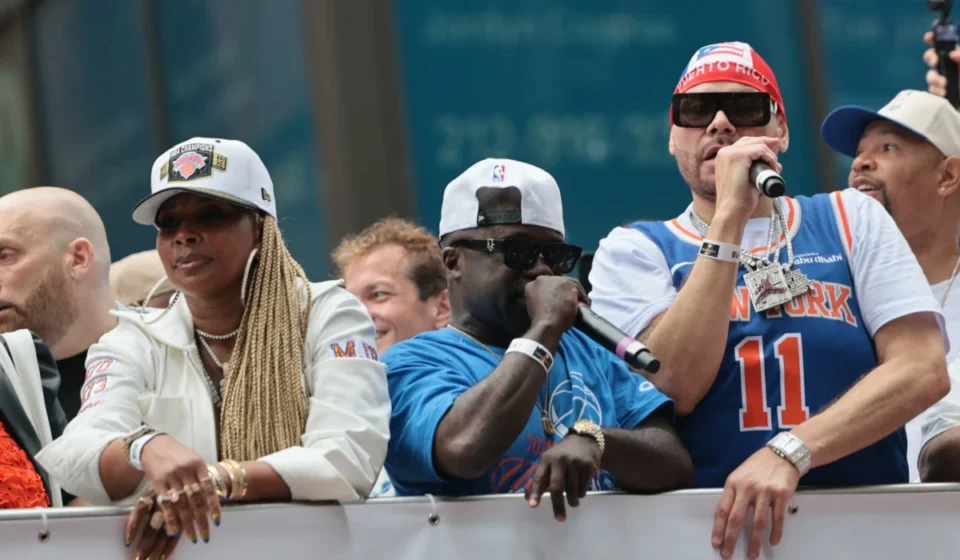
The sheer logistics of the day were staggering. From fans climbing atop sanitation trucks to others vaulting over NYPD steel barricades in a desperate, jubilant quest to catch a glimpse of the team, the energy was palpable. The parade featured the team’s championship roster, including stars Jalen Brunson, OG Anunoby, Karl-Anthony Towns, and Josh Hart. Alongside them, the floats carried a cross-section of New York’s cultural elite, from Mayor Zohran Mamdani to titans of cinema and music like Spike Lee, Chris Rock, Timothée Chalamet, and the ever-present ambassador of New York hip-hop, Fat Joe.
Chronology of a Cultural Explosion
The parade was not merely a procession; it was a curated, moving concert that served as a testament to the symbiotic relationship between New York City basketball and the evolution of hip-hop.
The Rolling Mixtape
Fat Joe, serving as the de facto maestro of the musical festivities, orchestrated a "concert on wheels" that lasted for approximately 90 minutes of pure, high-energy performance. Joined by a powerhouse ensemble—including Mary J. Blige, Havoc of Mobb Deep, Remy Ma, The Lox, Ja Rule, Teyana Taylor, Yung Miami, and the legendary Wu-Tang Clan—the float navigated the parade route as a traveling masterclass in New York sound.
The setlist was a rapid-fire rotation of classics. Yung Miami opened with "Spend Dat," setting a brisk pace before the stage became a round-robin of iconic contributions. Mary J. Blige’s "Real Love" sent the crowd into a frenzy, while the Lox delivered "Mighty D-Block (2-Guns Up)." The Wu-Tang Clan brought the gravitas of "Triumph" and "C.R.E.A.M.," while Fat Joe and Remy Ma commanded the street with "Lean Back" and "All The Way Up."
DJ Ted Smooth, who managed the technical flow of the performances, described the experience as a "dope ass live mixtape." Smooth’s strategy was to keep the energy relentless: "We had three hours’ worth of songs ready. I treated it like a mixtape—play their records, two verses, next record. I was going round-robin." The result was an relentless barrage of anthems that defined an era of New York music.
The Grand Finale
As the parade reached its conclusion, the focus shifted to the official ceremony hosted by Mayor Mamdani. The crowning musical moment arrived when Alicia Keys took the stage. After exulting, "This is our time! We are the champions! We on fire today!" she treated the crowd to a snippet of Billy Joel’s "New York State of Mind" before transitioning into her own anthem, "Empire State of Mind." The performance served as a thematic bookend to a day that solidified the intersection of sports success and civic pride.
Supporting Data: The Soundtrack of a Championship
The 2026 title run has been characterized by an unprecedented output of creative content. While the Knicks dominated on the hardwood, the city’s artists were busy building a sonic legacy to match.
- Anthems Everywhere: The season saw the release of several Knicks-centric records. French Montana, Max B, and Remy Ma’s "Big Bronx Remix" of "Ever Since U Left Me" served as a steady backdrop to the NBA Finals.
- Midnight Releases: Busta Rhymes underscored the gravity of the moment by dropping "The Championship Anthem" at midnight on the eve of the parade.
- The Legacy of "Bing Bong": Nems, who helped popularize the "Bing Bong" phenomenon in 2021, noted that this championship did more than provide music; it provided a social lubricant. "New York is a place where different cultures and neighborhoods sometimes stay in their own lanes," Nems observed. "But not when the Knicks are on. The energy is out of this world."
Official Responses and Reflections
The emotional weight of the victory was felt most keenly by those who had waited a lifetime to see it. Fat Joe, who has been a fixture at Madison Square Garden since his youth, expressed a sentiment shared by millions.
"It meant everything to me to watch the Knicks win the championship," Joe told Variety. "I’ve been going to games since I was a kid sitting in the nosebleeds, so it still feels like a dream to have been part of this ride. There was a time that I wasn’t sure if I’d ever see the Knicks win a title during my lifetime. As long as I’m alive, I will always stand with the Knicks."
Method Man of the Wu-Tang Clan highlighted the historical tether between basketball and the hip-hop industry. "Basketball has been synonymous with hip-hop for a long time," he noted, citing early pioneers like Kurtis Blow. "Even if you aren’t a New York Knicks fan, you became one during their run because it was so magnificent to see."
Implications: A New Era for the City
The impact of this championship extends far beyond the confines of Madison Square Garden or the record books. It serves as a reset for the city’s morale and a powerful statement on the nature of urban identity.
Cultural Unification
Maiya the Don, another prominent voice in the New York scene, emphasized that this victory was a form of cultural validation. "Everyone is so unified; it’s really beautiful to see. New York culture is hip-hop culture by default, and every true New Yorker is a Knickerbocker."
The "Victory Lap"
The day was not just for the past; it was for the future. Fat Joe utilized the platform to film scenes for his upcoming music video, "Victory Lap (Him)," featuring Jadakiss and Yung Miami. This highlights how the Knicks’ victory has become a brand-building vehicle, turning the city’s championship pride into a sustainable cultural export.
Economic and Social Legacy
While the official numbers on the economic impact of the parade are still being calculated, the social impact is already clear. The 2026 Knicks have achieved something that the city has not seen in over half a century: they have successfully bridged the gap between the older generation of fans who remember the grit of the 70s and a younger, diverse generation that has only ever known the Knicks through the lens of hip-hop and social media.
As the confetti settles and the city returns to its rhythm, the echoes of the "Canyon of Heroes" remain. For the Knicks, the challenge now turns to defending their crown, but for the people of New York, the victory serves as a permanent reminder of what is possible when a city stands united. The 2026 championship is more than a trophy in a case; it is the heartbeat of a city that, for one glorious day, found its rhythm once again.