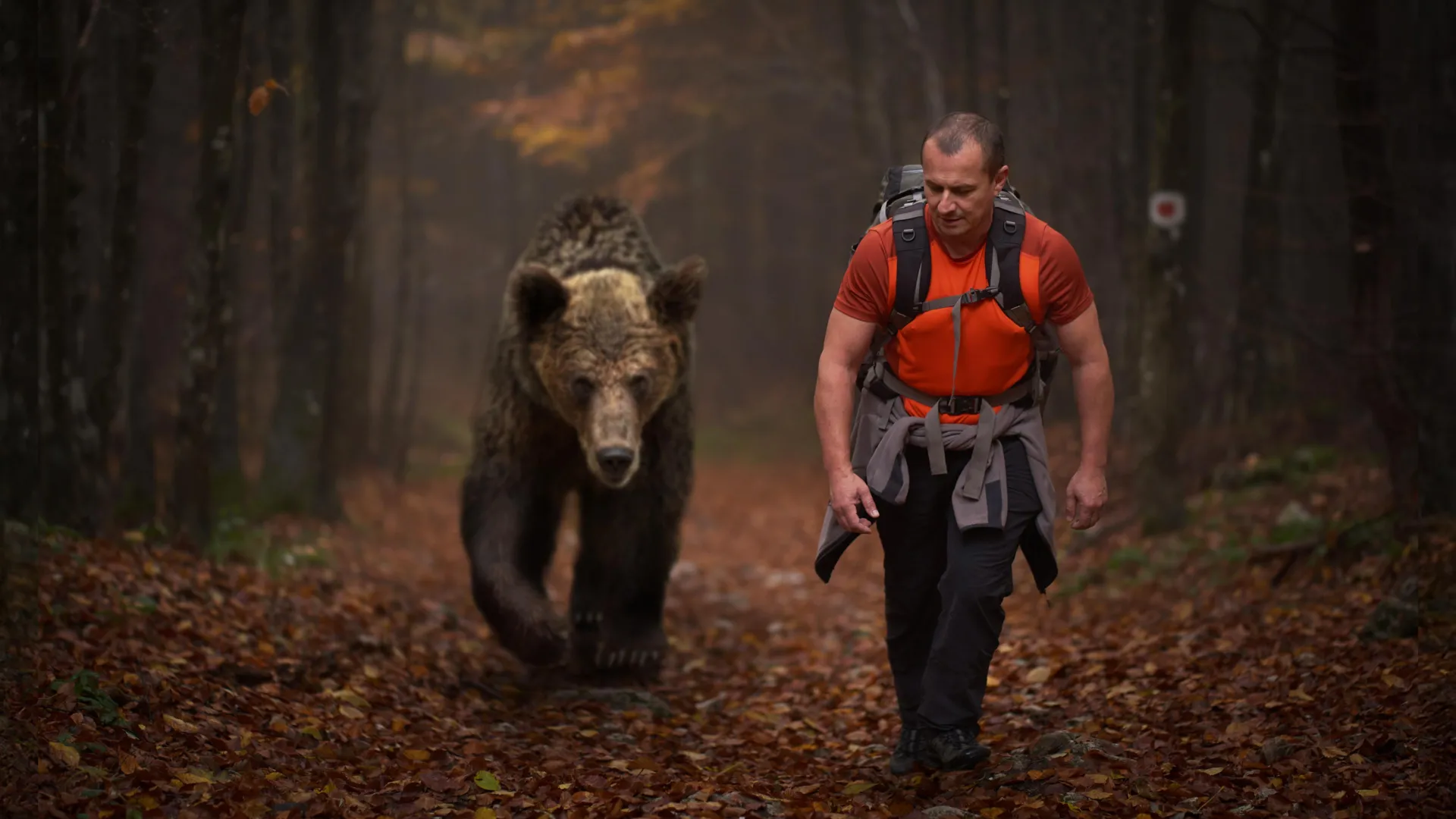
For centuries, humanity has occupied a unique ecological niche. We are the "super-predators"—a species whose reach extends into every ocean, forest, and mountain range, exerting a level of lethal pressure that dwarfs that of any natural carnivore. While conventional ecological theory has long suggested that this omnipresence would inevitably force wildlife into a state of perpetual, high-alert fear, a landmark study from the Indian Institute of Science (IISc) is challenging this monolithic view.
New research led by the Centre for Ecological Sciences (CES) at IISc suggests that animals are far more discerning than we previously imagined. They do not view all humans as apex threats; rather, they engage in a sophisticated, ongoing risk-assessment process that distinguishes between the lethal hunter and the benign observer.
The Evolution of the Human-Wildlife Interface: A Chronological Overview
To understand the current behavioral landscape, one must look at the trajectory of human-wildlife interactions over the last three decades. The IISc study, a meta-analysis published in Ecology Letters, represents a synthesis of 30 years of observational data from across the globe.
The Era of Undifferentiated Fear (1990s–2000s)
In the late 20th century, the prevailing consensus among biologists was that human presence—regardless of intent—was a negative stimulus. Whether it was a hiker, a photographer, or a poacher, the assumption was that animals would perceive a bipedal silhouette and immediately prioritize flight or heightened vigilance. Studies from this period largely treated "human disturbance" as a singular variable, ignoring the nuance of human intent.
The Shift Toward Behavioral Plasticity (2010s)
As tracking technology and long-term behavioral monitoring improved, researchers began to notice anomalies. Certain species were not fleeing from human-dominated landscapes; they were thriving. Urban foxes, suburban deer, and roadside scavengers began to appear, suggesting that the "human-as-universal-threat" model was insufficient.
The Modern Synthesis (The IISc Findings)
The current research by Shawn D’Souza and his colleagues at CES marks a paradigm shift. By aggregating data across multiple ecosystems, the team moved beyond anecdotal evidence. They categorized human interactions into "lethal" (hunters, fishers, trappers) and "non-lethal" (tourists, researchers, commuters). The data suggests that animals are not just reacting to presence; they are reacting to consequence.
Deciphering the Risk: Lethal vs. Non-Lethal Presence
The core of the study rests on the "risk allocation hypothesis." This ecological framework suggests that animals possess the evolutionary foresight to calibrate their fear responses based on the frequency and severity of a threat.
The Signature of Lethal Threat
When humans engage in hunting or fishing, the signals are unmistakable. The research indicates that in areas where these activities are common, wildlife exhibits a "fear signature." This includes:
- Increased Vigilance: Animals dedicate a significantly higher proportion of their time to scanning their surroundings, effectively reducing the time available for foraging.
- Foraging Trade-offs: The caloric intake of prey species in hunting-prone areas is consistently lower, as they favor "safe" cover over nutrient-rich open pastures.
- Avoidance Behavior: Species exhibit temporal shifts, becoming strictly nocturnal to minimize overlap with human diurnal activity.
The Paradox of Non-Lethal Interaction
Conversely, responses to tourists, researchers, and general public activity are markedly weaker and far more unpredictable. Because these interactions do not result in direct mortality, animals appear to undergo a process of habituation or, at the very least, a downgrade in their threat assessment. The study notes that in these scenarios, the energy cost of being "on guard" often outweighs the risk of the human presence itself, leading to more relaxed, naturalistic behavior.
Infrastructure as a Sanctuary: The Unexpected Refuge
Perhaps the most counterintuitive finding of the IISc study is the role of human infrastructure—roads, settlements, and industrial sites—as potential "perceived refuges."
For many prey species, the proximity to a human settlement is not a deterrent, but a calculated strategy. "In certain cases, these areas can function as perceived refuges," explains lead author Shawn D’Souza. "Predators often avoid humans, which can make areas near people feel safer for some prey species."
The "Edge Effect" and Vegetation Dynamics
Co-author Professor Maria Thaker highlights that structural changes in the landscape also play a role. Roadsides are frequently cleared of dense brush, creating open patches of vegetation. For small grazers, these corridors offer easy, high-quality foraging opportunities. However, this creates a tragic ecological trap: while the area may be "safe" from a mountain lion or a tiger that fears the road, the animals become vulnerable to vehicular strikes. This illustrates a complex, multi-layered risk landscape where the animal is constantly weighing the threat of predation against the threat of traffic.
The Physiological and Ecological Costs of Vigilance
Why does this behavioral change matter? The answer lies in the "ecology of fear." Every second an animal spends scanning the horizon for a potential human threat is a second it is not feeding, mating, or nursing its young.
The Caloric Deficit
Foraging is a zero-sum game. When an animal opts for vigilance over feeding, it incurs an energetic cost. Over the long term, this leads to lower body mass, reduced reproductive success, and diminished survival rates for offspring.
Landscape-Scale Consequences
The ripple effects of these behavioral choices move up the food chain. If grazers avoid high-quality patches due to fear of humans, the vegetation in those areas may become overgrown, altering the composition of the plant community. If predators change their hunting routes to avoid human-dominated areas, the entire spatial distribution of the ecosystem shifts. These cascading effects demonstrate that human activity is not just a nuisance; it is a fundamental driver of ecological architecture.
Official Responses and Management Implications
The research has sparked a conversation regarding how wildlife management and conservation policy should be formulated in the 21st century.
Rethinking Human-Wildlife Conflict
Professor Kartik Shanker, a co-author of the study, suggests that understanding these behavioral nuances could revolutionize how we manage human-wildlife conflict. "The behavioral effects of lethal human activity could have implications for managing conflict," Shanker notes.
In specific, high-stakes scenarios, the strategic use of limited culling or targeted "threat signaling" could potentially discourage wildlife from entering dangerous human-dominated zones more effectively than passive deterrents like fencing or noise emitters. By making a human-dominated area "feel" lethal, managers might prevent wildlife from entering zones where they are likely to be struck by cars or involved in lethal conflict.
The Need for Predictive Frameworks
However, the researchers are quick to caution against a "one-size-fits-all" policy. They emphasize that wildlife responses are highly context-dependent. A species’ past experience with humans, its evolutionary history, and the surrounding predator community all dictate its response.
"We need more predictive frameworks that link behavioral responses to ecological and evolutionary context," says D’Souza. He advocates for long-term experimental research to determine the threshold between simple habituation—where an animal gets used to a human presence—and evolutionary change, where a species permanently alters its survival strategy to accommodate the human super-predator.
Conclusion: Living Alongside the Super-Predator
The findings from the Centre for Ecological Sciences serve as a humbling reminder of the intelligence of the natural world. Wildlife is not merely reactive; it is analytical, constantly processing the data of its environment to optimize for survival.
As the human footprint continues to expand, our role as the dominant predator will continue to reshape the planet’s biology. Whether this influence leads to the decline of species or the successful integration of wildlife into human-adjacent landscapes depends on our ability to understand the complex language of fear and risk that animals speak.
The future of conservation lies not in separating humans and nature, but in acknowledging the profound, invisible influence our presence exerts on every creature that shares the landscape with us. By recognizing that animals are observing us just as closely as we observe them, we can move toward a more sophisticated, evidence-based approach to co-existence.