
The Track-Only Masterpiece: Gordon Murray Automotive Unveils the T.50s Niki Lauda at Goodwood

The automotive world is bracing for a spectacle of engineering prowess as Gordon Murray Automotive (GMA) prepares to unleash the T.50s Niki Lauda—a track-focused iteration of the world’s most advanced supercar—at the prestigious Goodwood Festival of Speed. This isn’t merely a display of wealth or vanity; it is the public unveiling of a machine that bridges the gap between pure road-going performance and the raw, visceral intensity of Formula 1.
As the first customer-delivered chassis takes to the legendary Goodwood hill climb, enthusiasts and industry experts alike are witnessing a milestone for the bespoke manufacturer. With a limited run of just 25 units and a price tag of $3 million, the T.50s Niki Lauda stands as a monument to Gordon Murray’s uncompromising design philosophy.
A Legacy in Every Stitch: The Niki Lauda Tribute
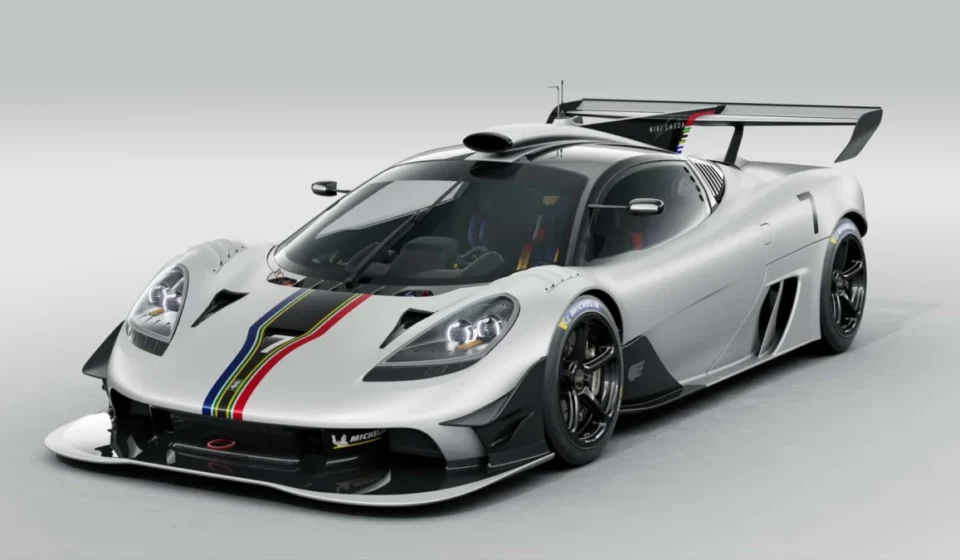
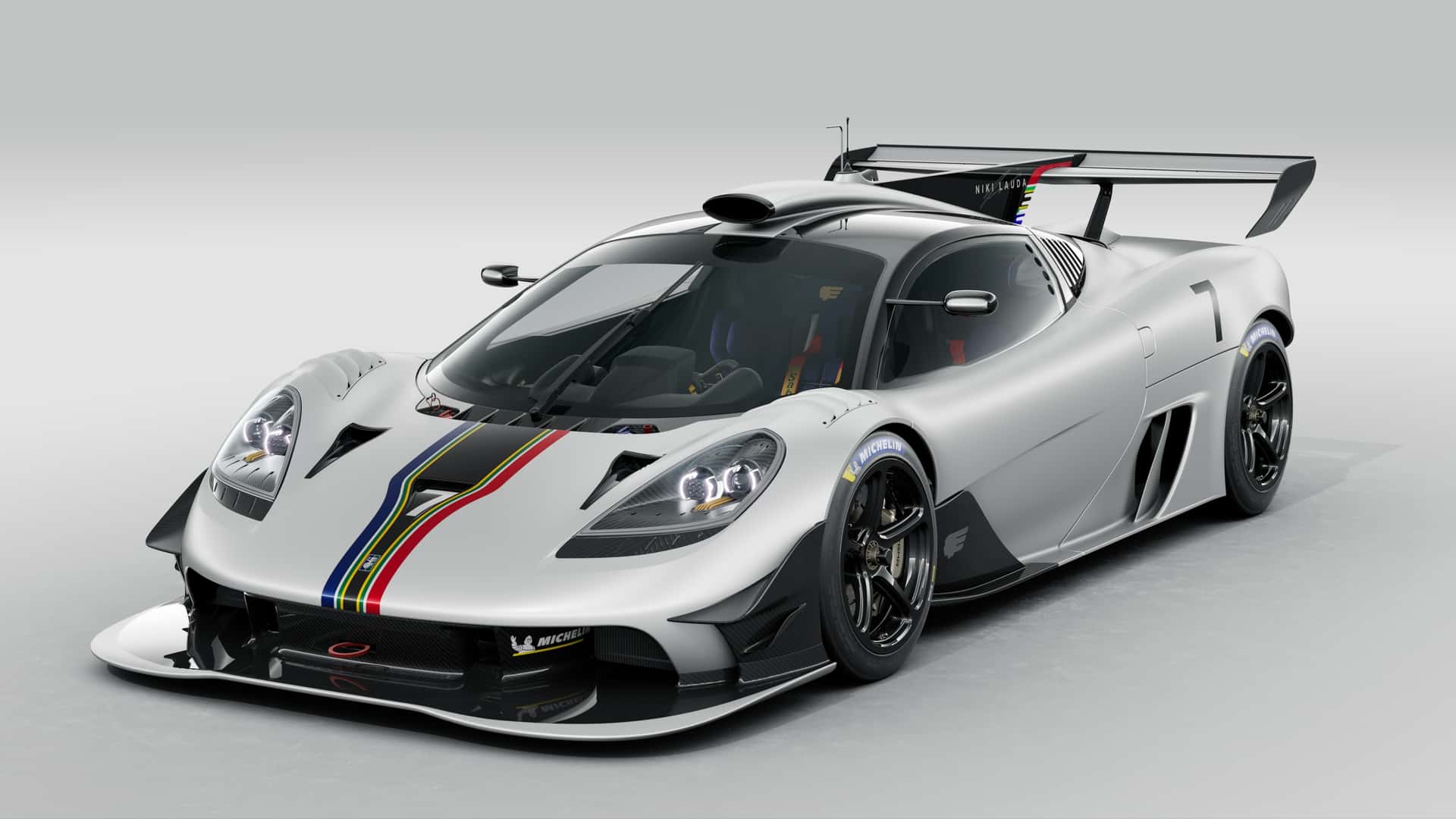
The car presented at Goodwood is more than just an engineering exercise; it is a profound tribute to history. Clad in a clean white livery accented with colors inspired by the South African flag, the vehicle serves as a direct nod to Gordon Murray’s maiden Formula 1 victory at the 1974 South African Grand Prix.
The hood stripe and the precise application of color on the rear fins are subtle yet poignant reminders of a career that redefined motorsport. By naming the car after the legendary Niki Lauda—a driver whose precision and technical feedback were instrumental to the Brabham F1 team—Murray has cemented a link between his past triumphs and his future-facing automotive company.
The Heart of the Beast: Technical Specifications
At the core of the T.50s Niki Lauda lies a 3.9-liter Cosworth-developed V12 engine, a masterpiece of modern combustion. Unlike many modern supercars that rely on forced induction or hybridization to achieve massive power figures, the T.50s remains a purist’s dream. It produces a staggering 761 horsepower at an ear-splitting 11,500 rpm.
This engine is an evolution of the unit found in the standard T.50 road car, yet it has been stripped of the constraints required for road legality. The power is funneled through a specialized six-speed gearbox equipped with paddle shifters, designed specifically to handle the demands of track racing while delivering instantaneous gear changes.
Aerodynamics and Downforce
The T.50s is designed to stick to the tarmac with relentless force. Through a combination of an active rear-mounted fan and sophisticated underbody ducting, the car generates up to 2,645 pounds (1,200 kg) of downforce. This allows the car to maintain exceptional cornering speeds that rival purpose-built GT3 racers. The driving position remains central, a signature trait of the Murray design philosophy, ensuring the pilot is perfectly balanced and connected to the chassis.
A Wider Portfolio: The Goodwood Lineup
While the T.50s Niki Lauda will undoubtedly command the lion’s share of attention, it is not arriving at Goodwood in isolation. Gordon Murray Automotive is utilizing the event to provide a comprehensive look at its current trajectory.
Alongside the T.50s, attendees will witness the European debut of the S1 LM design model. This vehicle serves as a conceptual beacon, highlighting the company’s focus on long-distance endurance racing performance. Furthermore, the Le Mans GTR XP1 prototype will tackle the hill climb. This car provides a direct look at the 24 production models currently in the pipeline—a project that seeks to bring the spirit of 1990s endurance racing into the modern era.
Rounding out the display is the T.33 Spider validation prototype, known internally as VP12. This serves as a vital proof-of-concept for the company’s mid-range offering, demonstrating that the same attention to detail applied to the $3 million T.50s is being poured into the broader GMA product lineup.
The Development Timeline: A Brief Chronology
The rapid ascent of Gordon Murray Automotive has been nothing short of extraordinary. In just six years, the company has transitioned from a small design studio to a boutique manufacturer capable of producing world-class hypercars.
- 2020: Initial unveiling of the T.50 road car, characterized by its central driving position and iconic rear fan.
- 2021: Announcement of the T.50s Niki Lauda, shifting the focus to track-exclusive performance.
- 2022: Extensive testing phases for the T.50 and T.33 platforms, utilizing rigorous track sessions at proving grounds globally.
- 2023: Expansion of production facilities and finalization of the Le Mans GTR project.
- 2024: Commencement of customer deliveries for the T.50s, marking the transition from development to ownership.
Leadership Perspective: "Exploring the Limits"
Gordon Murray, the man behind the brand, has been clear about his objectives. He notes that while the T.50s is currently the headline act, the T.33 and T.33 Spider are already "well through development," moving closer to the final production phase.
"Our goal has never been mass production," Murray remarked during a recent press briefing. "It is about creating a specialized range of vehicles that allow us to explore the limits of our design and engineering philosophy. We aren’t interested in following market trends; we are interested in perfecting the driving experience."
This philosophy is the bedrock of the company. Every decision—from the choice of materials to the removal of unnecessary electronic nannies—is made with the driver’s connection to the road as the primary priority.
Industry Implications and Future Outlook
The release of the T.50s Niki Lauda signals a shift in the hypercar market. In an era where many manufacturers are shifting toward heavy, battery-assisted powertrains, Gordon Murray is doubling down on the internal combustion engine. By pushing the V12 to its absolute thermal and mechanical limit, GMA is providing a final, triumphant hurrah for the naturally aspirated engine.
Furthermore, the high demand for these limited-run vehicles—all 25 examples of the T.50s have already been sold—proves that there is a significant, affluent market segment that values purity over technological gadgetry.
For the broader automotive industry, the success of GMA serves as a case study in how to maintain brand prestige while operating at a low-volume, high-value scale. As the company continues to develop its "specialized range," competitors will be watching closely to see if this model can be sustained as environmental regulations tighten.
Conclusion: The Road Ahead
As the T.50s Niki Lauda ascends the Goodwood hill, it will do so as a symbol of defiance. It is a car that exists outside the conventional rules of the automotive market, built by a team that refuses to compromise on weight, sound, or feeling.
For Gordon Murray Automotive, the next few years will be defined by the successful delivery of these vehicles and the potential expansion into new "specialized" niches. If the T.50s is any indication, the company’s future is not just bright—it is fast, loud, and uncompromisingly brilliant. Enthusiasts should savor these moments, as vehicles of this caliber, born from the mind of a living legend, represent the absolute pinnacle of what is possible when engineering meets passion.