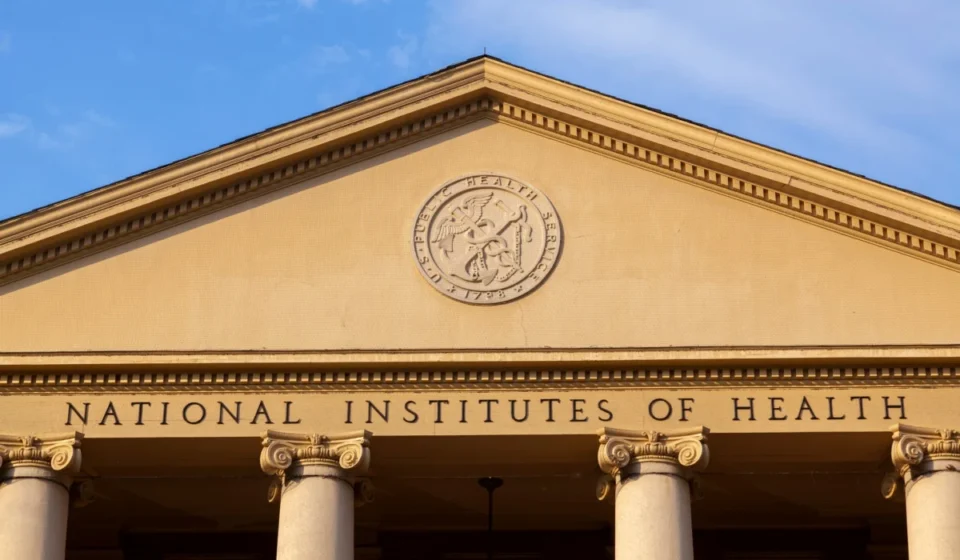

The bedrock of American public health—the National Institutes of Health (NIH)—is facing an unprecedented existential crisis. As the Trump administration moves to formalize political control over the grant-making process, a broader, more insidious pattern has emerged: a systematic campaign to dismantle scientific independence. Two former senior officials, Alexa Romberg and Sylvia Chou, have stepped forward to detail how the agency has been transformed from a bastion of objective research into a landscape of fear, censorship, and political realignment.
The core of this crisis lies in a fundamental shift in authority. Decisions once dictated by peer review and scientific merit are now filtered through a lens of partisan loyalty. By suppressing specific terminology, purging communication staff, and weaponizing executive orders, the administration is effectively redefining what constitutes "truth" in American science.
A Chronology of Control: From Communication Blackouts to Institutional Purges
The assault on scientific autonomy did not occur in a vacuum; it has been a methodical, stage-by-stage takeover of the nation’s health research apparatus.
The Immediate Freeze
The restructuring began on the second day of the current administration. The Department of Health and Human Services (HHS), which oversees the NIH, issued a sweeping directive to halt almost all external communications. This was not merely a temporary administrative pause; it was a blockade that prevented researchers from engaging in peer-review meetings, attending conferences, and publishing findings. For an agency whose mission relies on the fluid exchange of data, the blackout was a paralyzing blow.
The Communications Vacuum
By April 2025, the internal landscape of the NIH had been permanently altered. The majority of the agency’s communications staff—the professionals responsible for translating complex data into public-facing guidance—were laid off. The result was a functional silence. By March 2026, the individual social media accounts for the various centers and institutes under the NIH banner had gone dark. In their place, a centralized, highly controlled apparatus now pushes only information approved by the White House, effectively turning the NIH’s digital footprint into an arm of the administration’s political messaging.
The "Renegotiation" of Grants
The mechanism for control shifted from simple silence to active interference. Using text-analysis tools, the administration now scans grant applications for "suspicious" terminology. Terms like "health equity," "structural racism," and "gender identity" serve as red flags, triggering mandatory "renegotiations." This process forces researchers to strip their work of essential context to qualify for funding, or face the outright termination of their projects.
Supporting Data: The Erosion of Research Integrity
The breadth of this interference is documented not just by whistleblower accounts, but by the tangible decline in research output regarding critical public health issues.
The Impact of Executive Orders
The administration’s ideological framework is codified in a series of executive orders (EOs) that have fundamentally reshaped the research environment:
- EO 14151 & 14173: These orders target "DEI" (Diversity, Equity, and Inclusion) programs, labeling them as inherently discriminatory. By failing to provide a clear definition of what constitutes a "DEI program," the administration has created a state of permanent ambiguity, forcing researchers to preemptively censor themselves to avoid political retribution.
- EO 14168: Known as the "Defending Women" order, this directive mandates the exclusion of gender-inclusive language, effectively erasing the scientific validity of gender identity in health research.
The Toll on Health Communication
Health communication research, a discipline dedicated to understanding how to effectively relay health information to the public, has been a primary target. Following the appointment of Robert F. Kennedy Jr. to head HHS, the focus shifted to dismantling research on vaccine hesitancy and misinformation. According to recent reports, over 40 studies related to vaccine efficacy and public trust were terminated in early 2025 alone.
This creates a dangerous feedback loop. By suppressing research into how to combat medical misinformation, the administration allows falsehoods—such as claims that vaccines cause autism or that specific, unproven therapeutics are "cures"—to fester. As the public loses access to credible, government-backed science, the environment becomes increasingly fertile for the growth of the very misinformation the agency was designed to counter.
Official Responses and the "Academic Freedom" Paradox
The administration’s public rhetoric stands in stark contrast to the reality within the NIH hallways. While leadership has periodically issued statements claiming to "welcome dissent" and "restore academic freedom," the ground-level experience for researchers remains one of extreme risk.
Internal directives demand that any staff talk touching upon "agency priorities" or involving potential media presence be submitted for political review. Officials are required to provide talking points that adhere strictly to administration-approved narratives. Researchers who refuse to align with these mandates find their travel requests denied, their publications stalled, and their career trajectories suddenly halted.
Critics of the administration argue that this "re-alignment" is a calculated effort to force the scientific community into a state of subservience. By equating scientific disagreement with political insurrection, the administration has effectively weaponized the NIH’s own grant-making power against its scientists.
The Implications: A Democracy at Risk
The long-term implications of this policy shift extend far beyond the laboratory. The current situation represents a profound danger to both public health and democratic governance.
The Normalization of Self-Censorship
Perhaps the most damaging legacy of this period will be the culture of fear. When researchers begin to purge their own work to ensure funding, the "scientific record" itself becomes tainted. Once a field begins to censor itself, the process is difficult to reverse. Even if political pressure were to ease, the psychological impact—the fear that a certain word or topic could lead to professional ruin—will likely suppress innovation for years to come.
The Erosion of Public Trust
Science is a pillar of trust in a functioning democracy. When the government dictates what scientists are permitted to say, it transforms science into propaganda. This has immediate, real-world consequences: if the public no longer believes that the NIH is providing objective, data-driven advice, they will turn elsewhere. In the vacuum of credible information, the most sensational, partisan, or outright false claims become the primary sources of health guidance.
A Call to Action: The Bethesda Declaration
In response to these conditions, a group of scientists and former officials have launched the NIH Bethesda Declaration. This initiative is not merely a statement of protest; it is a call for a massive, coordinated effort by the academic community to:
- Protect Institutional Memory: Documenting every instance of censorship to ensure the scientific record is preserved for future investigation.
- Foster Transparency: Creating independent, outside channels for scientists to report political interference without fear of retribution.
- Engage the Public: Actively communicating the nature of the crisis to the general public, emphasizing that the assault on science is an assault on their personal health outcomes.
Conclusion: The Path Forward
The politicization of the NIH is not a debate over policy; it is a fundamental challenge to the role of expertise in a democracy. As the administration continues to push for a formal process to vet scientific grants based on ideological alignment, the scientific community faces a binary choice: comply with the political requirements and watch the integrity of the enterprise wither, or stand in unified defense of evidence-based inquiry.
As Alexa Romberg and Sylvia Chou noted upon their resignation, the danger is not just in the "word deletions and alterations" occurring today, but in the precedent being set for the future. When a government gains the power to determine which questions are permissible to ask, it has effectively gained control over the future of human knowledge. Safeguarding the NIH is, therefore, not just a matter of scientific principle—it is an essential act of protecting the democratic process itself.
The struggle for the soul of the NIH is far from over. It requires a sustained, unflinching commitment from the academic and public communities to demand that truth be returned to the center of the scientific enterprise, shielded from the shifting winds of political expediency.