Congressional Push for Public Lands Investment: Bipartisan Bill Advances to Tackle Billions in Deferred Maintenance

Washington, D.C. – In a rare display of bipartisan consensus, a critical bill aimed at reauthorizing a fund dedicated to addressing the staggering maintenance backlog across America’s national parks and other public lands has successfully cleared a key Senate committee. Heralded as a potential beacon of cooperation in an often-divided Congress, the measure seeks to inject $1.9 billion annually over the next five fiscal years into the National Parks and Public Land Legacy Restoration Fund, a vital mechanism for preserving the nation’s cherished natural and historical sites.
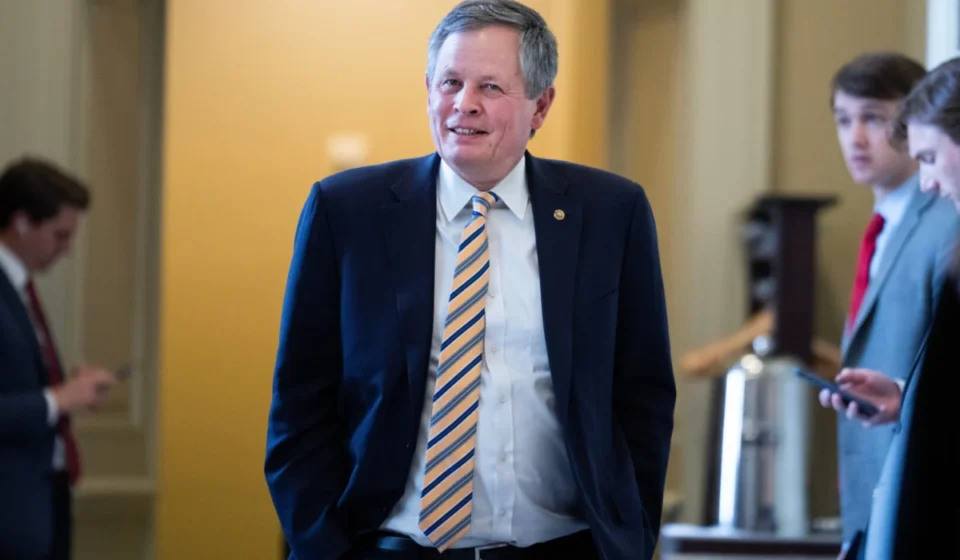
The Senate Energy and Natural Resources Committee on Wednesday unanimously approved the bill by voice vote, reflecting a shared understanding of the urgent need to invest in these national treasures. Senator Steve Daines (R-Mont.), the bill’s sponsor, expressed optimism about its rapid passage, setting an ambitious target of getting the legislation to President Donald Trump’s desk by the Fourth of July, underscoring the bipartisan desire to showcase tangible legislative achievement.
This legislative effort comes at a crucial time for America’s public lands, which face an estimated $43 billion backlog in deferred maintenance – a figure that threatens visitor safety, compromises ecological integrity, and diminishes the overall experience for millions who flock to these sites annually. The reauthorization seeks to continue the work initiated by the landmark Great American Outdoors Act of 2020, a bipartisan success story that established the fund and provided permanent funding for conservation efforts.
The Urgency of Conservation: Addressing a Decades-Old Backlog
A Critical Investment in National Treasures
America’s national parks, forests, wildlife refuges, and other public lands represent an unparalleled legacy, encompassing breathtaking natural wonders, historical landmarks, and vast recreational opportunities. From the majestic peaks of Glacier National Park to the ancient forests managed by the Bureau of Land Management, these spaces are integral to the nation’s identity, offering solace, adventure, and connection to the natural world. They are not merely scenic backdrops but powerful economic engines, supporting vibrant gateway communities through tourism, outdoor recreation, and related industries. Millions of Americans and international visitors annually generate billions in economic activity and sustain hundreds of thousands of jobs, highlighting the significant return on investment that public lands provide.
However, decades of underfunding and deferred upkeep have taken a severe toll. The term "deferred maintenance" refers to the postponement of maintenance activities, such as repairs, renovations, and replacements, due to budget constraints or other factors. This backlog manifests in crumbling roads, aging visitor centers, failing water and wastewater systems, eroded trails, deteriorating campgrounds, and outdated infrastructure across the vast network of federal lands. These issues not only detract from the visitor experience but also pose safety hazards, strain natural resources, and can lead to more costly emergency repairs down the line.
The current estimated deferred maintenance backlog stands at approximately $43 billion across all federal land management agencies. This colossal sum includes critical repairs for sites managed by the National Park Service, the Bureau of Land Management, the U.S. Forest Service, the U.S. Fish & Wildlife Service, and the Bureau of Indian Education. Addressing this backlog is not merely about aesthetics; it’s about ensuring the long-term health, safety, and accessibility of these vital public assets for current and future generations. The proposed reauthorization of the Legacy Restoration Fund offers a structured and significant pathway to systematically tackle this monumental challenge.
Legislative Journey: From Committee Markup to the Senate Floor
A Voice Vote Victory
The unanimous voice vote in the Senate Energy and Natural Resources Committee was more than a procedural step; it was a powerful affirmation of the broad, cross-aisle commitment to conservation and infrastructure investment. In an era often characterized by deep partisan divides, the swift and consensus-driven approval of the bill stood out as a testament to the enduring appeal of America’s public lands. Lawmakers from both sides of the aisle converged on the understanding that maintaining these national treasures transcends political ideologies.
Senator Steve Daines, a vocal advocate for public lands and outdoor recreation from Montana, championed the bill. His enthusiasm was palpable as he articulated the significance of the committee’s action. "This isn’t just a bill; it’s a promise to future generations that we will protect and preserve the places that define us as Americans," Daines stated following the vote. "To see it pass through committee with such strong bipartisan backing is incredibly encouraging. Our goal now is to carry this momentum to the full Senate and get it to the President’s desk before the Fourth of July, delivering a tangible win for the American people."
Building Consensus: The Amended Bill
A crucial element in achieving this bipartisan consensus was the adoption of a comprehensive amendment during the committee markup. This amendment, carefully crafted through extensive negotiations, was designed to integrate priorities and concerns voiced by various stakeholders, including fellow senators, representatives in the House, and even the Trump administration. This collaborative approach was instrumental in broadening the bill’s appeal and smoothing its path through the committee.
Notably, the amendment brought the funding levels proposed in the Senate bill into direct alignment with a counterpart measure introduced in the House of Representatives. This House bill, introduced on June 10th, was a joint effort by Natural Resources Chairman Bruce Westerman (R-Ark.) and ranking member Jared Huffman (D-Calif.). This harmonization between the chambers signifies a powerful bicameral commitment, reducing potential friction as the legislation progresses and increasing its likelihood of becoming law.
Senator Daines underscored the collaborative spirit behind the amended bill. "This amendment and the bill we’re sending to the full Senate represents a bipartisan and bicameral collaborative output," he affirmed. "It shows that when it comes to safeguarding our public lands, we can set aside our differences and work together for the greater good. This is what true governance looks like." The alignment not only streamlines the legislative process but also sends a clear signal of unity and purpose to the American public and the agencies tasked with managing these lands.
The Legacy Restoration Fund: A Pillar of the Great American Outdoors Act
Reauthorizing a Vital Resource
At the heart of this legislative effort is the National Parks and Public Land Legacy Restoration Fund (LRSF). Established by the Great American Outdoors Act (GAOA) in 2020, the LRSF was designed as a dedicated funding stream to directly confront the daunting challenge of deferred maintenance across federal land management agencies. Its initial authorization, a five-year commitment, is due to conclude at the end of fiscal year 2025, necessitating this reauthorization to ensure the continuity of critical maintenance and repair projects.
The fund specifically targets the backlog at sites operated by the National Park Service, which manages iconic destinations like Yellowstone and the Grand Canyon; the Bureau of Land Management, overseeing vast tracts of wilderness and recreational areas; the U.S. Forest Service, responsible for national forests and grasslands; the U.S. Fish & Wildlife Service, protecting wildlife habitats; and the Bureau of Indian Education, which maintains infrastructure on tribal lands. These agencies collectively manage hundreds of millions of acres, and the LRSF provides crucial capital for their infrastructure needs, ranging from road and bridge repairs to visitor center renovations and trail improvements. The reauthorization seeks to extend this vital investment, ensuring that the progress made since 2020 can continue uninterrupted.
The Enduring Impact of the Great American Outdoors Act
The Great American Outdoors Act (GAOA), signed into law in 2020, was hailed as a monumental achievement for conservation in the United States. Its passage with overwhelming bipartisan support in both chambers of Congress marked a historic moment, demonstrating that protecting natural heritage and enhancing outdoor recreation could unite politicians across the political spectrum. Many conservationists and lawmakers considered it the most significant conservation legislation in generations.
GAOA had two primary pillars. The first was the establishment of the Legacy Restoration Fund, which provides dedicated annual funding for deferred maintenance. The second, equally significant component, was the permanent and full funding of the Land and Water Conservation Fund (LWCF) at $900 million per year. The LWCF, a program that acquires and protects land and water for public recreation and conservation, had historically been underfunded and subject to annual appropriations battles. GAOA secured its future, ensuring a stable source of funding for land acquisition and state-level conservation projects.
Senator Daines, reflecting on the enduring legacy of GAOA, passionately declared it "one of the greatest conservation wins in 50 years." This sentiment is widely shared among conservation groups and outdoor enthusiasts, who recognize the transformative impact of sustained, predictable funding for both maintenance and land acquisition. The current reauthorization effort for the Legacy Restoration Fund is a direct continuation of this commitment, building upon the foundation laid by GAOA to ensure that America’s public lands remain vibrant and accessible for generations to come.
Navigating Political Waters: Points of Contention and Compromise
Despite the prevailing spirit of bipartisanship, the legislative process inevitably involves navigating areas of contention and seeking common ground through compromise. The bill’s journey through committee highlighted several such discussions, showcasing the intricate balance lawmakers must strike to advance meaningful legislation.
Ensuring Accountability and Transparency
One key area of focus for some lawmakers was ensuring transparency and accountability in how the funds would be allocated. Senator Lisa Murkowski (R-Alaska), who also chairs the influential Senate Interior-Environment Appropriations Subcommittee, played a significant role in pushing for provisions that would guarantee the effective and non-political deployment of resources. Working closely with her subcommittee’s ranking member, Senator Jeff Merkley (D-Ore.), Murkowski advocated for a requirement that the administration present a detailed list of deferred maintenance projects that the fund would be used to address.
This provision is critical to preventing political favoritism or arbitrary decision-making in project selection. "We have a responsibility to ensure that these substantial investments are directed towards the most pressing needs, not towards politically convenient projects," Murkowski explained. "This requirement ensures that we are not establishing a venue for the administration – any administration going forward – to kind of pick and choose and inject layers of politics into what should not be political but, again, really caring for our treasures." Her emphasis on transparent project lists aims to depoliticize infrastructure decisions and focus squarely on the critical maintenance needs of public lands.
The Nonresident Fee Controversy
A more contentious issue emerged regarding a provision in the adopted amendment that would codify certain nonresident fees. These fees, instituted last year through an executive order by the Trump administration, apply to foreign visitors to national parks and public lands. The amendment’s inclusion of this measure, which would allocate money raised through these fees to the restoration funds, drew strong objections from some Democrats on the panel.
Senator Alex Padilla (D-Calif.) voiced significant concerns about the implications of codifying these fees. His primary worry centered on the potential for national parks to transform into "de facto immigration checkpoints." Padilla argued that requiring park staff, whose primary roles are conservation, visitor services, and safety, to verify the residency status of visitors could create an unwelcoming environment and place an undue burden on personnel. "If we codify this, I feel that parks could become de facto immigration checkpoints, where hardworking parks staff would be required to check passports or birth certificates, and that’s not their job," Padilla stated emphatically.
Padilla indicated that he had prepared an amendment that would specify these fees only apply to individuals on tourist visas, a narrower scope intended to mitigate his concerns. However, he ultimately chose not to call up this and other amendments during the committee markup, acknowledging that further work and negotiation would be required on the bill as it progresses through the legislative pipeline. This decision highlights the ongoing nature of legislative compromise, where some issues are set aside for later debate to ensure overall forward movement.
Fiscal Responsibility and Future Reforms
Another point of scrutiny came from Senator Mike Lee (R-Utah), who, while supporting the overall goal of the bill, raised concerns about its fiscal implications. Lee pointed out that the bill was "only partially offset," meaning that not all of its proposed spending was counterbalanced by corresponding revenue increases or spending cuts elsewhere in the budget. For fiscal conservatives, ensuring that new spending is fully paid for is a cornerstone of responsible governance.
"We all have a responsibility to ensure that legislation this size is fully paid for before it reaches the President’s desk," Lee asserted. His comments underscore the broader debate in Congress about national debt and fiscal discipline, a conversation that often accompanies large spending bills, even those with widespread support. While not a deal-breaker for the committee’s approval, it signals a potential area of contention as the bill moves to the full Senate, where amendments related to fiscal offsets could be introduced.
Senator Lee also expressed his desire to see changes to how the Land and Water Conservation Fund (LWCF) operates, changes that were not included in this particular bill. While the GAOA permanently funded the LWCF, some lawmakers believe further reforms are needed to optimize its effectiveness and address specific regional priorities. His remarks suggest that while the current bill is a positive step, the larger conversation around public lands funding and management is ongoing and will likely involve future legislative efforts to address these broader concerns.
Broad Support and Economic Impact
A Coalition of Conservation and Recreation Advocates
The widespread support for the bill extends far beyond the halls of Congress, encompassing a broad coalition of conservation groups, outdoor recreation organizations, and industry stakeholders. These groups recognize the profound importance of investing in public lands, not only for their intrinsic value but also for the tangible benefits they provide to communities and the national economy.
Prominent organizations like the National Park Foundation, the official charity of America’s national parks, and the Outdoor Recreation Roundtable (ORR), a coalition of leading outdoor recreation trade associations, have publicly endorsed the legislation. They are joined by other influential groups such as the National Parks Conservation Association, local tourism boards, and various environmental advocacy organizations, all of whom understand that a healthy public lands infrastructure is foundational to their missions.
Jessica Turner, President of the Outdoor Recreation Roundtable, articulated the collective sentiment: "Our public lands and waters depend on sustained investments in access, infrastructure, and visitor experiences. This reauthorization is critical for ensuring that the places where Americans recreate, connect with nature, and build lasting memories are well-maintained and accessible. It’s an investment in our health, our economy, and our quality of life." This broad coalition’s vocal support adds significant weight to the bill’s prospects, demonstrating a unified front behind the principle of public lands stewardship.
Economic Dividends of Public Lands Investment
The economic impact of investing in public lands maintenance is substantial and far-reaching. While often viewed through the lens of conservation, these investments are powerful job creators and economic stimulators. Addressing the deferred maintenance backlog translates directly into construction and renovation projects, requiring skilled labor, materials, and equipment. This creates jobs in sectors ranging from engineering and construction to landscape architecture and specialized trades. Local businesses in gateway communities – hotels, restaurants, outdoor gear retailers, and tour operators – also benefit from improved infrastructure, which enhances visitor experiences and encourages longer stays and higher spending.
For every dollar invested in public lands, there is a significant return on investment through increased tourism, recreational spending, and the associated economic activity. Studies have consistently shown that outdoor recreation is a multi-billion dollar industry that supports millions of jobs across the country. By ensuring that national parks and public lands are safe, accessible, and well-maintained, the bill helps to sustain and grow this vital economic sector, providing stable livelihoods and fostering prosperity in often rural communities. This bill is not just about fixing roads and buildings; it’s about investing in economic resilience and community well-being.
Looking Ahead: The Path to Presidential Assent
Next Steps in the Legislative Process
With its approval from the Senate Energy and Natural Resources Committee, the bill now advances to the full Senate for consideration. Here, it will be subject to further debate, potential amendments, and ultimately, a floor vote. While the bipartisan committee approval is a strong indicator of its broad support, the Senate floor can present new challenges, including procedural hurdles and renewed discussions on contentious provisions like the nonresident fees and fiscal offsets.
Should the Senate pass its version of the bill, it will then need to be reconciled with the House counterpart, co-sponsored by Representatives Westerman and Huffman. While the amendment adopted in the Senate committee brought the funding levels into alignment, there may still be minor differences that require resolution, either through a conference committee or through one chamber adopting the other’s version. The aim remains to produce a single, unified bill that can be sent to the President for his signature. Senator Daines’ ambitious July 4th deadline underscores a desire for swift action, indicating that leaders hope to avoid protracted negotiations.
A Beacon of Bipartisanship?
The progress of this public lands maintenance bill stands as a compelling example of how, even in a politically charged environment, common ground can be found on issues of national importance. The enduring popularity of America’s national parks and public lands provides a unique platform for cooperation, reminding lawmakers of their shared responsibility to steward these irreplaceable assets.
However, challenges remain. The debate surrounding nonresident fees highlights the tension between revenue generation and accessibility. Concerns about fiscal offsets reflect the ongoing struggle to balance spending priorities with budgetary constraints. And the desire for further reforms to programs like the Land and Water Conservation Fund indicates that the conversation about public lands investment is dynamic and continuous.
Ultimately, the successful reauthorization of the Legacy Restoration Fund would be a significant victory – not just for the agencies managing public lands, but for every American who cherishes these spaces. It would ensure that the critical work of preserving infrastructure, enhancing visitor experiences, and protecting ecological integrity can continue, leaving a lasting legacy of conservation and outdoor access for generations to come. The bill’s journey through Congress serves as a vital test of lawmakers’ commitment to prioritizing these national treasures above partisan divides.