By Pardeep Cattry
June 16, 2026
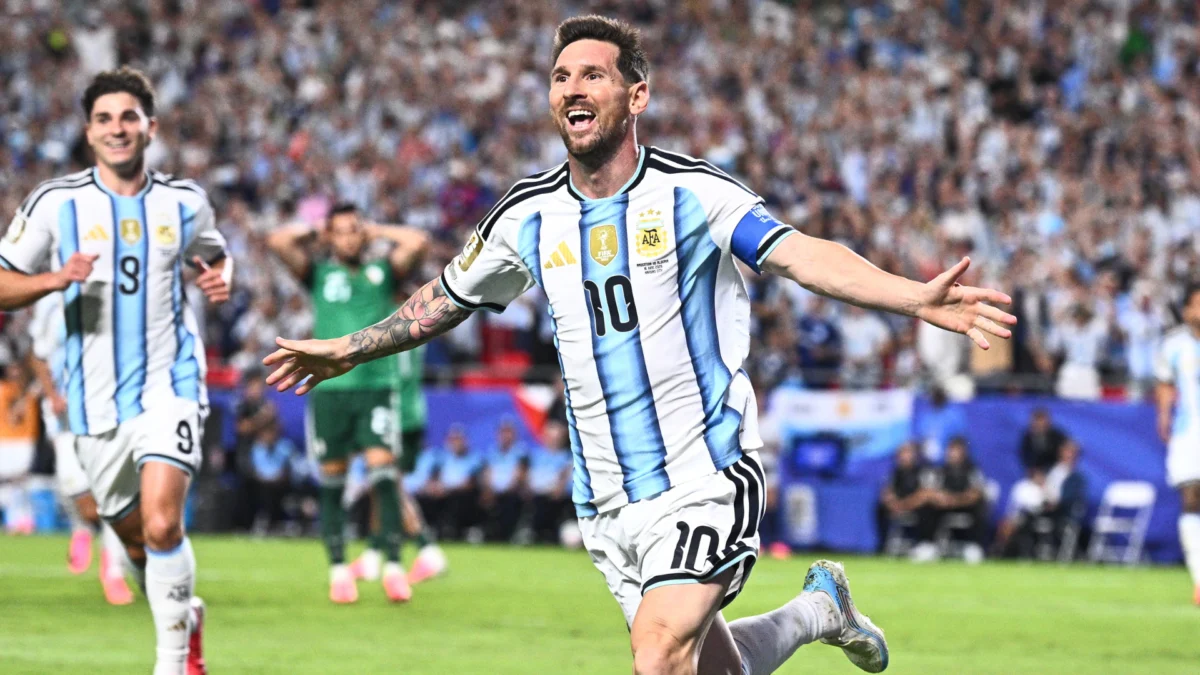
There are few constants in the modern sporting landscape as reliable as the sight of Lionel Messi turning toward a goal, the ball glued to his left boot, and the collective breath of a stadium hitching in anticipation. It is a spectacle that has fueled the growth of Major League Soccer, drawing sell-out crowds who treat his presence not as a luxury, but as a mandatory pilgrimage. On Tuesday, at a bustling Arrowhead Stadium in Kansas City, Missouri, that ritual was performed on the grandest stage of all. As Argentina opened their 2026 World Cup campaign against Algeria, the narrative was supposed to be about the changing of the guard, the inevitable decline of an icon approaching his 39th birthday. Instead, it became a masterclass in defiance.
The Main Facts: A Triple Statement of Intent
In a performance that defied the biological constraints of age, Lionel Messi delivered a masterclass, netting a spectacular hat-trick to lead Argentina past a resilient Algeria side. The victory was more than just an opening-game triumph; it was a statistical earthquake.
With his three goals, Messi vaulted to 16 career World Cup goals, equalling the legendary German striker Miroslav Klose for the most in the history of the tournament. The feat was achieved with a surgical precision that reminded onlookers why, despite the passing of time, he remains the most dangerous player on any pitch he graces. The first goal opened the floodgates, the second showcased his vision, and the third—a clinical strike from the edge of the box following a pinpoint assist from Nico Gonzalez—cemented his place in the history books.
Chronology: A Night of Milestones
The magnitude of the evening is difficult to overstate. Tuesday was not just another group-stage fixture; it was a convergence of historical markers that may never be replicated.

- The 200th Cap: Before the whistle even blew, Messi stood alone in the history of the Albiceleste, earning his 200th international appearance.
- The First Hat-Trick: Remarkably, despite his storied history in the tournament, this was the first time Messi had scored three goals in a single World Cup match.
- The Age Defiance: Twenty years after he first announced himself to the world as Argentina’s youngest-ever World Cup scorer, he reclaimed the spotlight by becoming the nation’s oldest.
- The Race for the Top: While other tournament heavyweights like Kylian Mbappé and Erling Haaland opened their accounts with braces, Messi’s third goal pulled him ahead in the immediate Golden Boot race, signaling that the "old guard" is not ready to relinquish the throne just yet.
Supporting Data: Where Messi Stands Among the Pantheon
The following table illustrates the elite company Messi now keeps at the pinnacle of international football history. His ascent to 16 goals places him in a league occupied only by the very best to have ever played the game.
| Rank | Player | Country | Goals | Tournaments |
|---|---|---|---|---|
| T-1 | Lionel Messi | Argentina | 16 | 2006–26 |
| T-1 | Miroslav Klose | Germany | 16 | 2002–14 |
| 3 | Ronaldo (R9) | Brazil | 15 | 1994–2006 |
| T-4 | Kylian Mbappé | France | 14 | 2018–26 |
| T-4 | Gerd Müller | West Germany | 14 | 1970–74 |
| 6 | Just Fontaine | France | 13 | 1958 |
| 7 | Pelé | Brazil | 12 | 1958–70 |
| T-8 | Sándor Kocsis | Hungary | 11 | 1954 |
| T-8 | Jürgen Klinsmann | Germany | 11 | 1990–98 |
| 13 | Cristiano Ronaldo | Portugal | 8 | 2006–22 |
Note: The data highlights the sustained excellence of the Argentine captain, who has managed to add ten goals to his tally since the 2022 tournament, a testament to his evolution as a playmaker and finisher in the twilight of his career.
Official Responses and Tactical Observations
Post-match, the atmosphere in the mixed zone was one of awe rather than surprise. Argentina manager Lionel Scaloni, speaking to the press, noted the psychological shift in his captain. "Leo is playing with a freedom we haven’t seen before," Scaloni remarked. "He has already conquered the mountain. Now, he is playing for the love of the game and for the joy of his teammates. When he is that relaxed, the ball simply finds him."
Tactically, Algeria attempted to contain Messi with a low block, packing the midfield to deny him space. However, Messi’s movement—the subtle shifts in tempo and his ability to drift into pockets between the defensive and midfield lines—rendered the strategy ineffective. His goal-scoring prowess was complimented by an assist-heavy style of play that kept the Algerian backline in constant disarray, forced to choose between pressuring him and leaving gaps for Argentina’s surging wingers.
Implications: Can the Title be Defended?
The primary question following the 2022 triumph in Qatar was whether Argentina could maintain their hunger. Many pundits suggested that the emotional exhaustion of winning the trophy would leave the squad vulnerable. Tuesday’s result serves as a definitive rebuttal.

The Post-Pressure Era
For the first time in his career, Messi is playing without the "weight of a nation" that previously seemed to paralyze Argentine teams in high-stakes matches. Having already delivered the elusive World Cup, he is now operating in a "post-legacy" phase. This lack of existential pressure has, ironically, made him more lethal. He is no longer fighting for his reputation; he is playing for the pure aesthetic pleasure of the sport.
The Challenge from the New Generation
While Messi remains the focal point, the tournament landscape is shifting. With Kylian Mbappé and Erling Haaland entering their prime, the competition is arguably fiercer than it was in 2022. Mbappé’s speed and Haaland’s clinical efficiency represent the future of the game. Yet, as Tuesday night proved, the "Messi Factor"—that intangible ability to alter a game’s outcome through sheer intellect—remains the greatest equalizer in football.
A Final Note on Longevity
We are currently witnessing an anomaly in sports history. Most athletes, particularly those in high-intensity roles like forward, experience a sharp decline as they approach their late 30s. Messi, however, has pivoted. He has transformed from the explosive, dribbling winger of the 2000s into a quarterback-like orchestrator who saves his energy for the moments that truly matter.
As the tournament progresses, the opposition will undoubtedly adjust, but the blueprint to stop him is yet to be written. The world expected a transition; instead, it received a reminder. Lionel Messi may not be the player he was in 2012, but he is something arguably more dangerous: a player who has mastered the game so completely that he no longer needs to run to defeat you.
As Argentina looks toward their next group stage fixture, the message to the rest of the world is clear: The throne is still occupied. As long as Messi is on the pitch, the possibility of the impossible remains within reach. Whether this is his final curtain call or merely another chapter in an endless book, one thing remains certain: we are fortunate to be watching.