An exclusive exploration of life, legacy, and the true meaning of "Taking Stock," adapted from the insights of Dr. Jordan Grumet.
In the high-stakes world of personal finance, we are conditioned to measure success through the narrow lens of net worth. We track portfolios, obsess over expense ratios, and monitor market volatility with the intensity of a surgeon in an operating room. But for Dr. Jordan Grumet, a hospice physician who spends his days in the quiet, final chapters of his patients’ lives, the true measure of wealth looks nothing like a bank statement.
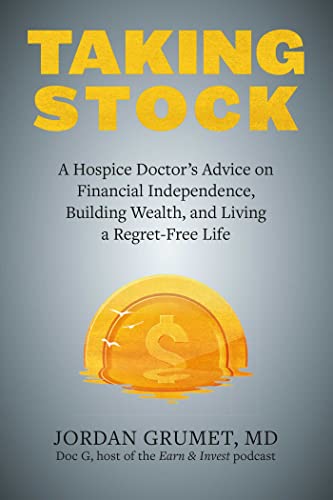
Dr. Grumet’s work, as detailed in his book Taking Stock, argues that our obsession with fiscal growth often blinds us to the compounding interest of our lived experiences. Having sat at the bedside of the dying for years, Grumet has developed a unique philosophy: when the people who witness the end of life speak, we should listen. What they reveal is that while money is a tool for survival, it is rarely the metric of a life well-lived.
The Chronology of Regret and Realization
The journey toward a meaningful life, according to Grumet, is not a sudden epiphany but a deliberate, incremental process. In his clinical experience, he has observed a recurring pattern in the lives of those nearing their end.
Early in life, individuals are often consumed by the "accumulation phase"—the pursuit of career, status, and material security. However, as the timeline shifts toward the final years, the focus undergoes a radical pivot. Patients who feel the most "successful" are rarely those who leave behind the largest estates. Instead, they are the ones who spent their middle years investing in intangible assets: self-forgiveness, education, human connection, and physical resilience.
Grumet recounts the story of a patient named Gerald, whose life serves as a cautionary tale of delayed priorities. Gerald spent decades anchored by the regret of a failed career exit and the subsequent disintegration of his marriage. By the time he reached hospice, his primary struggle was not financial poverty, but emotional bankruptcy. His inability to forgive himself had catalyzed a downward spiral of substance abuse that cost him his health and his relationship with his daughter. Grumet notes that had Gerald invested in self-forgiveness earlier, he might have preserved the connections that ultimately define the quality of a life.
The Pillars of Non-Monetary Investment
To build a life that stands the test of time, Grumet proposes a restructuring of how we define "assets."
1. The Power of Self-Forgiveness
Remorse is a universal human experience, but when left unchecked, it acts as a lead weight on our potential. Grumet identifies self-forgiveness as the most critical personal investment. We are often our own harshest critics, obsessing over past mistakes or lost opportunities. This fixation prevents us from engaging in the present. True wealth requires the discipline to acknowledge our past errors, learn from them, and release the burden of guilt so we can move forward.
2. Education as an Emergency Fund
While formal education provides a foundation, Grumet argues for a broader definition of learning. Knowledge is the ultimate insurance policy. In an unpredictable world, intellectual curiosity—the habit of reading, debating, and exploring foreign ideas—is the "emergency fund" that shields your happiness. When financial resources are depleted, the skills and mental agility you have cultivated remain. Those who approach life with an inquisitive mind tend to remain vital and engaged until their final days.
3. Investing in Human Capital
The most profound metric of success is the "legacy footprint" left behind. When Grumet enters the room of a dying patient, he can instantly discern the quality of their life by the presence of others. A life invested in people yields exponential returns in the form of love, memory, and presence. This is the ultimate compound interest: your essence survives in the smiles and stories of those you nurtured.
4. The Interconnectivity of Health
Financial planning is futile without the physical and mental health to enjoy the rewards. Grumet emphasizes that the body and mind form the framework of our existence. He advocates for "incremental gains"—small, sustainable habits like thirty minutes of walking or regular meditation—rather than the "all or nothing" approach that leads to burnout. If you are not well, you cannot manage your life effectively.
Implications for Modern Living
The modern obsession with "financial independence" often misses the forest for the trees. The goal of building wealth should not be the money itself, but the creation of a foundation that allows for a life of purpose.
Grumet’s research and observations suggest that we must treat our non-monetary investments with the same rigor we apply to our 401(k) accounts. Just as you diversify your portfolio to mitigate risk, you must diversify your life to mitigate the risk of regret. This means saying "yes" to uncomfortable opportunities, prioritizing time with children, and fostering community connections that transcend professional networking.
The Role of Financial Literacy
It would be irresponsible to ignore the "money" side of the equation entirely. Grumet acknowledges that money provides the necessary security to pursue the deeper, non-monetary goals. The strategy is straightforward:
- Automate your savings: Treat your financial future as a non-negotiable expense.
- Invest in low-cost, diversified index funds: Keep the process simple so you can spend your mental energy elsewhere.
- Understand the basics: A few hours of study can eliminate the fear of financial incompetence.
The core message is that financial security is a necessary condition but not a sufficient one for a life well-lived.
Practical Application: The Non-Monetary Inventory
To put these theories into practice, Grumet suggests a structured exercise. By setting aside time to audit your life away from the distraction of screens and social expectations, you can map out your true wealth.
The Exercise:
- Divide a sheet of paper into three columns.
- Column 1: Personal Growth. List the skills, experiences, and self-forgiveness milestones you are currently cultivating.
- Column 2: Relationships. Identify the people you are actively investing in through time, presence, and love.
- Column 3: Legacy. Define what you want to leave behind in the hearts and minds of the next generation.
Once you have this list, compare it to your financial net worth. If your financial wealth is high but your non-monetary inventory is empty, you have a structural imbalance that needs immediate correction.
Conclusion: Preparing for the Final Audit
We are all, in a sense, in a race against time. The irony of human life is that we spend our youth sacrificing our health and relationships to gain money, only to spend our final days spending that money in a futile attempt to regain our health and relationships.
Dr. Grumet’s work serves as a sobering, yet empowering, reminder. Life is a series of compounding decisions. The investments you make today—in your mind, in your body, in your children, and in your capacity to forgive—will dictate the quality of your existence.
Do not wait until the final chapter to read the book of your life. Start "taking stock" now. Build a foundation of meaning, and you will find that the greatest dividends are not found in a brokerage account, but in the life you have carefully, intentionally, and lovingly constructed. The point of investing is not to die with the most money; it is to live with the most purpose.