The residential real estate market of late 2026 presents a paradox for homeowners. On one hand, the equity built over the last decade remains substantial for many. On the other, the friction of high mortgage rates, persistent inflation, and a fragile global economic climate has created a landscape that is increasingly hostile to the traditional seller. For those considering putting a "For Sale" sign in their yard this fall, the decision is no longer just about the property’s value—it is about navigating a complex macroeconomic puzzle.
Main Facts: A Market in Transition
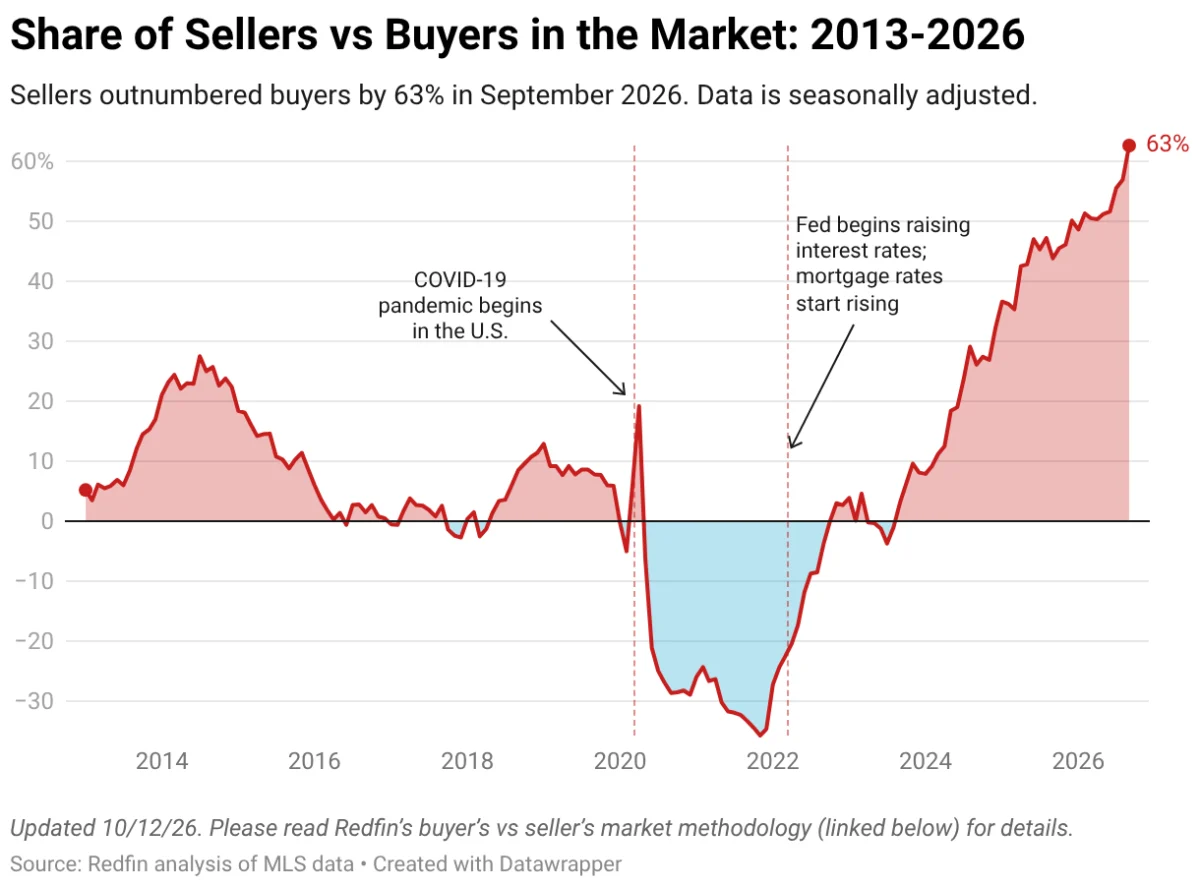
The overarching reality of the current housing market is that it has shifted firmly into the territory of the buyer, though not necessarily because buyers are flush with cash. Instead, the market has stalled. With over 500,000 more sellers than active buyers nationwide, the supply-demand imbalance has become the defining characteristic of the 2026 fiscal year.
The typical monthly mortgage payment has breached the $2,600 threshold, a figure that is pricing out a significant segment of the middle class. As house prices continue to rise—outpacing wage growth for consecutive months—the pool of qualified, willing buyers is shrinking. This has resulted in a "wait-and-see" approach, where prospective buyers are choosing to stay in their current rentals or remain in their existing homes rather than commit to high-interest, high-cost mortgages.
Chronology: How We Arrived at the 2026 Standstill
To understand the current volatility, one must look at the recent trajectory of the economy:
- Early 2026: Hopes for a "soft landing" fueled a modest optimism. The gap between buyers and sellers began to close, and there was a sense that interest rates might stabilize, potentially encouraging more inventory to hit the market.
- Mid-2026: External pressures began to mount. The escalating conflict in the Middle East introduced new variables into the global energy market, causing oil prices to fluctuate and reigniting inflationary fears.
- Late Summer 2026: Inflationary data began to consistently beat expectations, forcing bond markets into a state of anxiety. Mortgage rates, which were already elevated, saw a fresh surge, effectively slamming the brakes on the late-summer momentum.
- September 2026 to Present: The market has entered a period of "stagnant caution." We are seeing a record number of contract cancellations as buyers lose their financing or get cold feet, leading to a surge in delistings and relistings as sellers scramble to adjust to the new reality.
Supporting Data: By the Numbers
The data paints a sobering picture for those expecting a quick, lucrative sale.
The Time-on-Market Shift
The average time it takes to sell a home has crept up to 51 days. While this is significantly faster than the pre-pandemic norm of 60 to 100 days observed throughout the 2010s, it represents a massive shift from the hyper-competitive environment of 2022, where properties were often off the market in under 30 days.
Regional Disparities
It is a mistake to view the housing market as a monolith. Regional performance remains wildly divergent:
- The Midwest and Northeast: Markets like Rochester and Milwaukee remain outliers. Here, chronic undersupply continues to drive competition. Sellers in these regions may still see multiple-offer scenarios and relatively quick closing times.
- The Sun Belt: This region is experiencing the "supply hangover" of the post-pandemic construction boom. With a surge in new inventory, buyers have significantly more leverage, and sellers in these areas must be prepared for extended marketing times and aggressive price negotiations.
Price Sensitivity
Asking prices have recently hit their lowest level in a year, a direct response to the buyer’s lack of purchasing power. This is a critical indicator: the market is telling sellers that the "pandemic pricing" era is effectively over, and the era of "value-based pricing" has returned.
Official Responses and Expert Analysis
Daryl Fairweather, Chief Economist at Redfin, provides a blunt assessment of the current climate: "Home sellers should prepare for a strong buyer’s market. Elevated inventory has given buyers more options, but record costs have made them wary. Volatile mortgage rates and an unstable economy are adding a layer of uncertainty as well, making it harder for buyers to plan and act with confidence."
Fairweather emphasizes that while the market is difficult, it is not "closed." However, the strategy must change. "Affordability has only marginally improved over the last year, so those willing to brave today’s market are prepared to lead negotiations and pay a fair price. The near future is looking difficult for both buyers and sellers, but the right deal is still out there."
Chen Zhao, Head of Economics Research at Redfin, adds an international perspective: "Mortgage rates are reacting to the conflict in the Middle East, as rising energy costs and concerns over inflation and a bond market selloff put pressure on the economy. Prolonged tensions have kept investors and consumers on edge. Unless homebuilding skyrockets or the country falls into a severe recession, buyer activity and housing affordability are unlikely to improve substantially in the near future."
Implications for Sellers: Strategic Decision Making
If you are a homeowner weighing your options, the decision to sell must be dictated by your specific financial and personal circumstances rather than market timing alone.
When to Hold
If you have recently refinanced at a historically low rate, or if your home requires significant capital improvements, the current market is likely not your friend. Selling now would involve trading a low-interest rate for a high one, while also likely having to offer price concessions to account for the necessary repairs. In such cases, holding the property is often the most prudent financial move.
When to Sell
The decision to sell is often non-negotiable due to life events—divorce, job relocation, or a need for a different living space. If you find yourself in this category, the strategy must shift from "maximizing profit" to "optimizing liquidity."
- Price Competitively: Don’t chase the market. Use current comps and be prepared to price slightly below the competition to attract the limited pool of buyers.
- Offer Concessions: In a buyer’s market, things like covering closing costs, offering home warranties, or including appliances can make the difference between a stale listing and a closed sale.
- Partner with Expertise: A high-quality local agent is no longer an optional luxury; they are a necessity. You need someone who understands the hyper-local micro-market, not just the national trends.
Looking Toward 2027
The consensus among economists is that the volatility of 2026 is likely to bleed into the first half of 2027. Without a significant shift in monetary policy or a major cooling of geopolitical tensions, the housing market will remain in this "rut."
However, "rut" does not mean "broken." People will always need to move. The key for the remainder of 2026 is a return to basics. The speculative fever of the previous three years has been replaced by the need for patience, realism, and a data-driven approach to real estate. If you are financially ready and have a strategic plan, the current market is navigable, but it requires you to respect the power the buyer currently holds.
Ultimately, whether you sell now or wait until 2027 depends on your ability to absorb the costs of the current economic environment. For some, the wait is worth the potential for lower rates; for others, the need for change outweighs the current market friction. As with any significant financial decision, the best course of action is to ignore the "doom and gloom" headlines, speak with a financial advisor, and consult with a real estate professional who can provide an objective, data-backed assessment of your home’s value in today’s, not yesterday’s, market.