Introduction: A Symbol Reclaimed
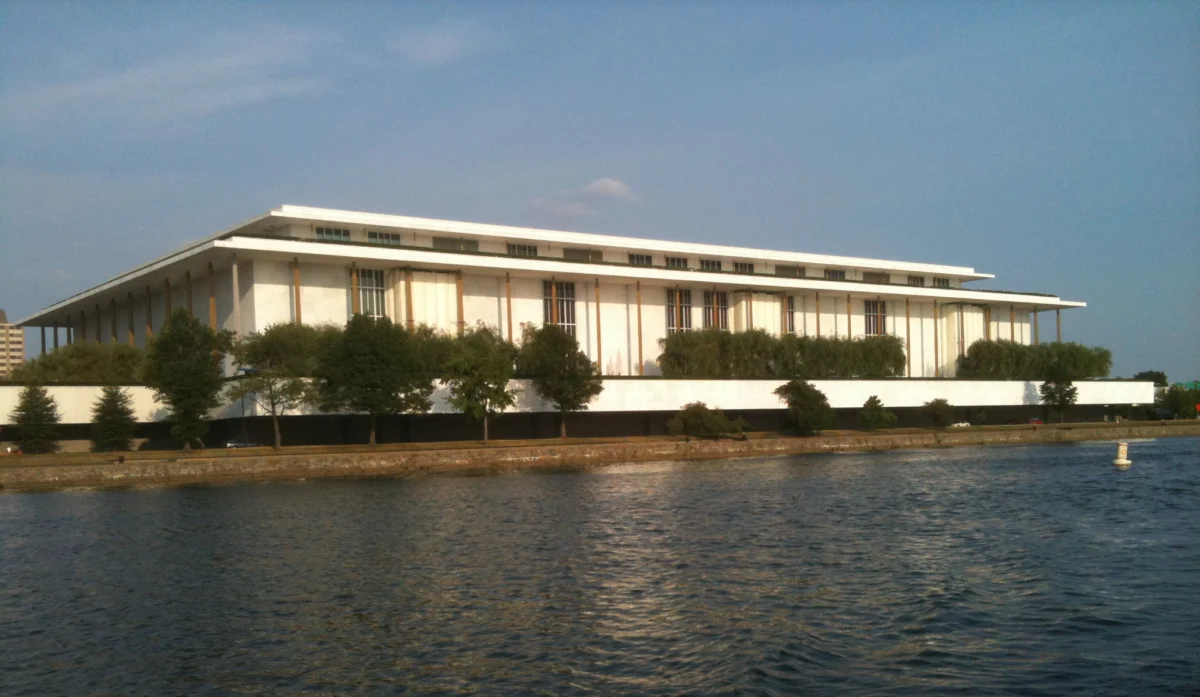
In a striking visual conclusion to a protracted legal and cultural battle, the John F. Kennedy Center for the Performing Arts—the nation’s premier memorial to the 35th president—has officially removed the name of former President Donald Trump from its facade. The removal, executed in the early hours of Saturday morning under the cover of darkness and shielded by industrial tarps, marks the end of a controversial chapter that saw one of Washington’s most iconic federally chartered institutions embroiled in a struggle over identity, governance, and historical legacy.
The physical dismantling of the signage, confirmed in court documents filed by Kennedy Center Director Matt Floca, serves as immediate compliance with a sweeping May 29 ruling by U.S. District Judge Christopher Cooper. The court’s intervention effectively halted a major rebranding effort spearheaded by Trump, who had assumed the role of board chairman in 2025, and restored the institution to its congressionally mandated moniker.
Chronology: From Boardroom Coup to Judicial Intervention
The controversy, which has captivated the legal and political communities in Washington, D.C., unfolded over the better part of a year.
December 2025: Rep. Joyce Beatty (D-OH), serving as an ex officio trustee, initiated legal proceedings against the board’s decision-making process. Beatty’s suit challenged three core actions: the unilateral renaming of the center to the "Trump Kennedy Center," the announcement of a controversial two-year closure for a $257 million renovation project, and the board’s decision to strip her of her voting rights as a trustee.
May 29, 2026: In a landmark 94-page opinion issued on the 109th anniversary of John F. Kennedy’s birth, Judge Christopher Cooper delivered a decisive blow to the Trump-led board. Emphasizing the sanctity of congressional authority, Judge Cooper wrote, "Congress gave the Kennedy Center its name, and only Congress can change it." The ruling imposed a 14-day deadline for the institution to revert all branding, signage, and trademark applications, while also ordering the restoration of Rep. Beatty’s voting rights.
Early June 2026: As the deadline neared, the board, represented by the U.S. Department of Justice, filed an emergency motion to stay the injunction. The legal maneuver aimed to keep the "Trump" branding in place while the board pursued an appeal.
June 12, 2026: Judge Cooper denied the motion to stay, noting that the defendants had failed to demonstrate "irreparable harm" or a "likelihood of success on the merits." Simultaneously, a panel of the U.S. Court of Appeals for the D.C. Circuit denied an immediate administrative stay, keeping the pressure on the board to comply.
June 13, 2026: Following a brief delay necessitated by severe thunderstorms in the D.C. area, the court granted a small extension, pushing the removal deadline to noon. By the early hours of the following day, the physical removal was completed, leaving the Potomac riverfront skyline free of the disputed signage.
The Legal and Administrative Foundation
The core of the dispute rests on the separation of powers and the nature of the Kennedy Center as a federally chartered institution. Unlike private cultural venues, the Kennedy Center operates under a specific congressional mandate.
Judge Cooper’s ruling leaned heavily on the principle of legislative supremacy. By concluding that the board lacked the legal standing to alter the name of a federally created memorial, the court effectively invalidated the administrative decisions made since 2025. This legal analysis also addressed the parallel litigation brought by historic preservation groups, including the National Trust for Historic Preservation. While these groups sought to block the $257 million renovation project on environmental and architectural grounds, Judge Cooper rejected those specific claims on May 29, finding that the board’s renovation plans—separate from the name change—did not violate the specific statutes invoked by the preservationists.
The board’s attempt to argue that the renaming was within their administrative purview failed to overcome the "plain language" of the institution’s founding charter. The court found that the board had overstepped its bounds by treating a national monument as an entity subject to private corporate branding.
Official Responses and Public Discourse
The reactions to the court’s mandate have been as polarized as the political climate surrounding the institution.
The Trump Perspective
Former President Donald Trump, who took an active role in the center’s management after appointing himself chairman in 2025, utilized Truth Social to express his vehement opposition. In a lengthy post, he criticized Judge Cooper, suggesting that the judiciary had become an obstacle to his vision for the institution. Trump characterized the decision as a "disgrace" and signaled that he would be distancing himself from the day-to-day operations of the center, though his legal team continues to pursue an appeal in the D.C. Circuit.
The Congressional Perspective
Rep. Joyce Beatty, the primary plaintiff, framed the victory as a win for public trust. "The Kennedy Center belongs to the American people, not to Donald Trump," Beatty stated following the ruling. Her legal challenge was centered on the protection of the center’s institutional integrity and the preservation of its status as a non-partisan space for the performing arts. Supporters of the move argue that the removal of the name was essential to maintaining the center’s neutrality and honoring the legacy of the late president.
Implications for the Future
The removal of the name is a temporary victory for the plaintiffs, but the legal battle remains ongoing. The D.C. Circuit Court of Appeals has set a briefing schedule that extends through June 29, 2026.
The Pending Appeal
While the name has been removed, the board’s appeal remains alive. If the appellate court were to reverse Judge Cooper’s decision, the institution could potentially see the name restored. However, legal experts suggest that the "likelihood of success on the merits"—a standard cited by Judge Cooper in his denial of the stay—remains low given the clear congressional language regarding the naming of the monument.
Governance and Renovations
The fate of the $257 million renovation project remains a point of contention. While Judge Cooper allowed the renovations to proceed, the legal uncertainty surrounding the board’s composition and its leadership could lead to further complications. If the board is deemed to have acted without proper authority, the contracts and planning associated with the renovation could be subject to further scrutiny.
Institutional Reputation
The events of the past eighteen months have left an indelible mark on the Kennedy Center. The institution now faces the task of restoring public confidence and focusing on its primary mission: the presentation of world-class music, dance, and theater. The board must now reconcile the aggressive, politicized management style of the 2025-2026 period with the traditional expectations of a national cultural center.
Conclusion
The physical act of removing the letters from the building’s facade is more than a maintenance task; it is a profound restoration of the status quo in the nation’s capital. For many, the return to the "John F. Kennedy Center for the Performing Arts" represents the resilience of institutional norms in the face of executive encroachment. As the case moves to the D.C. Circuit, the American public remains a spectator in a high-stakes drama that tests the limits of executive power, the sanctity of federal charters, and the definition of a national monument. For now, the Potomac riverfront is quiet, and the institution stands, once again, in the name of the president for whom it was built.