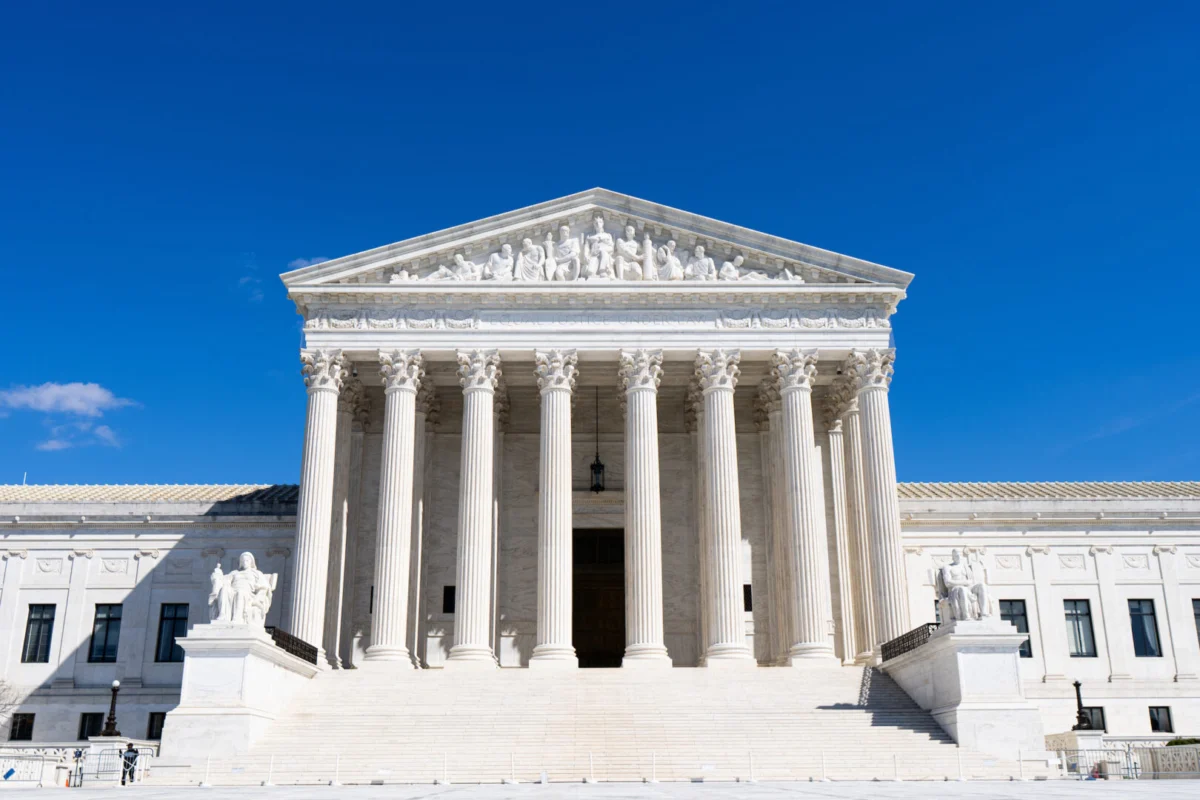
Washington, D.C. – In a landmark decision that further reshapes the landscape of Second Amendment jurisprudence, the Supreme Court on Thursday significantly limited a federal law that broadly prohibits illegal drug users from possessing firearms. The unanimous ruling found that the prosecution of Ali Danial Hemani, who faced charges after investigators discovered a gun in his home and he admitted to using marijuana, violated his constitutional right to bear arms.
The decision, United States v. Hemani, marks the latest in a series of high court cases since 2022 that have expanded gun rights, building upon the foundational "text and history" test established in New York State Rifle & Pistol Association Inc. v. Bruen. While the justices were united in their outcome, distinct legal reasonings emerged, underscoring the complexities of applying historical analysis to modern societal challenges.
At the heart of the ruling was the Court’s determination that the federal statute, 18 U.S.C. § 922(g)(3), which disarms anyone who is "an unlawful user of or addicted to any controlled substance," was overly broad. Written by Justice Neil M. Gorsuch and joined by six other justices, the main opinion asserted that mere possession or use of an illegal drug—even "using a spouse’s Ambien," as the opinion provocatively noted—could not, by itself, justify depriving Americans of their Second Amendment rights without additional legal process or evidence of actual danger.
This judgment signals a critical re-evaluation of who can be deemed "dangerous" enough to forfeit a constitutional right, moving away from categorical prohibitions towards a more nuanced, historically informed assessment of individual risk. The ruling has immediate implications for thousands of individuals and sets a new precedent for how federal prohibitions on firearm ownership will be scrutinized under the Second Amendment.
The Hemani Case: A Catalyst for Constitutional Review
The specific circumstances surrounding Ali Danial Hemani provided the Court with a clear, albeit stark, illustration of the federal law’s expansive reach. In 2022, Hemani was living in the Dallas area with his parents, holding a stable job, when federal agents searched the family home. During the search, Hemani cooperated fully, surrendering his firearm, pointing agents to a small amount of marijuana, and candidly admitting to using the substance about every other day.
Crucially, the government did not assert that Hemani was a drug addict. Nor did it contend that his drug use had ever led him to pose a danger to himself or others. There was no claim that he had done anything with his gun other than possess it within the confines of his home. Despite these mitigating factors, more than six months after the initial encounter, Hemani was charged under 18 U.S.C. § 922(g)(3) with knowingly possessing a gun while being an "unlawful user" of a controlled substance. This charge carried severe penalties, including a potential sentence of up to 15 years in prison and a lifetime prohibition on possessing firearms.
Justice Gorsuch, in the majority opinion, highlighted the perceived overreach in Hemani’s prosecution: "No matter that the government did not assert Mr. Hemani was a drug addict. No matter that it did not contend his drug use had ever led him to pose a danger to himself or others. No matter, too, that the government did not claim Mr. Hemani had done anything with his gun other than possess it in his home." This stark portrayal underscored the Court’s view that the federal law, as applied, cast too wide a net, ensnaring individuals who posed no discernible threat to public safety.
The federal law itself dates back to 1968, enacted during an era of heightened concern over drug use and crime. It was conceived as a prophylactic measure, designed to disarm categories of individuals deemed inherently dangerous. However, the Court’s new "text and history" standard demands a more direct historical analogue for modern gun regulations, a benchmark the federal government struggled to meet in Hemani’s case.
The Supreme Court’s Unanimous Verdict and Its Foundations
The Court’s unanimous decision in United States v. Hemani rested heavily on the interpretive framework established by New York State Rifle & Pistol Association Inc. v. Bruen in 2022. In Bruen, the conservative majority fundamentally altered Second Amendment jurisprudence, replacing the previous "intermediate scrutiny" balancing test with a requirement that gun restrictions must be "consistent with this Nation’s historical tradition of firearm regulation." This means that for a modern gun law to be constitutional, the government must demonstrate that it has a historical analogue from the founding era or early American history that regulated firearms in a similar manner and for similar reasons.
Justice Gorsuch’s Majority Opinion: Distinguishing History from Modern Law
Justice Gorsuch’s opinion meticulously applied the Bruen test, scrutinizing whether the federal prohibition on firearm possession by "unlawful users" of controlled substances aligned with historical practices. The Trump administration, in its arguments, had contended that the Constitution allows Congress to regulate firearms for dangerous people, drawing parallels to colonial-era laws targeting "habitual drunkards."
However, Gorsuch robustly rejected this comparison, arguing that the modern federal law "sweeps in large numbers of people without regard to whether their substance use has the kind of incapacitating effect on them that historical habitual drunkard laws normally required." He elaborated that historical "habitual drunkard" laws were far more extensive and stringent than the law used to prosecute Hemani. They typically required an individual to be so regularly intoxicated or incapacitated by alcohol that they could not function in day-to-day life, demonstrating a profound and persistent inability to manage their affairs or maintain self-control.
"They targeted different kinds of people, did so for different purposes, and operated in different ways," Gorsuch wrote, emphasizing the qualitative difference between historical prohibitions and the categorical ban under § 922(g)(3). The historical laws were narrowly tailored to individuals whose severe impairment posed a demonstrable risk, whereas the federal statute automatically considered it a crime for anyone who merely used a restricted drug to also possess a firearm, regardless of the frequency, quantity, or actual incapacitation caused by that use.
The majority opinion was careful to carve out important distinctions, however. It affirmed that the government could still pursue cases to disarm individuals who are demonstrably addicted, or those who are actively intoxicated. Gorsuch also explicitly stated that Congress still retains the power to target users of a particular drug if it can be shown that they pose a "special risk" of misusing firearms, provided such a prohibition is narrowly tailored and supported by historical precedent or compelling evidence of danger. This caveat leaves open the door for future, more specific legislative actions by Congress.
Concurring and Dissenting Voices on Legal Reasoning
Despite the unanimous outcome, several justices penned separate opinions, highlighting underlying jurisprudential differences even within the Bruen framework.
- Justice Clarence Thomas, the author of the Bruen decision, concurred in the judgment. He argued that the federal law itself exceeded Congress’s authority under the Commerce Clause of the Constitution, suggesting a broader skepticism of federal power to regulate firearm possession. His concurrence reinforced his originalist view that the Second Amendment protects an individual right to bear arms for self-defense, and that any infringement must be historically justified and narrowly drawn.
- Justice Samuel A. Alito Jr., joined by Justice Elena Kagan, also concurred in the judgment but explicitly disagreed with the reasoning of the majority opinion. While agreeing that Hemani’s conviction could not stand, their concurrence signaled a potential discomfort with the sweeping nature of Gorsuch’s historical analysis or the implications of its application. This unusual pairing of a conservative and liberal justice suggests a shared concern, perhaps about the practical difficulties of applying the "text and history" test in every instance, or a belief that the government’s arguments for prohibiting dangerous individuals might have been dismissed too readily. Their specific objections were not fully detailed in the provided summary, but often, such disagreements stem from how stringently the historical test should be applied or what constitutes a sufficient "analogue."
Historical Analogues: The "Habitual Drunkard" Standard
The Court’s detailed comparison of the modern federal law with historical "habitual drunkard" statutes formed the bedrock of its reasoning. To fully appreciate the significance of this comparison, it’s essential to understand what these colonial and early American laws actually entailed.
"Habitual drunkard" laws were not designed to disarm anyone who simply consumed alcohol, even regularly. Instead, they targeted individuals whose alcohol consumption had progressed to a severe state of chronic incapacitation, rendering them unable to fulfill their civic duties, support their families, or manage their personal affairs. These were individuals often publicly known for their severe alcoholism, who might squander their estates, neglect their children, or pose a general nuisance or danger to the community due due to their constant state of inebriation.
For instance, some laws allowed for guardians to be appointed for "habitual drunkards" to manage their property, or for public posting of their names to prevent taverns from serving them. Disarming such individuals was often a consequence of their recognized inability to exercise responsible judgment, rather than a blanket prohibition based on mere use. The threshold for intervention was high, requiring evidence of profound functional impairment and a clear, present danger to themselves or others.
In stark contrast, the federal law applied to Hemani, 18 U.S.C. § 922(g)(3), operates on a far lower threshold. It prohibits gun possession for anyone who is "an unlawful user of or addicted to any controlled substance," without requiring any demonstration of actual incapacitation, danger, or inability to function. As Gorsuch pointed out, this definition could sweep in someone who occasionally uses marijuana without any impairment, or even someone who takes a single dose of a prescribed but controlled substance like Ambien from a spouse without a personal prescription. The law did not differentiate between a recreational user and a severely impaired addict, nor did it require a nexus between the drug use and a demonstrated propensity for violence or irresponsibility.
The Court effectively ruled that this modern, categorical prohibition lacked the historical precision and narrow scope of its supposed analogues. The historical laws focused on demonstrated, severe impairment and public danger, whereas the modern law created a broad class of prohibited persons based solely on the status of drug use, irrespective of individual conduct or risk.
Implications and Future Challenges
The United States v. Hemani decision carries significant implications for various aspects of law and policy, from individual gun rights to federal drug enforcement and the mechanics of the national background check system.
Impact on Gun Ownership and Background Checks
One of the most immediate concerns raised by outside groups during the litigation was the potential for the ruling to complicate the administration of the National Instant Criminal Background Check System (NICS). The NICS system relies on clearly defined categories of prohibited persons to prevent firearms sales. If the category of "unlawful user of or addicted to any controlled substance" becomes harder to apply due to the need for individual assessment of danger or incapacitation, it could introduce new challenges for gun retailers and law enforcement.
However, the Court’s decision does not abolish the prohibition entirely; rather, it demands a more rigorous standard for its application. This means that while merely admitting to marijuana use may no longer be sufficient for a lifetime ban, evidence of severe addiction, active intoxication, or a demonstrated "special risk" associated with a particular drug could still lead to disarmament. The practical challenge will be how federal agencies and the courts will define and prove these higher thresholds in future cases.
Federal Drug Policy and State Marijuana Laws
Justice Gorsuch explicitly noted the "awkwardly positioned" federal government regarding marijuana policy. While federal law continues to classify marijuana as a Schedule I controlled substance, numerous states have legalized its medical and/or recreational use, leading to a patchwork of legality across the nation. The federal government itself has, in many instances, relaxed prosecutions for marijuana-related offenses.
This decision exacerbates that awkwardness. It highlights the incongruity of a federal law that treats all "unlawful users" of controlled substances as prohibited persons, even as states move towards decriminalization or legalization. It could empower further legal challenges against other federal prohibitions that disproportionately affect individuals whose drug use is legal under state law but still federally prohibited. This might push Congress to reconsider the federal scheduling of marijuana or to craft more nuanced federal firearm prohibitions that align with evolving societal views on drug use.
The "Special Risk" Clause: A Legislative Pathway
The Court’s allowance for Congress to target users of a particular drug if they pose a "special risk" of misusing firearms provides a potential legislative pathway forward. This carve-out suggests that if Congress can demonstrate, through robust evidence, that the use of a specific controlled substance (e.g., highly addictive stimulants, hallucinogens that induce psychosis) creates a demonstrably elevated and unique risk of firearm misuse, it might be able to craft a narrowly tailored prohibition that passes constitutional muster under the Bruen framework.
However, defining "special risk" and establishing the necessary evidentiary link will be a significant challenge. Such legislation would likely face intense scrutiny and further legal challenges, requiring a strong scientific and historical basis to survive.
Broader Second Amendment Landscape
United States v. Hemani unequivocally reinforces the Supreme Court’s commitment to the Bruen framework and its expansion of individual gun rights. By striking down a long-standing federal prohibition, the Court has signaled that broad, categorical bans on firearm possession will be increasingly difficult to defend without clear historical analogues.
This ruling could embolden challenges to other categories of prohibited persons under federal law, such as individuals subject to domestic violence restraining orders or certain classes of felons. While the Court has previously upheld prohibitions on felons, the Bruen test has injected a new variable into these legal debates. Future cases will undoubtedly explore the limits of the Second Amendment’s reach and the extent to which historical analysis can justify modern public safety regulations.
The decision also solidifies the Court’s role as the primary arbiter of gun control debates, placing a heavy burden on the government to justify any firearm regulation with historical evidence, rather than relying on contemporary public safety concerns alone.
Conclusion
The Supreme Court’s unanimous decision in United States v. Hemani marks a pivotal moment in American constitutional law, fundamentally altering the scope of a federal law designed to disarm individuals deemed "unlawful users" of controlled substances. By demanding a higher, historically informed standard for depriving individuals of their Second Amendment rights, the Court has reinforced its post-Bruen commitment to expanding gun ownership protections.
While the ruling leaves room for the government to disarm genuinely dangerous individuals and those actively intoxicated, it places a significant burden on prosecutors to prove actual risk rather than relying on broad, categorical prohibitions. The decision underscores the inherent tensions between long-standing federal laws, evolving state policies on substances like marijuana, and the Court’s strict interpretation of constitutional rights. As the legal landscape continues to shift, Hemani will serve as a critical precedent, shaping future debates over gun control, federal power, and the enduring meaning of the Second Amendment in a modern society.