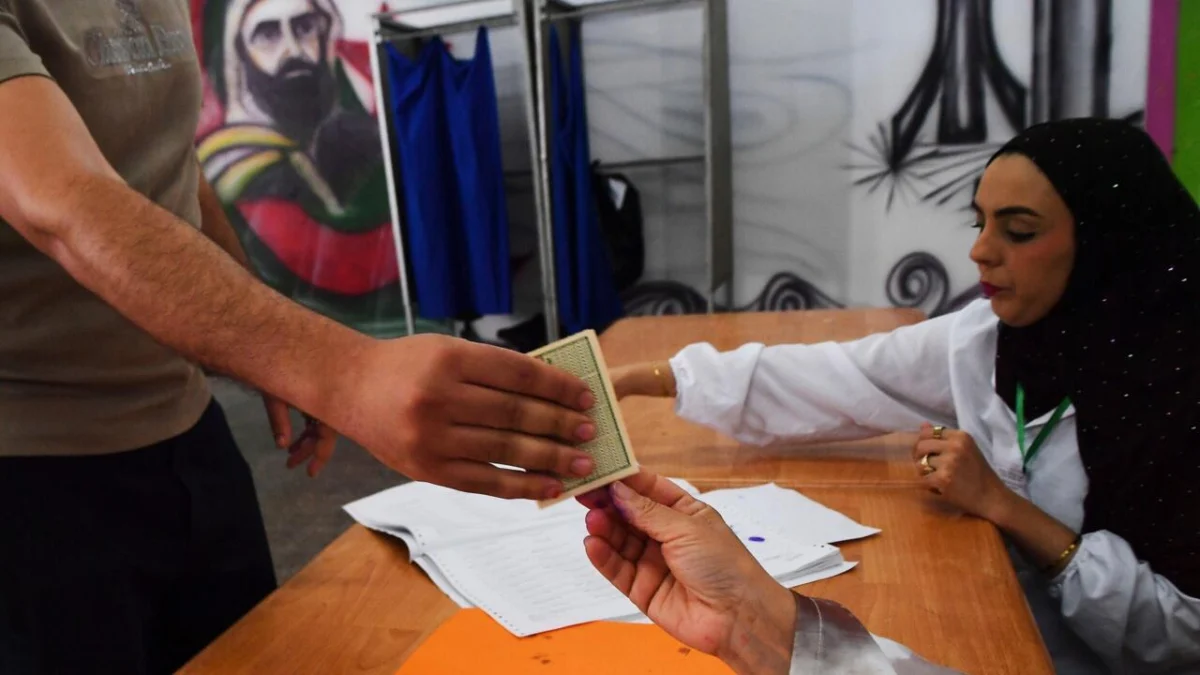
ALGIERS — As the sun rose over the capital on Thursday, security forces maintained a visible presence outside polling stations across Algiers, a somber backdrop for a nation heading to the ballot box. Nearly 25 million Algerians are eligible to cast their votes in a parliamentary election that arrives at a precarious moment for the North African nation. With 1,235 candidates vying for 407 seats in the lower house of Parliament, the stakes are nominally high, yet the prevailing sentiment among the electorate remains one of profound disillusionment.
The State of Play: A Nation in Stasis
The parliamentary election is being held under the shadow of a deepening cost-of-living crisis, a steady decline in public services, and a restrictive political climate that has seen the space for dissent shrink significantly. While the government has declared Thursday a paid national holiday in a bid to bolster turnout, the atmosphere in the streets suggests that the electoral process is struggling to capture the public imagination.
For the average Algerian, the discourse of party manifestos often feels detached from the visceral realities of daily life. Inflation, purchasing power, and the crumbling state of social infrastructure have become the true focal points of public concern, far eclipsing the abstract promises of political candidates. Furthermore, the national psyche is currently occupied by a fervent obsession with football; the Algerian national team’s impending World Cup knockout match against Switzerland on Friday has arguably generated more civic excitement than the entirety of the parliamentary campaign.
Chronology of a Contested Process
The path to this election has been characterized by meticulous government management and a series of preemptive measures designed to ensure a smooth, if not entirely representative, process.
- Pre-election Logistics: Understanding the geographical challenges of Africa’s largest country by territory, the government initiated voting 48 hours early in the Sahara Desert and southern regions. Administration-led teams utilized off-road vehicles and police-escorted convoys to reach nomadic populations, ensuring that even the most remote citizens were accounted for.
- The Diaspora Experience: For the approximately 854,225 registered voters abroad—the vast majority residing in France—the democratic exercise concluded last weekend. Reports from the state news agency, APS, noted a "family atmosphere" and relatively high turnout at consular offices, contrasting sharply with the apathy observed within the country’s borders.
- Administrative Engineering: In a move highlighting the state’s logistical control, the Ministry of Education adjusted the academic calendar, moving end-of-year exams forward. This strategic shift cleared classrooms and freed up teaching staff, who are typically mobilized to act as poll workers in exchange for a daily stipend.
- The Campaign Trail: With traditional campaign venues remaining largely vacant, political parties were forced to pivot. Rather than formal rallies, candidates turned to "grassroots meetings" in markets, cafes, and street corners. One widely circulated video captured the stark reality of this disconnect: a party leader attempting to engage a young man, only to be met with a polite but firm dismissal, encapsulating the broader struggle of the political class to resonate with a youth population that feels excluded from the system.
Supporting Data and Political Landscape
The outgoing Parliament was dominated by a pro-government majority holding roughly 300 seats, with the Islamist Movement of Society for Peace (MSP) acting as the second-largest force with 64 seats. However, this election cycle has seen a notable culling of the candidate pool.
The National Electoral Authority barred 269 candidates from standing, citing "links to illicit financial networks" and "suspicious political activities." Among those excluded were prominent figures and activists associated with the Hirak movement—the mass protest wave that successfully forced the resignation of long-serving autocrat Abdelaziz Bouteflika in 2019.
The current political structure remains under the firm guidance of President Abdelmadjid Tebboune, who secured a second term in 2024. Under his administration, the crackdown on media, trade unions, and political opposition has intensified, leading to a landscape where only sanctioned voices are permitted to operate with full freedom.
Official Responses and Institutional Stance
The government has defended its management of the election as a necessary step to ensure stability. The presidential majority, anchored by the historical National Liberation Front (FLN), has framed the vote as a crucial exercise in national cohesion. Their messaging emphasizes that a high turnout will strengthen Algeria’s position on the international stage, particularly as it navigates complex geopolitical challenges in the Mediterranean and the Sahel.
The Electoral Authority has maintained that the vetting process for candidates was objective and intended to "cleanse" the political system of corruption. By removing those it labels as threats to national security or conduits for illicit funding, the state claims it is protecting the integrity of the republic.
However, the opposition offers a starkly different narrative. The Trotskyist Workers’ Party has focused its platform on the erosion of economic rights, specifically demanding wage hikes and higher pensions. They have also taken a strong stance against mining sector reforms, which they argue are designed to benefit foreign investors at the expense of Algerian national resources.
Meanwhile, the Socialist Forces Front (FFS), the most prominent democratic opposition party, has walked a fine line. They have urged voters to participate, arguing that a boycott only serves the interests of the status quo. At the same time, the party has utilized the campaign to demand the release of political prisoners and the restoration of a free press, positioning itself as the only viable democratic alternative within a system they argue is intentionally designed to stifle them.
Implications: The Future of the Algerian Republic
The implications of this election extend far beyond the composition of the new Parliament. The primary concern for observers is the legitimacy gap. If turnout is as low as current indicators suggest, the new government will begin its five-year term with a significant deficit of public trust.
The Hirak Legacy
The exclusion of Hirak-affiliated candidates marks a turning point in the post-Bouteflika era. By neutralizing the protest movement’s ability to transition from the streets to the ballot box, the government has effectively closed the door on the peaceful political evolution that many activists had hoped for in 2019. This creates a volatile dynamic: when formal political channels are blocked, the potential for non-institutional protest—which is much harder to control—increases significantly.
Economic Pressure Cooker
The government’s ability to manage the economy will be the ultimate test of its stability. With a growing youth population and limited job creation, the "purchasing power" issue is not merely an electoral slogan; it is a potential catalyst for future civil unrest. If the newly elected parliament fails to address these fundamental needs, the disconnect between the state and the populace will only widen.
Geopolitical Stability
Algeria plays a pivotal role in North African security. A stable, albeit restrictive, government provides a predictable partner for regional cooperation on migration and counter-terrorism. However, the international community, particularly European partners, will be watching closely to see if the ongoing suppression of civil liberties leads to regional instability.
As the ballots are counted, the true outcome will not be found in the seat count or the percentage of votes cast, but in whether the Algerian state can find a way to reconcile its rigid control with the aspirations of a disillusioned, young, and increasingly skeptical citizenry. For now, the nation remains a puzzle—a country with a massive, untapped potential, held back by a political architecture that fears the very voters it asks for support.