
Inside the FBI’s “Kinetic Cyber Range”: A High-Stakes Training Ground for the Digital Frontline

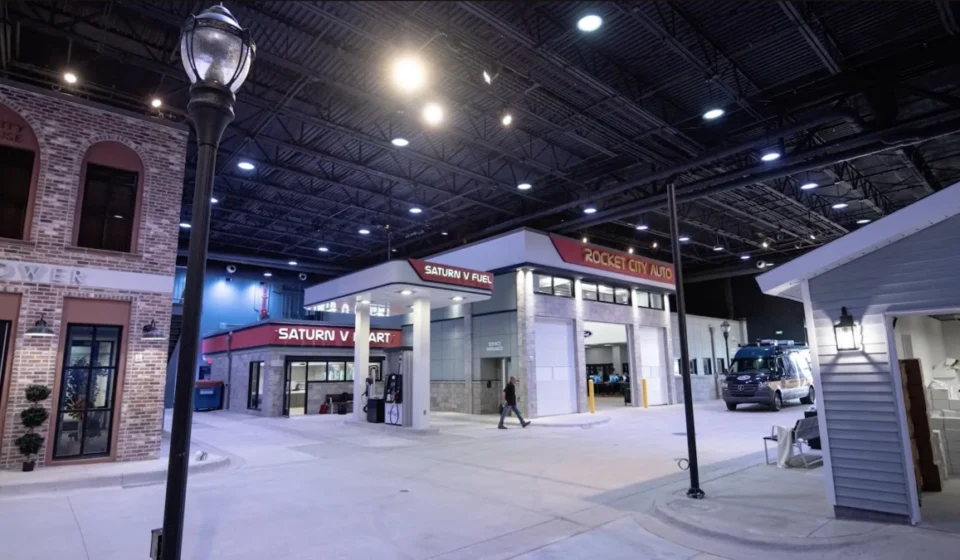
In the quiet hills of Huntsville, Alabama, the Federal Bureau of Investigation has constructed a town that does not appear on any GPS map, nor does it host a single permanent resident. Spanning 22,000 square feet, this sprawling, purpose-built facility—dubbed the "Kinetic Cyber Range"—is the FBI’s latest and most ambitious weapon in the escalating war against global cybercrime.
As the digital landscape becomes increasingly intertwined with physical infrastructure, the FBI is moving beyond traditional classroom instruction. This facility provides law enforcement agents with a hyper-realistic, high-pressure environment to simulate, investigate, and mitigate the complex cyberattacks that threaten the backbone of American society.
The Main Facts: A Town Built for Battle
The Kinetic Cyber Range, which officially opened its doors in February 2025, is a masterclass in immersive simulation. Designed to mirror a standard U.S. municipality, the facility includes fully furnished residential homes, a functional gas station, a grocery mart, a courthouse, a hospital, and a power company. These buildings are not mere props; they are connected by paved roads and operational traffic lights, creating a seamless, life-like environment.
The facility’s primary mission is to provide hands-on experience with the consumer and enterprise technologies that form the target list for modern malicious hackers. Each structure within the range is wired with functioning digital systems—the same programmable logic controllers (PLCs) and server architectures found in real-world critical infrastructure. By isolating these systems within a secure, contained environment, the FBI can launch simulated ransomware, malware, and data breaches without the risk of collateral damage to the public internet.
Chronology: The Evolution of FBI Cyber Preparedness
The inception of the Kinetic Cyber Range represents the culmination of a multi-year shift in how federal agencies approach digital threats.
- Pre-2020: Training was largely centralized in classroom environments with static, non-interactive lab scenarios.
- 2021–2023: As ransomware threats to critical infrastructure (such as the Colonial Pipeline attack) surged, the FBI identified a critical gap: agents lacked experience navigating the physical constraints and high-stress environments of a compromised business or hospital.
- February 2025: The Kinetic Cyber Range officially opens in Huntsville, Alabama, marking a milestone in "kinetic" training—a term used to describe the intersection of cyber operations and physical world consequences.
- Mid-2025 to Present: The facility has successfully cycled through more than 1,400 students, ranging from FBI special agents to domestic and international partners, establishing a new baseline for inter-agency incident response.
Supporting Data: The Rising Tide of Cybercrime
The necessity of the Kinetic Cyber Range is underscored by the sobering reality of the 2025 Internet Crime Report. According to the FBI’s Internet Crime Complaint Center (IC3), the agency processed more than one million complaints in the past year alone.
The financial toll of these crimes is staggering, reaching a record $20.9 billion in losses across the United States—a 26% increase over the previous year. Perhaps most concerning to national security officials is the prevalence of ransomware, which remains the top threat to critical infrastructure.
The data suggests that cybercriminals are no longer just after credit card numbers; they are targeting the systems that regulate water, power, and healthcare. The FBI’s investment in the Huntsville range is a direct response to this shift, aiming to reduce the "mean time to respond" (MTTR) when a major system goes offline.
The "Cold and Cramped" Reality of Forensic Investigation
While the town itself looks like a movie set, the back-end infrastructure is designed to be as unglamorous as reality. The range includes a massive data center housing over 200 physical servers running a mix of legacy and modern operating systems, including Windows and various Linux distributions.
Dave Beachboard, the program manager for the range, emphasizes that the goal is to replicate the "miserable" conditions agents face during a real-world digital investigation. "They’re cold, they’re cramped, they’re noisy, they’re dark, they’re miserable," Beachboard noted in an FBI project summary.
This sensory realism is intentional. When an agent is called to secure a server room during a live breach, they are rarely working in an ergonomic, climate-controlled office. They are often working under time pressure in server closets, surrounded by the mechanical hum of equipment, while under the scrutiny of high-stakes corporate or government leadership. By forcing trainees to navigate these physical discomforts, the FBI ensures that their decision-making remains sharp even when the environment is far from ideal.
Digital Forensics and the "Encryption" Debate
A significant portion of the training focuses on digital forensics—specifically, the art of bypassing the cybersecurity defenses of encrypted modern devices.
In an era where personal devices are protected by sophisticated hardware-level encryption, law enforcement faces a significant hurdle: "going dark." The Kinetic Cyber Range provides a space for agents to practice the use of specialized tools designed to exploit vulnerabilities in consumer hardware. These tools, often developed in secrecy, allow investigators to extract data from devices manufactured by tech giants like Apple and Google by leveraging undisclosed security flaws.
This aspect of the training remains highly controversial. Privacy advocates and tech companies argue that by utilizing "zero-day" exploits—vulnerabilities that the device makers are unaware of—the FBI is essentially creating a stockpile of digital master keys. Critics contend that these methods could potentially be leaked or discovered by malicious actors, thereby weakening the security of every consumer device on the market. The FBI maintains that these capabilities are essential for solving high-level crimes, such as terrorism or kidnapping, where digital evidence is often the only path to a resolution.
Implications: A New Era of Law Enforcement
The existence of the Kinetic Cyber Range signals a permanent change in the FBI’s operational philosophy. The agency is acknowledging that the "cyber" domain is no longer an abstract space existing only on screens; it is a kinetic force that can shut down hospitals, stop the flow of fuel, and disrupt the judicial process.
The Human Element
The training emphasizes that technology is only one half of the equation. The other half is the human response. During simulations, the FBI tests the "high-pressure decisions" investigators must make in real-time. For instance, when a simulated hospital system goes dark, agents are forced to weigh the technical steps of a forensic investigation against the immediate need to restore life-saving equipment. This integration of technical skill and crisis management is the primary value proposition of the Huntsville facility.
Inter-agency Cooperation
The fact that the facility is open to partners from other federal and local agencies suggests a push toward a unified national cyber-defense posture. As cyber threats become more sophisticated and cross-border in nature, the ability for different agencies to communicate and operate on the same "field" is paramount. The Kinetic Cyber Range acts as a common ground, ensuring that when the next major attack hits, the response is coordinated rather than fragmented.
The Future of Training
Looking ahead, the FBI plans to continue expanding the capabilities of the range. As AI-driven attacks and automated malware become more common, the facility will likely incorporate adaptive, autonomous adversaries—AI-driven red teams—to constantly test the resilience of human investigators.
Conclusion: Securing the Digital Future
The Kinetic Cyber Range is a testament to the fact that the FBI is taking the cyber threat with the same level of gravity as physical terrorism. By building a town that can be broken, restored, and analyzed, the Bureau is equipping its agents with the necessary experience to defend the real world from the invisible dangers of the digital age.
While the controversy surrounding forensic device exploitation will likely continue, the need for advanced, high-fidelity training is undeniable. As the line between our physical lives and our digital existence continues to blur, the lessons learned in the quiet town in Huntsville will become increasingly critical to the safety and security of the American public. The FBI is no longer just studying the cyber battlefield; they are living in it, one simulated disaster at a time.