Introduction: Bridging Silicon Valley and Academia
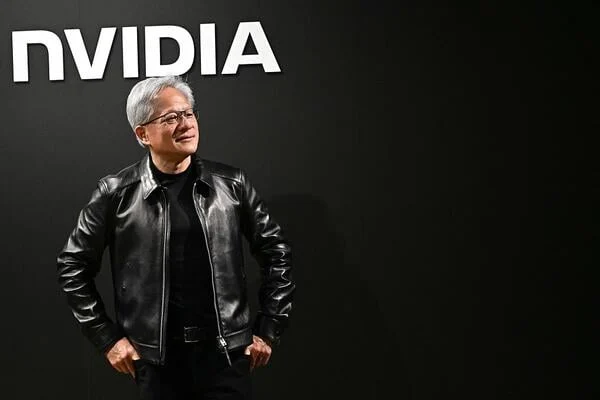
In a landmark development for American higher education, Vanderbilt University has announced a transformative $75 million gift from NVIDIA President and CEO Jensen Huang and his wife, Lori. This substantial donation serves as the foundational cornerstone for Vanderbilt’s ambitious expansion into San Francisco, a move that signals a tectonic shift in how elite private institutions interact with the global epicenters of technological innovation.
The gift, channeled through the couple’s private foundation, will establish the Jen-Hsun and Lori Huang College of Art, Architecture and Design. Scheduled to open its doors in 2027, the campus is poised to become a vital hub for the intersection of cutting-edge engineering and the creative arts. By planting a flag in the heart of the Bay Area, the Nashville-based university is not merely opening a satellite office; it is establishing a strategic gateway that aims to redefine the relationship between liberal arts education and the hyper-accelerated world of artificial intelligence and hardware development.
The Chronology of Expansion: From Nashville to the Bay
The journey to the San Francisco campus began as a strategic pivot to address the evolving needs of modern industry.
- January 2026: The California College of the Arts (CCA) made the difficult announcement that it would close its doors at the end of the 2026–27 academic year, marking the end of a long-standing creative institution.
- Early 2026: Recognizing the logistical and strategic value of the CCA’s existing infrastructure, Vanderbilt University initiated negotiations to acquire the campus, seeing it as the ideal site for its West Coast aspirations.
- July 21, 2026: Vanderbilt officially announced the $75 million gift from the Huangs, confirming that the San Francisco campus would proceed under the new leadership and branding associated with the donation.
- Academic Year 2027–28: The campus is slated to welcome its inaugural cohort of students, marking the official commencement of Vanderbilt’s operations in California.
This rapid acquisition and rebranding effort underscore the university’s commitment to speed and agility—traits often associated with the tech industry it now aims to serve.
Supporting Data and Financial Scope
The $75 million contribution is not an isolated windfall; it has acted as a catalyst for broader institutional investment. According to university officials, the donation inspired a wave of follow-on philanthropic support, propelling the total investment for the San Francisco project to over $100 million.
This figure is particularly significant when considering the university’s long-term financial roadmap. Vanderbilt reports that this $100 million represents more than 40 percent of the total capital required to fully operationalize and scale the campus by the end of 2028.
The campus is designed to support a population of approximately 1,000 undergraduate and graduate students. By maintaining a relatively intimate student body, the university intends to foster an environment of high-impact mentorship, mirroring the collaborative nature of the startup ecosystem that defines the surrounding San Francisco area. The capital will be allocated toward upgrading laboratory facilities, reconfiguring studio spaces for multidisciplinary work, and recruiting faculty who bridge the gap between creative theory and industrial application.
Philosophical Foundations: The "Huang Doctrine"
The mission of the new college is perhaps best summarized by Jensen Huang himself. In a statement released alongside the gift announcement, he articulated a vision that challenges the traditional siloed approach to education.
"Technology expands what we can build. Art and design determine why we build it. Together they shape civilization," Huang noted.
This philosophy—that technology is the how and art is the why—is the core thesis of the Jen-Hsun and Lori Huang College of Art, Architecture and Design. For Huang, a pioneer of the AI revolution, the success of future technology depends on the human-centric design principles traditionally found in the arts. By embedding this department within a tech-forward institution like Vanderbilt, the university hopes to produce graduates who are not only technically proficient but also philosophically grounded.

Implications for Higher Education and Industry
The establishment of a Vanderbilt satellite in San Francisco carries profound implications for both the higher education sector and the corporate landscape.
1. The "Silicon Valley Effect" on Curriculum
By moving into the Bay Area, Vanderbilt is effectively decentralizing the traditional collegiate experience. Students will have unprecedented access to internships, industry partnerships, and networking opportunities that are simply unavailable in Nashville. This move forces a re-evaluation of how universities should position themselves in a post-digital world where location-based networking remains a critical factor in career success.
2. A New Model for Philanthropy
Jensen Huang’s involvement goes beyond a simple check; it represents an "intellectual investment." Having previously donated tens of millions to his alma maters—Oregon State and Stanford—Huang’s move toward Vanderbilt suggests a desire to build a "multi-hub" model of education. This shift encourages other industry titans to view university expansion as a way to cultivate talent pipelines that are geographically aligned with their corporate interests.
3. The Future of the Liberal Arts
The naming of the flagship college as the "College of Art, Architecture and Design" is a deliberate choice. It reaffirms that in an age of automation and generative AI, the value of human-led design, architecture, and creative thinking is rising rather than falling. Vanderbilt is betting that the most valuable graduates of the 2030s will be those who can speak both the language of code and the language of aesthetics.
Official Responses and Institutional Strategy
Vanderbilt’s leadership has framed this expansion as a historic milestone. Chancellor Daniel Diermeier, in internal communications, lauded the Huangs for their "visionary generosity," emphasizing that the gift provides the resources necessary to build a world-class facility that will serve as a beacon for global talent.
The university has noted that the transition from the California College of the Arts to the Vanderbilt model will be handled with sensitivity to the history of the site. By retaining the architectural integrity of the CCA campus while infusing it with new, high-tech infrastructure, the university aims to honor the location’s creative roots while steering it toward a future of technical excellence.
Conclusion: A Vision for 2028 and Beyond
As Vanderbilt prepares for the 2027 opening, the eyes of the academic world remain fixed on San Francisco. The success of this campus will likely serve as a litmus test for the viability of traditional universities operating large-scale, industry-aligned campuses far from their home bases.
With over $100 million already secured and a clear pedagogical mission rooted in the synthesis of art and engineering, the university is well-positioned to meet its 2028 goals. Whether the Jen-Hsun and Lori Huang College of Art, Architecture and Design becomes the premier training ground for the next generation of Silicon Valley innovators remains to be seen. However, one thing is certain: the partnership between the Huangs and Vanderbilt has set a new standard for how the private sector and higher education can collaborate to shape the future of civilization.
As we look toward 2027, the focus shifts to the recruitment of the first "pioneer" class—students who will be the first to experience a curriculum designed at the intersection of Vanderbilt’s institutional rigor and the Bay Area’s relentless drive for innovation. This is more than a campus opening; it is the beginning of a new chapter in the history of American education.