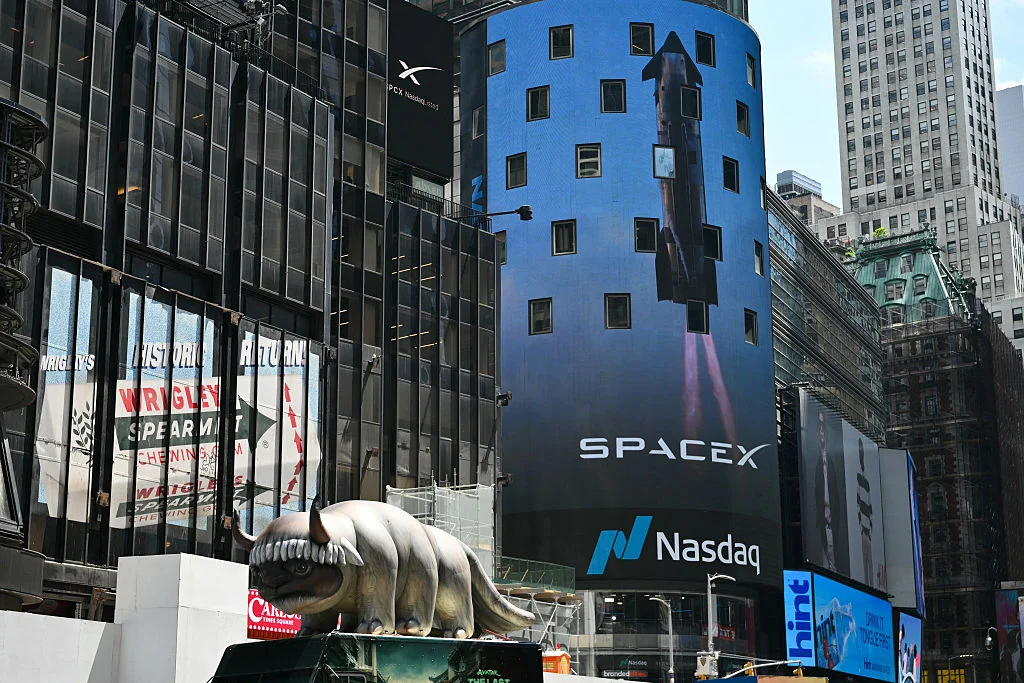
More than a decade after the conclusion of World War II, the world watched in awe as the Soviet Union and the United States engaged in a high-stakes geopolitical contest known as the Space Race. It was an era defined by Cold War tensions, the birth of NASA, and the rapid, state-funded development of aeronautical engineering. Today, that narrative has shifted. We have entered a second Space Race—a dynamic, multi-billion-dollar ecosystem driven not just by government mandates, but by the relentless ingenuity of private enterprise. For the modern investor, this shift represents a unique opportunity to gain exposure to the next industrial revolution, though it comes with significant volatility and the need for careful due diligence.
The Evolution of the Space Sector: A Chronology
To understand the current investment landscape, one must look at the timeline of space commercialization.
- 1957–1975: The Original Space Race. The era of Sputnik, Yuri Gagarin, and the Apollo moon landings. This period was strictly the domain of national governments, characterized by "flags and footprints."
- 1980s–2000s: The Shuttle Era and Satellite Commercialization. The focus shifted to the low-Earth orbit (LEO) economy, primarily through telecommunications and the construction of the International Space Station (ISS).
- 2002–2020: The Rise of the "NewSpace" Disruptors. The founding of SpaceX and Blue Origin fundamentally changed the cost-per-kilogram of launching payloads into orbit, introducing reusable rocket technology.
- 2021–Present: The Era of Market Integration. Space has moved from a niche defense sector to a broader commercial market, culminating in massive IPOs, the integration of AI and data centers in orbit, and the renewed geopolitical focus on moon bases and planetary defense.
The Titan of the Industry: SpaceX and the IPO of the Century
At the epicenter of the current fervor is Elon Musk’s SpaceX (SPCX). The company has transcended its origins as a launch provider to become a vertically integrated technology conglomerate. Its portfolio now includes sophisticated data center operations, artificial intelligence integration, and the Starlink satellite communications network—a constellation that is redefining global internet connectivity.
In June of this year, SpaceX made history with an initial public offering that shattered all expectations. Raising an astounding $85.7 billion—$10 billion more than the most optimistic projections—the offering became the largest IPO in U.S. history. The market response was immediate and euphoric; shares vaulted from an IPO price of $135 to approximately $177 within a single week. This surge pushed the company’s market capitalization to a staggering $2.4 trillion, placing it in the upper echelons of global corporate valuation.
Diverse Perspectives: The Bull vs. Bear Debate
The investment case for SpaceX remains polarizing. Proponents, such as Michael Monaghan, portfolio manager at Founder ETFs in Dallas, view the company as an inevitable monopoly. "We are bullish on SpaceX," Monaghan notes. "We think SpaceX will be the dominant space company with the highest efficiency and lowest price."
Monaghan also highlights the critical defense-industrial angle. As geopolitical tensions rise, the U.S. government’s push for a permanent moon base creates a massive, singular contract opportunity. "There is only one company that can do this: SpaceX," he asserts. "The Space Force needs to prepare for an in-person moon conflict with China, and that creates an immense tailwind for SpaceX’s heavy-lift capabilities."
Conversely, the skepticism from analysts like Nick Owens at Morningstar serves as a necessary check on the hype. Owens has assigned a significantly more conservative value of $63 per share, less than half of the recent market price. His hesitation is rooted in the "proof of concept" phase regarding the company’s peripheral ventures. "The validation evidence would be that the rockets are reliable," Owens explains. "To find out the commercial viability in space, we will want to know the relative costs to those data centers on Earth compared to their orbital counterparts. We need to see if the AI and space-based data center narrative translates into tangible bottom-line growth."
Beyond the Headline: Other Key Players
While SpaceX dominates the conversation, the space economy is broad, offering varied risk profiles for the discerning investor.
Rocket Lab (RKLB)
Rocket Lab has carved out a specialized niche as a preferred supplier for the industry. Keith Snyder, a senior analyst at CFRA Research, highlights the company’s prowess in small-launch services. "They are doing really good work in small launches that few others do," Snyder notes.

Rocket Lab’s involvement in flagship missions—including the Artemis lunar program, Mars rover expeditions, and resupply missions to the ISS—positions it as an indispensable "picks and shovels" player in the industry. With 70 launches currently scheduled and a record backlog, the company’s future revenue is increasingly predictable. While the stock has seen significant movement, analysts like Snyder remain optimistic, maintaining a one-year price target of $140, significantly above recent trading levels.
The Boeing (BA) Factor
For investors seeking exposure to space with the stability of a diversified aerospace giant, Boeing remains a staple. While it does not share the "start-up" growth profile of SpaceX, its role in developing bespoke, high-reliability launch systems ensures it remains a government favorite.
Matt Miller of CFRA Research points out that Boeing’s massive commercial aircraft revenue—forecasted at $98 billion this year—provides the "economic ballast" needed to weather the volatility inherent in space development. With limited competition in the heavy-launch and aerospace-defense manufacturing space, Boeing offers a more conservative, value-oriented entry point for investors who are wary of pure-play space startups. Miller has a 12-month target of $278 for the stock.
Implications for the Portfolio: ETFs vs. Individual Stocks
For most retail investors, the volatility of the space sector is a primary concern. The technical complexity of space missions means that a single failed launch or a delayed government contract can cause individual stock prices to plummet.
To mitigate this, financial advisors often suggest the use of exchange-traded funds (ETFs) that aggregate risk across the sector. Funds like the VanEck Space ETF (WARP), the Procure Space ETF (UFO), and the ARK Space & Defense Innovation ETF (ARKX) provide diversified exposure to satellite manufacturers, launch providers, and defense contractors. By investing in these "baskets," investors can capture the growth of the broader space economy without being overly reliant on the performance of a single company or CEO.
Strategic Outlook: A Long-Term Perspective
The transition of space from a government-led endeavor to a commercial marketplace is still in its infancy. Much like the early days of the internet, the infrastructure is being built, but the long-term winners are not yet fully solidified.
Investors should consider the following when analyzing the sector:
- Technological Maturity: Is the company’s primary revenue from proven, reliable launch services, or speculative future technologies?
- Government Dependency: How much of the company’s revenue is tied to defense and NASA contracts? This is a double-edged sword: government contracts are stable but subject to political shifts.
- Capital Intensity: Does the company have the cash reserves to sustain operations through the long development cycles required for orbital hardware?
As we look toward the next decade, the space sector is likely to see further consolidation, regulatory evolution, and perhaps a few high-profile failures. However, for the investor with a long time horizon and a tolerance for the volatility of frontiers, the modern space race offers a rare opportunity to invest in the future of human capability. Whether through the high-growth potential of pure-play innovators or the relative stability of established aerospace giants, space is no longer just a destination—it is a legitimate asset class.