Introduction: A Breach of Academic Conduct
An Ohio State University (OSU) assistant professor, Luke Perez, has been sentenced to two years of probation following a plea of no contest to a charge of disorderly conduct. The sentencing, handed down by the Franklin County Municipal Court on Monday, marks the latest development in a high-profile case of workplace violence that has sent shockwaves through the university community.
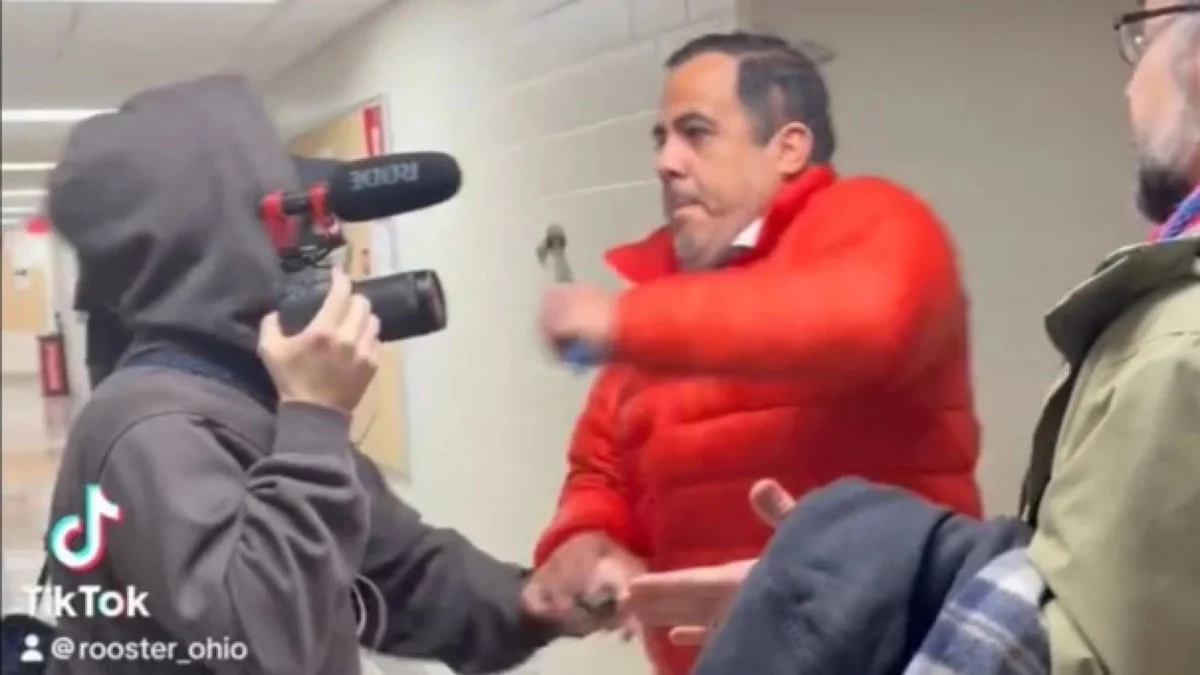
Perez, a faculty member associated with the Salmon P. Chase Center for Civics, Culture and Society—a center established under legislative mandate—was caught on camera earlier this year physically assaulting a documentary filmmaker. The incident has prompted significant debate regarding academic freedom, the role of university centers in the current political climate, and the boundaries of physical security in a campus environment. While Perez remains on administrative leave, the university’s internal processes have already signaled a clear disapproval of his actions, with a faculty-led committee recommending his termination.
Chronology of the Incident
The events leading to Monday’s sentencing began in February, when a routine visit by a high-profile university figure turned into an unprecedented display of physical aggression.
The February Altercation
In February 2026, documentarian Mike Newman and a colleague were present on the OSU campus to film E. Gordon Gee, the former two-time president of the university, who was serving as a consultant for the Chase Center. Following a guest lecture delivered by Gee, the journalists approached him in a campus hallway to pose questions.
Witnesses and video footage captured the interaction, which escalated when Perez intervened. Perez, appearing to act as a self-appointed guardian of the event, ordered the journalists to vacate the premises. When the reporters verbally objected to the dismissal, citing their professional prerogative to conduct interviews in a public-accessible university space, Perez initiated physical contact. He tackled Newman to the ground, a maneuver that resulted in an immediate uproar and subsequent investigation by law enforcement.
The Legal Trajectory
Initially, the legal system treated the event with the gravity typical of assault cases. Perez was charged with assault, a first-degree misdemeanor, to which he initially entered a plea of not guilty. As the investigation proceeded, prosecutors and defense counsel reached a resolution. On Monday, the original charge was amended to disorderly conduct, a fourth-degree misdemeanor.
Perez entered a no-contest plea to the amended charge. The court sentenced him to two years of probation, a suspended 30-day jail term, and a $100 fine. The reduction of the charge from a violent assault to a lesser disorderly conduct offense has raised questions about the legal threshold for holding academics accountable for physical outbursts against members of the press.
Internal University Sanctions and HR Findings
While the legal system has reached its verdict, the university’s internal mechanisms for accountability have been far more severe.
The Recommendation for Termination
In June 2026, an Ohio State University human resources sanctioning committee completed a comprehensive review of the incident. In their findings, the committee was unequivocal: they recommended that Perez be fired. The committee described the incident as "the most egregious case of workplace violence they had ever investigated."
This language underscores the severity with which the university views the safety of its staff and invited guests. Universities are historically viewed as sanctuaries for open inquiry and debate; the introduction of physical violence by a faculty member against a journalist strikes at the core of the institution’s commitment to transparency and discourse.

Perez’s Defense
Throughout the internal investigation, Perez maintained a stance of justification. He argued that he did not perceive his behavior as violent, nor did he believe it to be inappropriate. Instead, he claimed to be acting in self-defense, asserting that his actions were in accordance with university-provided training regarding how to respond to "active aggressors."
This defense has been widely criticized by institutional observers, who argue that the presence of journalists asking questions—even if perceived as persistent or unwanted—does not constitute an "active aggressor" scenario, which is a term reserved for individuals posing a lethal or immediate physical threat. The discrepancy between Perez’s interpretation of university policy and the administration’s interpretation of professional conduct has become a central point of contention in his ongoing employment status.
Implications for Academic Freedom and Campus Journalism
The case of Luke Perez is not merely an isolated incident of an angry individual; it reflects broader anxieties within higher education regarding the presence of media on campus and the influence of politically charged academic centers.
The Role of the Salmon P. Chase Center
The Chase Center for Civics, Culture and Society was established with the goal of fostering robust civic engagement. However, critics of such centers often point to the potential for them to become echo chambers or, conversely, sites of intense scrutiny that can make faculty feel "under siege." The fact that Perez, an assistant professor affiliated with this specific center, felt empowered to forcibly remove journalists suggests a breakdown in the understanding of how public-facing academic institutions should operate.
Journalism in Public Spaces
The assault on Mike Newman highlights the vulnerability of independent documentarians and journalists who work in university settings. If faculty members feel empowered to physically intervene when they dislike a line of questioning, the "chilling effect" on investigative journalism is significant. The OSU administration now faces the difficult task of balancing the protection of its faculty’s academic autonomy with the imperative to maintain a safe, accessible environment for the press.
Current Status and Official Responses
Despite the recommendation for termination by the HR committee, the university’s administrative response has been notably measured, if not opaque. As of late July 2026, a university spokesperson confirmed to Inside Higher Ed that Perez "remains on administrative leave."
The Delay in Final Action
The continued state of "administrative leave" months after the incident has sparked frustration among student groups and faculty unions. Typically, such leaves are meant to be temporary, pending a final decision on employment. The delay in finalizing Perez’s status could be attributed to complex labor laws, tenure-track contract protections, or pending appeals within the university’s governance structure. However, it also suggests that the university is navigating the precarious intersection of faculty rights and public reputation.
The Question of Accountability
For many, the $100 fine and probation sentence feel insufficient for a physical assault on a journalist. Critics argue that the legal system failed to address the symbolic weight of an academic attacking the press. As the university moves forward, it remains under pressure to demonstrate that its internal disciplinary policies carry more weight than the criminal court’s lenient sentencing.
Conclusion: The Path Forward
The assault by Luke Perez on Mike Newman serves as a sobering reminder of the tensions inherent in the modern university. As Ohio State University weighs its next steps, the case will likely serve as a case study for human resources departments across the country on how to handle faculty misconduct in the digital age.
The incident has forced an uncomfortable conversation about what it means to be a faculty member in an era where the public and the press demand greater accountability from academic institutions. Whether Perez remains a member of the faculty or is eventually dismissed, the long-term impact on the reputation of the Chase Center and the university’s relationship with the media will be felt for years to come. The university must now decide if its commitment to academic integrity includes the firm enforcement of professional behavior, regardless of an individual’s ideological alignment or institutional affiliation.