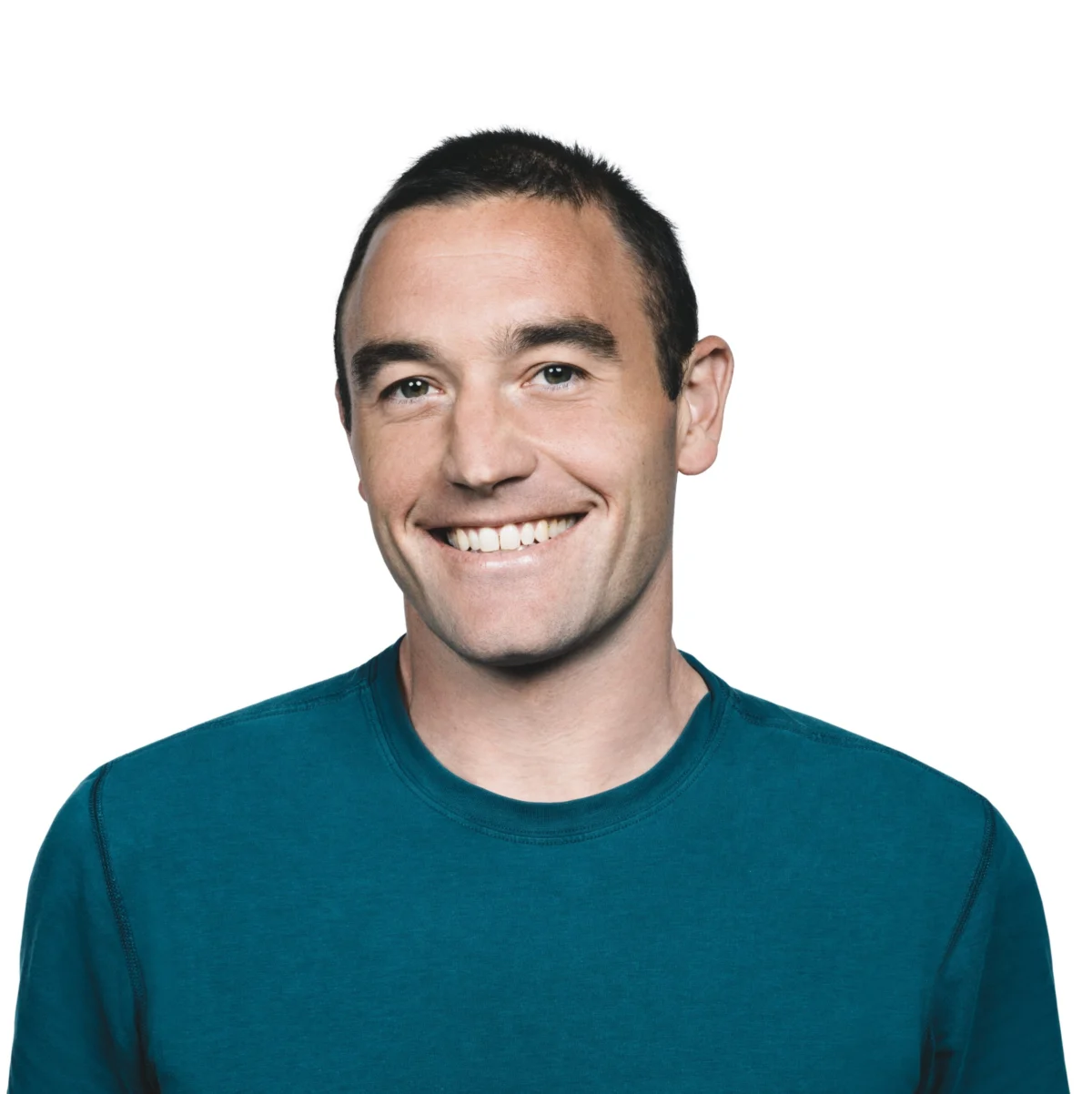
In a move that signals the intensifying convergence of Silicon Valley’s high-growth software culture and the heavy-industrial demands of the new space race, Stoke Space has appointed seasoned technology executive Kevin Weil to its board of directors.
Weil, whose career includes high-profile leadership roles at Meta, Twitter, Planet Labs, and OpenAI, has long been a quiet architect behind the scenes of the Seattle-based startup. His appointment marks a pivotal transition for Stoke Space—a company currently racing to perfect a fully, rapidly reusable rocket—as it shifts from an experimental venture-backed outfit to a company focused on operational, industrial-scale launch.
The Architect of Growth: A Deep-Rooted Connection
The relationship between Weil and Stoke Space CEO Andy Lapsa dates back to the company’s infancy. When Lapsa, a former Blue Origin engineer, co-founded Stoke in 2020 and successfully navigated Y Combinator’s winter batch, he was a newcomer to the labyrinthine world of venture capital.
“It’s real simple for me,” Lapsa told TechCrunch. “I came out of engineering, started a company, had no idea how to fundraise. I had no idea how Silicon Valley worked. I had no network.”
Enter Kevin Weil and his wife, Elizabeth, who provided critical early-stage capital through their investment fund, Scribble Ventures. Beyond the checkbook, Weil served as a mentor, guiding Lapsa through the arduous process of scaling a hardware-intensive business in an era dominated by software-first investors. This mentorship has now culminated in a formal board seat, providing Stoke with a director who understands both the hyper-growth ethos of social media giants and the complex operational requirements of the satellite observation industry.
Chronology of a Rising Star
Stoke Space’s trajectory has been nothing short of meteoric. Since its inception, the company has secured a staggering $1.34 billion in total funding, a figure that underscores investor confidence in the promise of full, rapid reusability.
- 2020: Stoke Space is founded by Andy Lapsa; enters Y Combinator. Kevin Weil and Scribble Ventures become early backers.
- 2021–2023: The company begins development of the "Nova" rocket, focusing on a proprietary heat-shielding technology designed to allow for rapid reuse, a feat that has remained the "holy grail" of orbital mechanics.
- 2024–2025: Weil serves as Chief Product Officer at OpenAI, providing high-level strategic oversight at the bleeding edge of the AI revolution.
- October 2025: Stoke secures a massive $510 million Series D round, validating its engineering approach against industry giants.
- April 2026: Weil exits his operational role at OpenAI following a reorganization of the company’s research division.
- Present: Weil joins the board of Stoke Space, bringing with him a blend of product-management expertise and experience in the defense sector.
The Engineering Challenge: Why "Nova" Matters
At the heart of the partnership is the Nova rocket. While SpaceX’s Starship has successfully pushed the boundaries of what is possible in heavy-lift launch, the industry at large has struggled to replicate that efficiency.
Reusability is the economic key to unlocking the next generation of space infrastructure. The intense heat generated during re-entry typically degrades rocket materials, requiring expensive refurbishments that eat into profit margins. Stoke Space’s strategy is built on a radical design approach to thermal management, which Lapsa believes will allow for rapid turnarounds—potentially flying the same vehicle multiple times in a single week.
“The world is realizing that launch is still not solved,” Lapsa noted. “The idea of full, rapid reuse was a little bit out there at that time… that’s now been rather normalized, and people see the inevitable now.”
This "inevitability" has sparked a massive demand for launch capacity. With the current backlog of satellite deployments and the increasing interest in orbital data centers—an infrastructure goal that requires affordable, frequent, and reliable access to space—Stoke is positioning itself not just as a rocket company, but as a critical logistics provider for the space-based economy.
The OpenAI Connection: Rumors and Realities
Weil’s arrival on the board has inevitably fueled speculation regarding deeper ties between the tech and space sectors. Reports from last year indicated that OpenAI CEO Sam Altman had explored the potential of investing in a SpaceX competitor.
While Lapsa dismissed these as “gossip and rumors,” the synergy is undeniable. As AI models become more computationally expensive and power-hungry, the concept of placing data centers in orbit—where solar energy is abundant and political constraints are minimized—has gained traction among Silicon Valley’s elite. For such an ambitious project to be viable, the cost of launch must drop to a fraction of its current price. Weil’s presence on the board provides a direct link to the leaders of the AI revolution, positioning Stoke as the likely carrier for the next generation of space-based computation.
Navigating the Defense Landscape
Beyond the commercial sector, Stoke Space is looking toward the U.S. government as a primary customer. The Pentagon has signaled an increasing reliance on commercial space launch for both reconnaissance and rapid-deployment logistics.
Weil’s profile is uniquely suited for this pivot. He was one of a handful of high-profile tech executives who joined the U.S. Army Reserve, a deliberate move to foster better communication and collaboration between the Silicon Valley ecosystem and the Department of Defense. His experience as President of Planet Labs—a company that revolutionized how the military and commercial sectors use earth-observation data—adds a layer of institutional knowledge that will be invaluable as Stoke begins bidding for national security launch contracts.
Implications for the Future
The decision to bring Weil on board is a signal that Stoke Space is entering its "commercialization phase." The company has moved past the early R&D hurdles that break many startups, but the path to becoming an operational launch provider remains fraught with risk.
“We’ve got a good chunk of the risk behind us, we’ve got more to go,” Lapsa said. “We’ll work as hard as we can, and we’ll go when it’s ready.”
For investors and industry observers, the appointment is a vote of confidence in Lapsa’s vision. By embedding a veteran like Weil—someone who has navigated the scaling of Twitter during its explosive growth and the complexities of OpenAI’s public-private structure—Stoke is building the corporate infrastructure required to handle the immense pressures of a billion-dollar aerospace firm.
As SpaceX continues to dominate the headlines with Starship, the secondary market for launch is heating up. There is a distinct, lucrative opening for a company that can offer a reliable, lower-cost alternative for smaller to medium-sized payloads that don’t require the immense capacity of a Starship, or for missions that require the flexibility of a more agile, rapidly reusable vehicle.
Ultimately, Weil’s tenure at Stoke will likely be measured by the company’s ability to move from the drawing board to the launchpad. If Nova can successfully demonstrate its reusability, Stoke will not only solve a primary bottleneck in the global aerospace industry but will also vindicate the long-held belief that the next generation of space companies will be built by those who understand how to fuse the software-driven speed of Silicon Valley with the uncompromising precision of rocket science.
The stage is set. With the board strengthened and the financial runway extended, the burden of proof now rests on the engineering team in Seattle. For now, the industry is watching closely to see if Stoke can turn its billions in funding into the reality of a routine, orbital commute.