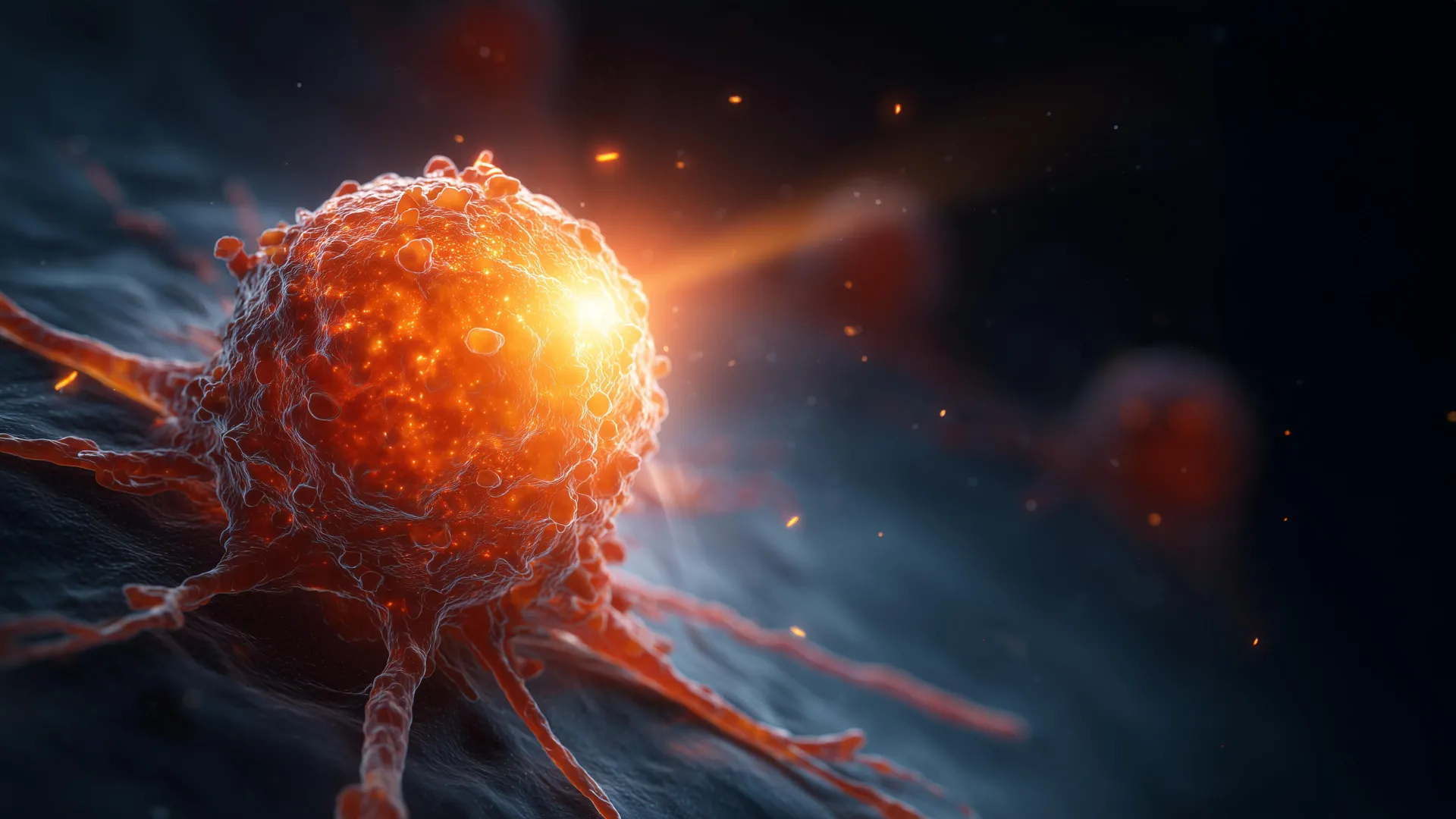
In a significant breakthrough that could reshape the landscape of oncology, researchers at the University of Illinois Chicago (UIC) have unveiled an experimental cancer treatment derived from bacteria that naturally inhabit the tumor microenvironment. By isolating a specific protein fragment, the team has successfully developed a therapeutic agent that targets the energy-generating "factories" of cancer cells, effectively depriving them of the fuel required for rapid proliferation.
The findings, recently published in the journal Signal Transduction and Targeted Therapy, represent a departure from traditional, gene-dependent cancer therapies. By focusing on the metabolic vulnerabilities of tumors rather than their genetic mutations, this novel approach offers a potential lifeline for patients whose cancers have become resistant to conventional treatments.
The Metabolic Achilles’ Heel: Targeting Mitochondria
At the heart of every living cell lies the mitochondrion, an organelle responsible for generating adenosine triphosphate (ATP), the chemical fuel that powers cellular functions. Cancer cells, which are characterized by their aggressive and unchecked growth, possess a voracious appetite for energy. To sustain this rapid division, cancer cells often rewire their metabolism, resulting in altered mitochondrial activity.
"The mitochondria are very important for a cell to survive; they are the energy factories," explains Dr. Tohru Yamada, the study’s senior author, associate professor in the departments of Surgery and Biomedical Engineering at UIC, and a member of the University of Illinois Cancer Center. "Many cancer cells exhibit altered mitochondrial number and activity, because a cancer cell has to grow aggressively and rapidly. Therefore, the mitochondria would be an ideal target for cancer therapy."
The UIC team’s strategy involves a peptide known as "aurB," derived from a bacterial protein called auracyanin. By infiltrating the tumor cell, aurB attaches itself to ATP synthase—the molecular machine responsible for the final steps of energy production. By disabling this mechanism, the peptide effectively triggers a metabolic crisis within the tumor, stalling growth and sensitizing the cancer to other forms of treatment.
A Chronology of Discovery: From Cupredoxins to aurB
The path to the development of aurB was not a sudden epiphany but the result of years of systematic investigation into the "tumor microbiome." Scientists have long understood that tumors are not isolated entities; they host diverse communities of bacteria that thrive within the hypoxic, nutrient-rich environment of the tumor mass.
Early Foundations: The Role of Cupredoxins
The research team’s journey began with the study of cupredoxins, a class of copper-containing bacterial proteins known for their ability to transfer electrons. Previous work in Dr. Yamada’s laboratory identified these proteins as natural tumor suppressors. This initial discovery led to the development of a peptide drug that showed promise in clinical trials for adults and pediatric brain cancer.
However, the team encountered a significant hurdle: the efficacy of that earlier peptide was inextricably linked to the p53 gene. Often referred to as the "guardian of the genome," p53 is frequently mutated in cancer patients. Because these mutations vary wildly between individuals, the effectiveness of the therapy was inconsistent, working for some patients while failing for others.
The Pivot: Searching for a p53-Independent Agent
Recognizing that a universal cancer treatment must function independently of the patient’s genetic profile, Dr. Yamada’s team set out to find an alternative. "We wanted to have an anti-cancer agent that doesn’t use the p53 function," Yamada noted.
The search led them to analyze tumor samples from breast cancer patients, utilizing advanced DNA sequencing to identify the specific bacterial inhabitants of those tumors. The team focused on a particular bacterial species that produced auracyanin. By synthesizing a peptide based on this protein—aurB—the researchers created an agent that bypassed the p53 pathway entirely, opting instead for a direct strike on the cell’s mitochondrial engine.
Supporting Data: Preclinical Success in Prostate Cancer
To validate the efficacy of aurB, the researchers focused on one of the most challenging areas of oncology: hormone-refractory prostate cancer. This form of cancer is notoriously difficult to treat because it often develops resistance to standard hormonal therapies.
In experiments involving mouse models of metastatic prostate cancer, the results were striking. When aurB was administered in isolation, it demonstrated an ability to suppress tumor growth. However, when paired with radiation therapy—a gold-standard treatment in clinical oncology—the synergy was profound.
The combination treatment resulted in a substantial reduction in tumor volume without the systemic toxicity often associated with aggressive chemotherapy. In a well-established tibial bone metastatic model, the researchers observed significant inhibition of tumor progression. Because the treatment targets the universal mechanism of ATP production rather than a specific genetic mutation, it provides a "broad-spectrum" metabolic disruption that is difficult for cancer cells to circumvent through typical mutation-driven resistance.
Official Responses and Collaborative Effort
The development of aurB was a multi-disciplinary effort involving experts from across the University of Illinois system. Dr. Yamada credited the Department of Surgery, noting that the contributions of Drs. Martin Borhani, Aslam Ejaz, Ajay Rana, Enrico Benedetti, and Tapas K. Das Gupta were instrumental in bringing the project to fruition.
"This approach is promising," said Dr. Yamada. "Using a well-established tibial bone metastatic model, we demonstrated significant inhibition of tumor growth, preclinically."
The university has moved quickly to secure the intellectual property surrounding this discovery. UIC has officially patented aurB with the support of the university’s Office of Technology Management, signaling a clear intent to move the drug from the laboratory bench to the bedside. The research team is currently navigating the complex regulatory and financial requirements necessary to launch Phase I human clinical trials.
Implications for Future Cancer Therapeutics
The implications of the UIC study extend far beyond the specific success of aurB. By proving that bacterial proteins can be successfully "repurposed" to exploit the metabolic vulnerabilities of human tumors, the researchers have effectively opened a new front in the war on cancer.
The Unexplored Microbial Frontier
Dr. Yamada believes that auracyanin is merely the tip of the iceberg. As metagenomic sequencing continues to reveal the vast diversity of the human microbiome—and the microbial populations residing within tumors—the potential for discovering new anti-cancer compounds is immense. "There are many other bacterial proteins that could be a source of cancer drugs," Yamada said. "We simply haven’t tried them yet."
Shifting the Paradigm
The move toward metabolic-based therapies represents a significant shift in cancer research. For decades, the focus has been on "precision medicine" aimed at correcting or bypassing specific genetic drivers of cancer. While successful in many cases, this approach is limited by the heterogeneity of cancer cells and their ability to evolve.
By targeting the fundamental metabolic requirements of the cell, the UIC approach seeks to strike at the "energy factories" that all cancer cells, regardless of their genetic makeup, rely upon. If successful in human trials, this could provide a platform for developing a new class of adjuvant therapies—treatments that work in tandem with radiation or immunotherapy to make cancer cells more vulnerable, effectively "starving" them into submission.
Conclusion: A Hopeful Horizon
While clinical trials remain the next major hurdle, the work conducted at the University of Illinois Chicago provides a compelling roadmap for the future of oncology. By looking to the ancient, symbiotic relationship between bacteria and their hosts, researchers have found a novel weapon that may turn the tide against some of the most stubborn and treatment-resistant forms of cancer. As the team moves toward human testing, the global scientific community will be watching closely, hopeful that the bacteria living within our tumors may eventually hold the key to their eradication.