Introduction: A New Chapter for an Iconic Lot
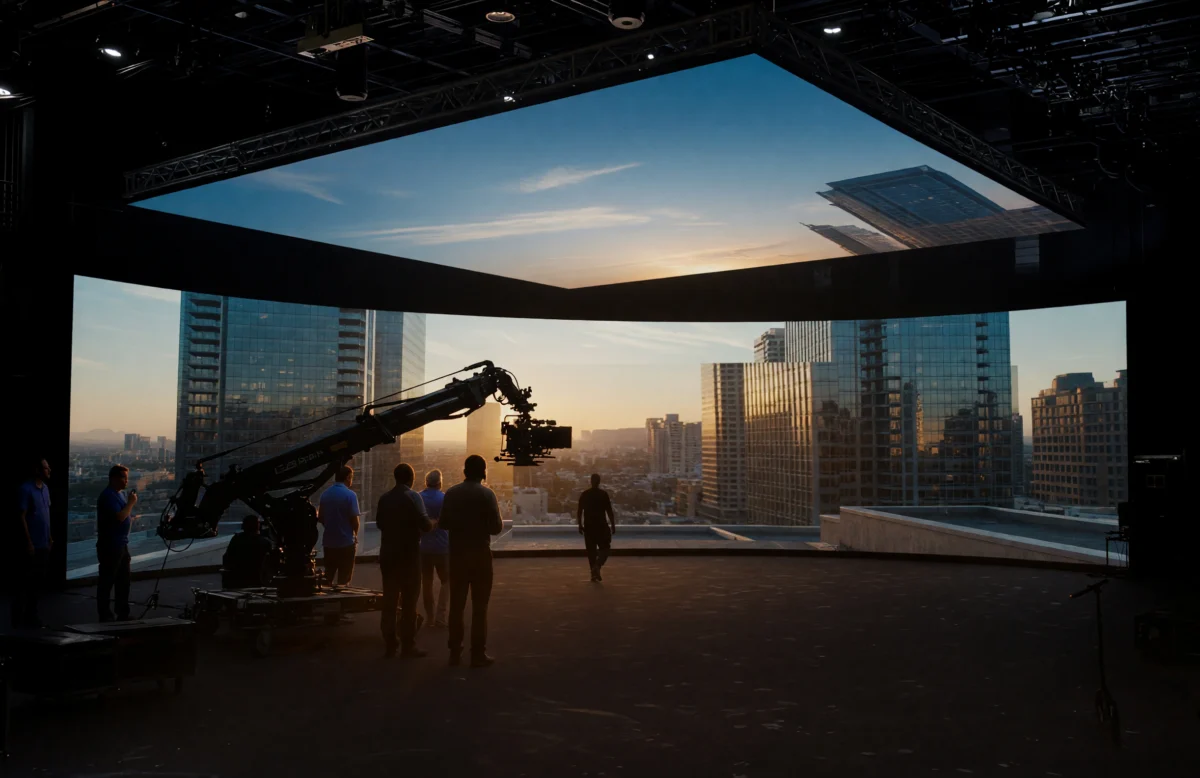
In a strategic move that bridges Hollywood’s storied past with the bleeding edge of cinematic technology, Television City and Orbital Studios have announced a high-profile partnership to launch a cutting-edge virtual production studio within the heart of Los Angeles’ Fairfax District. Located at the legendary 7800 Beverly Boulevard—a site synonymous with the history of American television—this new LED volume represents a significant investment in the infrastructure of modern storytelling.
As the industry grapples with the rising costs of location shooting and the logistical complexities of global travel, this partnership aims to provide a "best-in-class" virtual production experience. By deploying industry-leading LED volume technology, the collaboration seeks to accommodate productions of all scales, from high-budget studio tentpoles to independent projects, ensuring that Los Angeles remains the epicenter of the global entertainment economy.
The Chronology of Innovation: From Traditional Stages to Virtual Reality
The history of Television City is a microcosm of the evolution of the entertainment industry. Since opening its doors in 1952, the lot has served as the birthplace of some of the most influential programs in history. However, the nature of production has shifted dramatically over the last decade.
- 1952–2000: The era of traditional multi-camera and single-camera production, characterized by physical set construction and on-location shooting.
- 2010–2020: The rise of digital visual effects (VFX) and the initial integration of green screens, which often required extensive post-production workflows.
- 2020–2023: The rapid adoption of real-time rendering and virtual production, catalyzed by the industry’s need for flexibility during the global pandemic.
- 2024: The formalization of the partnership between Television City and Orbital Studios, marking the installation of a permanent, industry-standard LED volume at the Fairfax campus.
This timeline reflects a broader industry transition toward "In-Camera VFX" (ICVFX), where digital environments are rendered in real-time on massive LED walls, allowing filmmakers to capture final-pixel imagery during the principal photography stage.
Supporting Data: Why Virtual Production Matters
The decision to invest in virtual production is not merely aesthetic; it is a pragmatic response to the economic pressures currently facing the film and television sector.
The Economic Shift
Recent years have seen a "brain drain" of production activity, with many high-profile series and features relocating to states like Georgia or countries like Canada and the United Kingdom, drawn by aggressive tax incentives and lower overhead costs. The Television City-Orbital partnership is a direct counter-strategy to this trend. By enabling production teams to capture photorealistic global locations—from the streets of Paris to the Martian landscape—without leaving the Fairfax District, the studio effectively eliminates the need for expensive travel, permitting, and logistics.
Technological Specifications
While proprietary technical details remain closely guarded, the volume at Television City is built to the highest industry standards. Key features include:
- High-Resolution LED Panels: Designed to eliminate moiré patterns and ensure accurate color rendition for high-dynamic-range (HDR) cameras.
- Real-Time Rendering: Powered by state-of-the-art gaming engines (such as Unreal Engine), allowing for instantaneous lighting and environmental adjustments.
- Integrated Camera Tracking: Utilizing high-precision sensors to synchronize the movement of the physical camera with the digital background, creating a seamless parallax effect.
Official Responses: Bridging Legacy and Future
The collaboration has been met with enthusiasm from both the institutional side of the lot and the creative leadership at Orbital Studios.
"We could not be more excited to welcome Orbital Studios to Television City," said Anthony Mazziotti, executive director of stage operations and marketing at Television City. "Their work puts this lot among the most advanced production environments anywhere, while honoring everything these stages have stood for. This is exactly the kind of partnership that keeps Television City both iconic and essential."
For A.J. Wedding, founder and CEO of Orbital Studios, the project is as much about reverence for history as it is about technological advancement. "Walking these stages, you feel the weight of what was made here," Wedding noted. "Generations of crews poured everything they had into these rooms. That legacy makes us determined to get it right. We’re bringing the latest in virtual production technology and the most talented virtual art and AI artists inside spaces that helped define American television, because the best way to honor a storied place is to make sure the next great stories happen there, too."
Implications for the Industry: Keeping Jobs Local
The most significant implication of this partnership is the retention of "above-the-line" and "below-the-line" jobs within the Los Angeles ecosystem.
Preservation of the Crew Base
When productions leave California to seek the "look" of a specific location, the local crew base—the grips, gaffers, set decorators, and technicians who have built the Hollywood infrastructure—often suffer. By bringing the world to the studio, Orbital and Television City are effectively stabilizing the local labor market. Virtual production shifts the workflow from "traveling to the location" to "bringing the location to the studio," which necessitates a new class of digital artists, Unreal Engine developers, and volume technicians, thereby evolving the skill set of the local workforce rather than replacing it.
Sustainability and Efficiency
The environmental impact of location shooting is substantial. Between the carbon footprint of air travel, the transport of massive fleets of production vehicles, and the waste generated by traditional set building, the industry has faced mounting pressure to adopt more sustainable practices. Virtual production offers a greener alternative. By reusing digital assets and minimizing the physical footprint of a shoot, productions can significantly reduce their carbon emissions while simultaneously optimizing their shooting schedules.
A Proven Track Record
Orbital Studios arrives at Television City with a robust portfolio that justifies the high stakes of this investment. Their recent work demonstrates a deep understanding of how to blend digital and physical realities:
- "The Drop: A Snowfall Saga": Currently in production, showcasing the studio’s capability to handle complex, high-stakes television drama.
- "Nemesis" (Netflix): A landmark project where the team performed digital scans of downtown Los Angeles to recreate the city in a virtual space, allowing for shots that would be physically impossible or prohibitively expensive on location.
- "Justified: City Primeval" & "History’s Greatest Heists": Projects that highlighted the studio’s versatility across genres.
- "World War II with Tom Hanks": The 20-part docuseries stands as a testament to their ability to integrate historical context with immersive digital environments.
Conclusion: The Path Forward
The arrival of Orbital Studios at Television City is more than a simple lease agreement; it is a fundamental recalibration of what a studio lot should be in the 21st century. By marrying the historic, cavernous soundstages of the mid-20th century with the pixel-perfect precision of modern virtual reality, the partnership ensures that Los Angeles remains not just a historic landmark of film history, but a primary participant in its future.
As the industry continues to navigate the complexities of AI, real-time rendering, and the global competition for production dominance, the Television City-Orbital Studios volume stands as a beacon of innovation. It is a reminder that while the tools of the trade may change, the core mission of Hollywood—to tell the next great story—remains constant. For filmmakers, crews, and the city of Los Angeles, this facility offers a glimpse of a future where the only limit to a production’s scope is the ambition of its creators.