A startling archaeological discovery on a remote, windswept island in the Baltic Sea is forcing the scientific community to reconsider one of the oldest narratives in human history: the relationship between Homo sapiens and the wolf. On the Swedish island of Stora Karlsö, researchers have unearthed the remains of wolves dating back 3,000 to 5,000 years—creatures that, according to the laws of biology and geography, had no business being there.
This finding, published in the Proceedings of the National Academy of Sciences (PNAS), suggests that prehistoric humans were not merely hunting or fearing these apex predators; they were potentially managing, transporting, and perhaps even caring for them long before the full-scale domestication of dogs became the norm.
The Geographical Impossibility: How Did They Arrive?
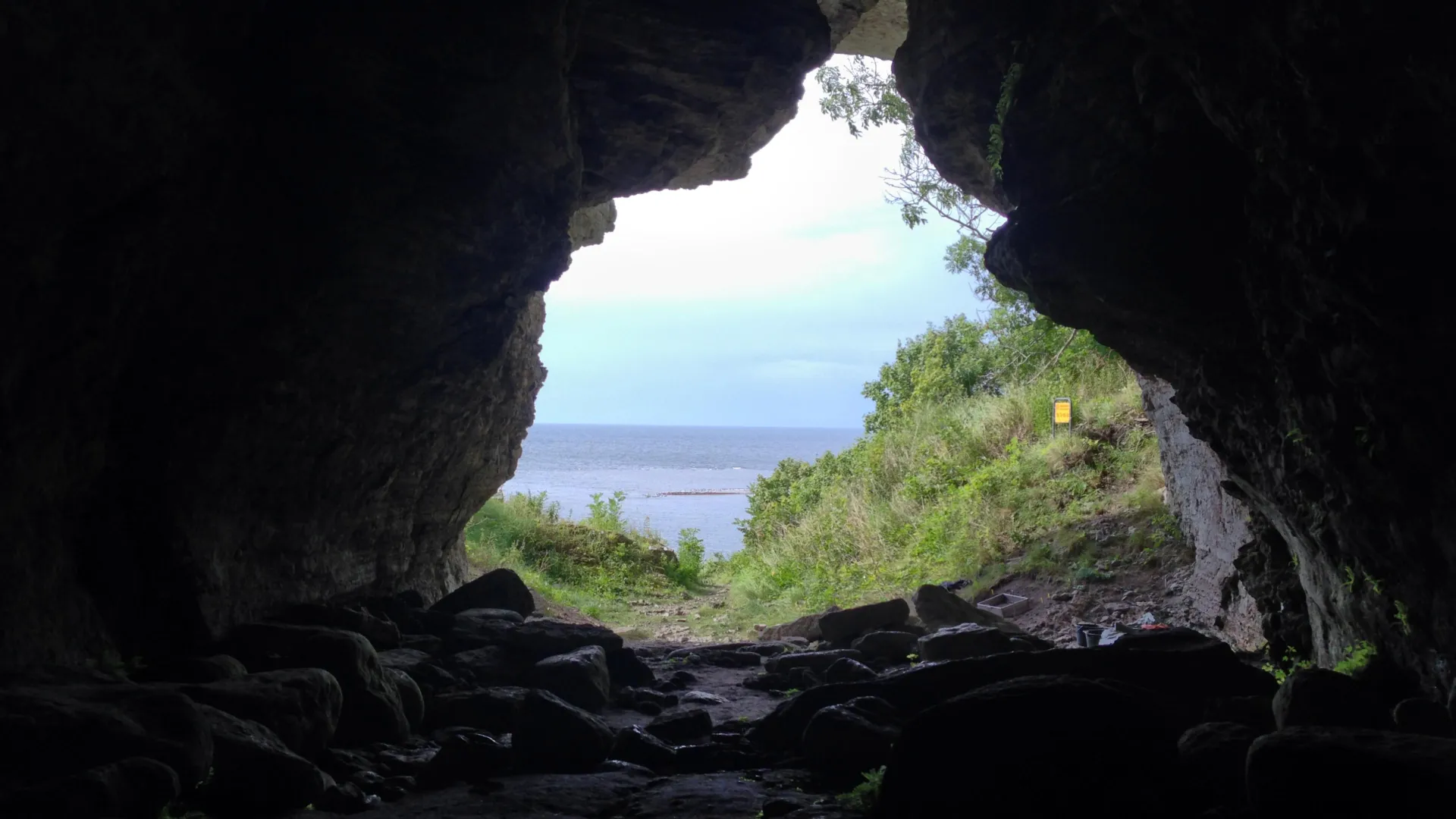
Stora Karlsö is a small, rugged limestone island covering roughly 2.5 square kilometers. Situated off the coast of Gotland, it has been historically devoid of native land mammals. For a wolf to reach the island naturally, it would have to cross several kilometers of cold, open Baltic waters—a feat impossible for the species.
The archaeological site, known as Stora Förvar cave, was a bustling hub for Neolithic and Bronze Age seal hunters and fishermen. The presence of wolf remains in a place that could only be accessed by boat confirms a radical hypothesis: these wolves were passengers. Prehistoric humans, likely traversing the Baltic in primitive watercraft, deliberately brought these wild carnivores to the island.
A Chronology of Coexistence
The story of the Stora Karlsö wolves spans a transformative period in human history, covering the transition from the Neolithic period into the Bronze Age.
The Neolithic Context
During the Neolithic era, human societies were transitioning from nomadic hunter-gatherer lifestyles to more sedentary, agricultural-based settlements. The cave at Stora Förvar served as a seasonal base for marine exploitation. It was here, amidst the debris of seals and fish, that the remains were deposited. The proximity of these wolf remains to human tools and food waste suggests that the animals were part of the domestic or semi-domestic sphere of these coastal communities.
The Bronze Age Legacy
As the timeline moved into the Bronze Age, the human-wolf dynamic persisted. One of the most compelling pieces of evidence from this later period is a wolf specimen that suffered a severe, debilitating limb injury. Osteological analysis shows that the injury would have rendered the animal incapable of stalking or bringing down prey. Yet, the skeleton reveals the wolf lived for a significant period after the injury occurred. This indicates that the wolf was likely provisioned by humans, receiving food and shelter that allowed it to survive an otherwise fatal condition.
Supporting Data: The Science of the "Wild" Dog
To understand the nature of these animals, a multi-disciplinary team from the Francis Crick Institute, Stockholm University, the University of Aberdeen, and the University of East Anglia employed a suite of advanced analytical techniques.
Genetic Analysis and the "Bottleneck" Effect
Genetic sequencing confirmed that the specimens were pure wolves, showing no evidence of interbreeding with dogs. However, the genetic data revealed a startling anomaly: one of the wolves exhibited exceptionally low genetic diversity—lower than any other ancient wolf studied to date.
"This is similar to what you see in isolated or bottlenecked populations, or in domesticated organisms," explains Dr. Anders Bergström of the University of East Anglia. Such low diversity typically occurs when a population is restricted, either by geography or, in this case, by human control. The data suggests that these wolves were not just "visiting" the island; they were part of a managed population that had been isolated from their mainland counterparts.
Isotope Analysis: The Human Diet
Stable isotope analysis of the wolves’ remains provided a window into their daily lives. By measuring the chemical signatures preserved in the bones, scientists reconstructed the wolves’ diets. The results were clear: these wolves were consuming a high volume of marine protein, such as seals and fish. This diet was nearly identical to that of the human hunters residing on the island. The implication is significant: the wolves were not scavenging; they were being fed the same resources the humans were harvesting for themselves.
Official Perspectives: Redefining the Human-Animal Bond
The lead researchers on the project have expressed that this discovery challenges the "dog-centric" view of human evolution.
"The discovery of these wolves on a remote island is completely unexpected," says Dr. Linus Girdland-Flink of the University of Aberdeen. "Not only did they have ancestry indistinguishable from other Eurasian wolves, but they seemed to be living alongside humans, eating their food, and in a place they could have only have reached by boat. This paints a complex picture of the relationship between humans and wolves in the past."
Professor Jan Storå of Stockholm University echoes this sentiment, noting that the study combines osteology and genomics to reveal a forgotten history. "The combination of data has revealed new and very unexpected perspectives on Stone Age and Bronze Age human-animal interactions," Storå noted. "It suggests that relationships between humans and wolves were far more varied than we once believed."
Implications: A Forgotten Chapter in Domestication
For decades, the standard scientific model of dog domestication has been a linear one: wolves wandered into human campsites, the less aggressive ones were tolerated, and over thousands of years of selective breeding, they evolved into the domestic dog (Canis lupus familiaris).
The Stora Karlsö discovery complicates this narrative. It suggests that there may have been a "middle ground" in human-animal history—a period where humans experimented with keeping wild wolves as companions, protectors, or perhaps even ceremonial animals, without the biological changes that define true domestication.
The "Failed" Experiment?
Why did this practice not lead to a new breed of domesticated wolf? The researchers hypothesize that the Stora Karlsö population may have been a localized cultural practice that, for reasons unknown, did not persist. It represents an "experiment in coexistence" that, while successful for centuries, ultimately hit a dead end.
This finding forces archaeologists to broaden their search parameters. If prehistoric humans were managing wolves in the Baltic, where else in the world might similar relationships have existed? The discovery suggests that we have been viewing ancient human history through too narrow a lens, focusing on successful outcomes like dogs while ignoring the myriad, temporary, and nuanced relationships that defined our ancestors’ lives.
Conclusion
The mystery of the Stora Karlsö wolves serves as a poignant reminder of the fluid boundary between the wild and the domestic. These animals, brought by boat to a lonely island, fed on the bounty of the sea, and cared for in their time of injury, remind us that the history of human civilization is inextricably linked to the animal kingdom in ways we are only beginning to comprehend.
As research continues, the Stora Karlsö site will likely remain a focal point for understanding the social complexity of Neolithic and Bronze Age life. We may never know the names of the people who brought these wolves to their island, nor the specific roles these animals played in their society. However, we now know that our ancestors were far more capable of cross-species connection than we ever dared to imagine—a discovery that turns the page on our understanding of our oldest companion, the wolf.