By Tech Insights Bureau
July 4, 2026
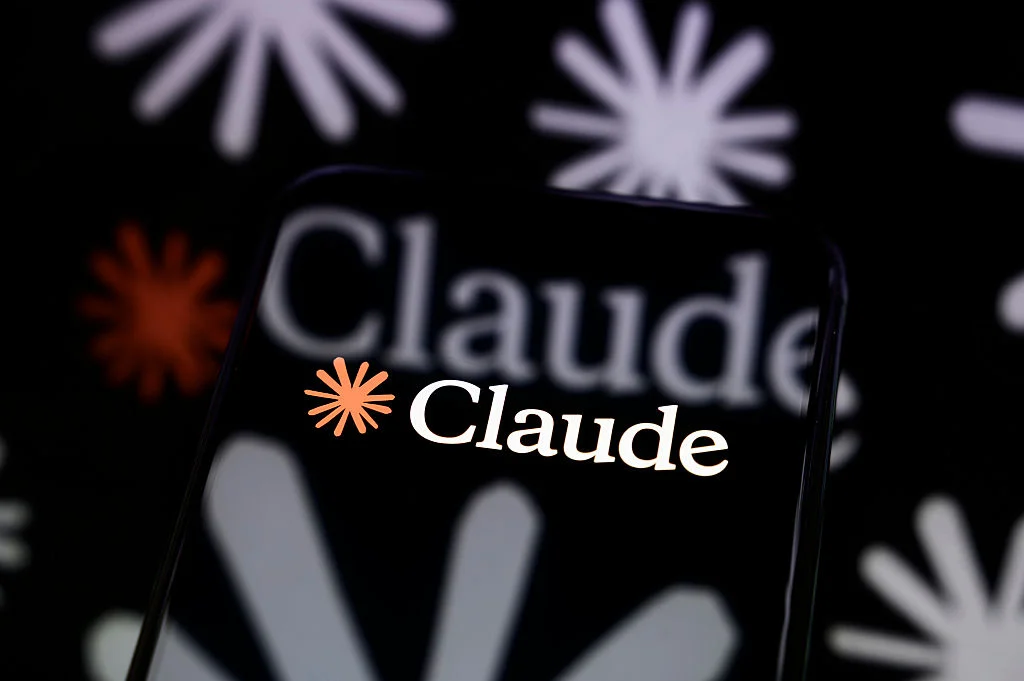
In a significant escalation of the ongoing geopolitical and technological friction between Western artificial intelligence developers and Chinese corporate entities, e-commerce giant Alibaba has officially issued a directive banning its employees from utilizing "Claude Code," the advanced programming assistant developed by Anthropic.
The mandate, which is set to take effect on July 10, 2026, marks a watershed moment in the relationship between Silicon Valley’s AI leaders and China’s massive tech ecosystem. According to internal reports and industry analysts, the move is driven by growing concerns over data sovereignty, alleged "backdoor" surveillance capabilities, and an increasing desire within the Chinese tech sector to achieve total independence from Western AI infrastructure.
The Core Conflict: Security and Data Sovereignty
The decision to blacklist Claude Code did not emerge in a vacuum. For months, tensions have simmered regarding the accessibility of high-end Western Large Language Models (LLMs) in restricted regions. Anthropic, which maintains a strict policy prohibiting Chinese companies—and their foreign-owned subsidiaries—from accessing its models, has been actively working to plug technical loopholes that have allowed users in China to bypass these geographic and legal restrictions.
However, the situation reached a boiling point following recent revelations regarding the nature of Anthropic’s defensive measures. Allegations surfaced on social media platforms, most notably Reddit, suggesting that a specific iteration of Claude Code contained mechanisms designed to identify and track users originating from or operating within China.
For a firm like Alibaba, which operates under strict regulatory scrutiny from Beijing, the presence of code that can identify user location or identity—potentially acting as a "backdoor"—is considered an unacceptable risk. By classifying Claude Code as "high-risk software," Alibaba is signaling to its workforce that the use of such tools could lead to the compromise of proprietary source code and internal intellectual property.
Chronology: The Road to the Ban
To understand the sudden nature of this ban, one must look at the timeline of events that led to the current impasse:
- Early 2026: Anthropic intensifies its efforts to restrict access to its models, specifically targeting unauthorized resellers who have been selling API access to Chinese developers and firms.
- March 2026: Anthropic launches an internal experiment—a "stealth" detection mechanism within Claude Code—intended to identify account abuse and prevent "model distillation," where smaller models are trained using the outputs of more powerful ones.
- June 2026: Reports begin circulating on technical forums like Reddit, claiming that Claude Code contains "spyware-like" features that report user activity back to Anthropic’s headquarters in San Francisco.
- July 3, 2026: Following a firestorm of community concern, Anthropic representative Thariq Shihipar issues a statement on X (formerly Twitter), acknowledging the experiment but framing it as a necessary security measure against unauthorized resellers.
- July 4, 2026: Multiple news outlets report that Alibaba has finalized its decision to block the tool, directing employees toward the company’s internal proprietary alternative, "Qoder."
Anthropic’s Stance and the "Distillation" Defense
The controversy centers on the fine line between "security monitoring" and "surveillance." In his public response, Thariq Shihipar attempted to quell the rising alarm by explaining the technical rationale behind the controversial code.
"This was an experiment we launched in March that was meant to prevent account abuse from unauthorized resellers and protect against distillation," Shihipar stated. He emphasized that the company had "landed stronger mitigations" since the experiment’s inception and had, in fact, been planning to phase out that specific tracking mechanism.
However, for critics and the Chinese tech establishment, the damage is already done. "Distillation" is a major concern for AI labs, as it allows smaller, less capable models to "steal" the reasoning capabilities of state-of-the-art models like Claude 3.5 or its successors. By monitoring for distillation, Anthropic was effectively policing how its intellectual property was being utilized—an act that has been interpreted by the Chinese tech community as an overreach into their internal research operations.

Implications: The Great AI Decoupling
The Alibaba-Claude incident is not merely a corporate policy dispute; it is a microcosm of the "Great AI Decoupling." As the United States and China continue to drift apart in terms of technological reliance, the incident carries several far-reaching implications.
1. The Rise of "National" AI Stacks
Alibaba’s directive to replace Claude Code with its own "Qoder" tool highlights a broader trend: Chinese tech firms are rapidly shifting toward self-reliance. By mandating the use of internal tools, companies like Alibaba, Tencent, and Baidu are ensuring that they do not have to rely on external APIs that can be cut off, throttled, or "policed" by a foreign entity.
2. The Erosion of Trust
The "backdoor" narrative—whether technically accurate or merely an interpretation of security telemetry—has severely damaged the trust required for cross-border software adoption. If major firms believe that Western AI tools are monitoring them, the market for Western LLMs in the East will shrink to near zero, regardless of their superior performance.
3. Increased Regulatory Scrutiny
This incident is likely to invite further scrutiny from both the U.S. Department of Commerce and China’s Cyberspace Administration (CAC). The U.S. government is increasingly sensitive to the risk of Western AI capabilities being "distilled" into Chinese models, while the Chinese government is equally concerned about the potential for Western companies to monitor or influence the internal workflows of Chinese corporate giants.
The Technical Reality: Can You "Ban" AI?
From a practical standpoint, enforcing a ban on an AI programming tool is a complex endeavor. Developers often rely on a web of interconnected dependencies, and blocking a tool at the corporate level requires sophisticated network traffic management.
Alibaba is likely implementing a multi-layered approach:
- Network-level blocking: Preventing traffic to Anthropic’s domains from internal corporate networks.
- Endpoint management: Removing the Claude Code integration from corporate-managed development environments.
- Internal audits: Scanning codebases to ensure that no proprietary intellectual property has been uploaded to the Claude platform.
However, the "shadow AI" problem remains. Many employees, frustrated by the limitations of domestic tools, often use personal VPNs or devices to access the best available technology. Whether Alibaba’s internal "Qoder" can reach parity with the user experience and coding prowess of Claude remains the ultimate test. If the domestic tool is perceived as significantly inferior, employees will find ways to circumvent the ban, leading to a "cat-and-mouse" game between security teams and engineers.
Conclusion: A New Frontier of Geopolitics
The events of July 2026 serve as a stark reminder that artificial intelligence is no longer just a neutral utility; it is a strategic asset. The friction between Anthropic and Alibaba is a symptom of a world where technology is inextricably linked to national security.
As Anthropic continues to refine its access policies and as Chinese firms accelerate their internal development of rival tools, the gap between the two AI ecosystems will only widen. For the global tech community, the message is clear: the era of "open" global AI development is rapidly closing, replaced by a fragmented, high-stakes landscape where every line of code is subject to the pressures of global power competition.
For now, the focus shifts to July 10. As the clock strikes for the official ban at Alibaba, the rest of the tech world will be watching to see if other major players follow suit, or if the "Qoder" transition can hold the line against the pervasive influence of the world’s most powerful AI models.