By Chuck Booth
July 4, 2026
PHILADELPHIA — Is it harder to break down a low-block defense in 100-degree heat, or to maintain composure when the opposition treats the pitch like a wrestling ring? France found itself answering both questions in the most demanding way possible during their Round of 16 clash against Paraguay. Ultimately, Les Bleus survived, securing a 1-0 victory that felt more like a survival mission than a standard knockout match.
As the humidity in Philadelphia finally begins to dissipate, Didier Deschamps’ squad faces no time for reflection. Their reward for advancing is a high-stakes quarterfinal date with Morocco in Boston—a rematch of their 2022 World Cup semifinal clash. While France emerged victorious two years ago, the current iteration of the Atlas Lions is a different beast entirely: more resilient, more tactical, and arguably more dangerous.
The Crucible: A Chronology of the Paraguay Battle
The match against Paraguay was defined by attrition. From the opening whistle, the South Americans appeared to have one singular tactical directive: disrupt the rhythm of the French attack through any means necessary.
The Opening Phase: France dominated possession early, looking for the quick passing lanes that have characterized their tournament run. However, the stifling heat acted as an immediate equalizer. By the 20th minute, the intensity of the French press began to wane, and Paraguay shifted into a defensive shell, banking on the temperature to drain their European opponents.
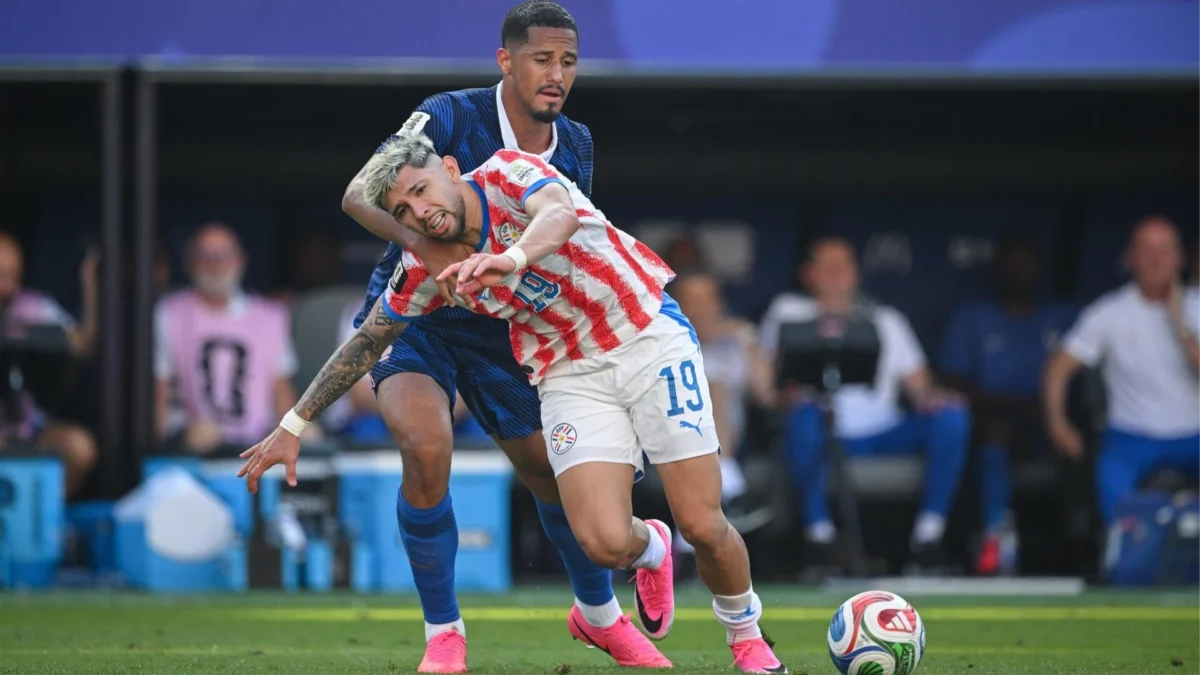
The Middle Stanza: As the game progressed into the hour mark, the "dark arts" of the game took center stage. Shoves, late challenges, and tactical fouls broke the game into jagged, unwatchable segments. Midfielder Kouadio Kone described the experience as a barrage of "cheap shots" and "shoves in the back," noting that the officiating crew allowed an unusual amount of physicality, seemingly prioritizing game flow over technical infractions.
The Deciding Moment: With the match deadlocked and fatigue setting in, the breakthrough finally arrived through a penalty kick. While it provided the necessary margin for victory, the reliance on a set-piece intervention underscored France’s struggles to break down a determined defensive line through open play.
The Closing Stages: As the final whistle approached, the physical toll became evident. Paraguay’s stars, Julio Enciso and Miguel Almirón, were forced off due to exhaustion and injury, respectively. France held firm, but the image of a visibly depleted French side walking off the pitch was a stark warning of what happens when a team is pushed to their absolute physical limit.
Tactical Analysis: France’s Efficiency vs. Moroccan Versatility
France’s win over Paraguay highlighted a potential vulnerability: an over-reliance on individual brilliance when the collective rhythm is stifled by physicality. Against a team like Morocco, that margin for error shrinks significantly.
The Moroccan Threat
Unlike Paraguay, who were content to pack ten men behind the ball, Morocco is a proactive, possession-competent side. Under their current tactical setup, they do not just defend; they transition with lethal speed.

- The Hakimi Factor: Achraf Hakimi remains one of the world’s premier wing-backs. His ability to cover the entire flank for 90 minutes provides Morocco with an outlet that Paraguay simply lacked.
- Squad Depth: The loss of striker Ismael Saibari to a hamstring injury might seem like a blow, but the performance of Sofiane Rahimi—who came off the bench to score in their victory over Canada—proves that Morocco’s threat is system-based rather than individual-dependent.
- Defensive Solidity: Morocco is the only team remaining in the tournament that has not lost a single match. They have mastered the art of absorbing pressure from "major nations" and punishing them on the counter-attack, a profile that mirrors the very dangers France struggled with in Philadelphia.
Official Responses and Reflections
The aftermath of the match saw the French squad balancing the relief of victory with the frustration of the officiating standards.
William Saliba, a pillar of the French defense, was particularly candid about the team’s mental fortitude. "I think the referee could have given a few yellow cards; maybe that would have calmed them down a bit," Saliba remarked. "We knew they were going to try to throw us off our game. Sometimes it’s clear we can get frustrated, but we’re not going to let them get away with it. We fought a battle, we won the battle, and we are qualified."
Saliba also acknowledged the brutal physical reality of the tournament’s current schedule. With the gap between matches shortening from a comfortable week to a mere five days, the recovery process has become the most important training session of all. "It was extremely hot today, so it was easy to tire out quickly. When you don’t score early on, the match can feel like a long, drawn-out affair. We’re pretty wiped out right now."
Implications: The Road to the Title
As the tournament shifts to Boston for the quarterfinals, the implications of the Paraguay match are twofold for Didier Deschamps.
1. The Physical Debt
The heat in Philadelphia likely cost France a degree of tactical sharpness that they will need against Morocco. With key personnel like Aurelien Tchouameni already nursing knocks, the squad depth will be tested. Deschamps must decide whether to rotate players to keep legs fresh or stick with the core group that has navigated the pressure thus far.
2. The Mental Threshold
France has proven they can win "ugly," but their ability to win "beautifully" is what will be required to beat a team as confident as Morocco. The Atlas Lions have already made history by knocking out the tournament hosts, Canada, in a dominant display. They play with a psychological freedom that comes from being the underdog who has already achieved the unthinkable.
3. Tactical Evolution
If France continues to fall into the trap of responding to physicality with frustration, they will likely see red cards or concede penalties against a more disciplined Moroccan side. The challenge for Deschamps is to instill a sense of calm. If France cannot find a way to circumvent the physical harassment they expect in the quarterfinal, their campaign could reach an abrupt, albeit violent, conclusion.
Looking Ahead
The quarterfinal in Boston is poised to be one of the most intense encounters of the 2026 World Cup. Morocco arrives with the momentum of a team that fears no one, having systematically dismantled defensive setups and high-pressing opponents alike.
For France, the path to the trophy has moved from a test of skill to a test of will. They have survived the heat and the hits of Philadelphia, but the Atlas Lions represent a hurdle of a different magnitude. In the world of tournament football, you are only as good as your last 90 minutes. If France’s last 90 minutes were any indication, they are a team that knows how to suffer—but they will need to do much more than just suffer to keep their World Cup dreams alive.