In the high-stakes environment of modern digital workspaces, the "meeting fatigue" phenomenon is often compounded by a more granular frustration: the cognitive load of navigating disparate software interfaces. Whether it is Zoom, Google Meet, Microsoft Teams, or Slack, every application demands a unique set of keyboard shortcuts. For the average professional, remembering that Command + Shift + A mutes the mic in one app while Control + D does it in another is not just a nuisance—it is a disruption to the flow of conversation.
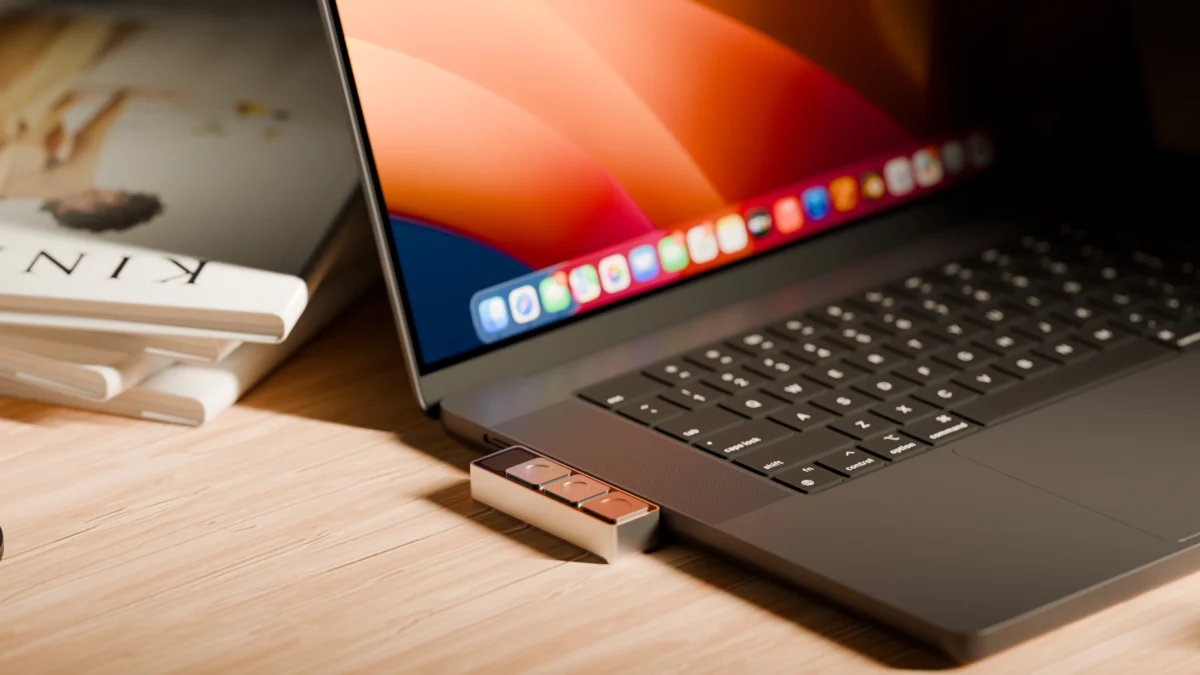
Project Mirage, a hardware startup aiming to bridge the gap between human intent and software execution, has unveiled "Dune." It is a diminutive, three-key aluminum keypad that promises to standardize the way we interact with our MacBooks. At the size of a stick of gum, this peripheral aims to be the universal remote for the professional digital life.
The Hardware: Minimalism Meets Functionality
The Dune is a $119 (introductory price) accessory that plugs directly into a MacBook’s USB-C port. Designed with a bespoke approach, each unit is manufactured to match the specific dimensions of the user’s Mac model, allowing it to sit flush against the chassis. This creates a seamless, integrated aesthetic that feels less like a clumsy dongle and more like a built-in feature of the laptop itself.
The device is entirely passive in its power consumption. By drawing energy directly from the MacBook, it eliminates the need for charging cables, proprietary batteries, or the perennial fear of a dead peripheral mid-presentation. For users whose USB-C ports are already occupied by high-bandwidth peripherals, the device can be connected via a standard dongle, though it loses its "flush" physical integration in such configurations.
Chronology of a Productivity Pivot
The concept of a "macro pad" is not new. The market has seen iterations ranging from the robust, screen-integrated Elgato Stream Deck to singular "MuteMe" buttons designed for remote workers. However, these solutions have historically been either overly complex for the average user or too limited in their application.
Project Mirage’s development cycle for Dune focused on two distinct pillars: universal hardware and context-aware software.
- Early Development: The startup prioritized compatibility with modern Apple silicon, specifically targeting M2 Air or later and M1 Pro or later models running macOS 15 Sequoia.
- The Software Layer: Recognizing that hardware is only as good as its firmware, the team built a companion application that allows for granular shortcut configuration.
- AI Integration: In a move to differentiate itself from traditional macro pads, the company integrated Claude Desktop, allowing users to define complex workflows using natural language rather than deep-diving into scripting languages.
Supporting Data: Context-Aware Execution
The true power of Dune lies in its ability to detect the "active" application. When a user is in a video conferencing suite, the three keys default to essential meeting controls: toggling the microphone, shuttering the webcam, and bringing the meeting window to the foreground.
Transitioning to productivity suites like Microsoft Excel or Google Sheets transforms the keys into copy, paste, and undo functions. For software engineers, the device can be mapped to perform repository actions, such as merging or approving pull requests directly from the IDE.
The AI-Powered Workflow
For those who lack coding expertise, the integration with Claude Desktop is a standout feature. By simply typing a prompt—such as "Create a shortcut that summarizes this website and extracts the investors"—the AI writes the necessary script and assigns it to a button. In testing, this functionality proved transformative for roles involving heavy research or data synthesis. An investor, for instance, can use the keypad to pull up a company’s financial history or competitive landscape with a single tap, turning a process that usually takes minutes into one that takes milliseconds.
Official Perspectives and User Experience
While the device offers significant promise, it is not without its growing pains. Initial user feedback—including firsthand accounts from testers—highlights a discrepancy between the device’s premium build and its tactile responsiveness.

"The keys need more resistance," notes one report. Because the device is positioned near the trackpad or edge of the keyboard, it is prone to accidental activation. A simple reach for a coffee mug or a shift in posture can result in an inadvertent camera toggle or an accidental mute—an ironic failure for a device designed to prevent such blunders.
Furthermore, the "skill" ecosystem is currently in its infancy. While the companion app provides a marketplace for community-driven shortcuts, the lack of a "sandbox" or preview mode is a significant hurdle. Currently, users must commit a shortcut to the hardware before they can test its efficacy, which can lead to a frustrating cycle of trial and error.
Implications: The Future of Peripheral Computing
The launch of Dune arrives at a time when the "Prosumer" market is increasingly saturated with devices aimed at optimizing workflows. However, Project Mirage is betting on a specific philosophy: hardware as a thin, tactile front-end for a deep, AI-powered ecosystem.
1. The Death of the Keyboard Shortcut?
If Dune succeeds in its mission, it could signal a shift in how we view the physical keyboard. Instead of memorizing a sprawling web of Option-Command-Shift combinations, users might increasingly rely on dedicated, context-aware hardware inputs. This would not only lower the barrier to entry for complex software but also reduce the mental tax of multitasking.
2. The "Skills Marketplace" Potential
The long-term viability of Project Mirage hinges on its marketplace. If the company can cultivate a community where developers share sophisticated Python-based skills, Dune could evolve from a mere keypad into an essential platform. The ability to "download" a workflow for a specific professional niche—be it legal, medical, or creative—would provide immense value, potentially moving the device from a niche gadget to an essential office tool.
3. Hardware-Software Synergy
The reliance on macOS 15 Sequoia and specific M-series chips indicates that Project Mirage is positioning itself at the bleeding edge of the Apple ecosystem. By leveraging the deep integration allowed by Apple’s latest OS, the company is ensuring that Dune feels like a native extension of the machine. However, this also limits the total addressable market. For the company to scale, it will likely need to expand its support to include older models and potentially other operating systems.
Conclusion
Project Mirage’s Dune is a bold experiment in human-computer interaction. It effectively addresses the "meeting fatigue" and "shortcut overload" that plague modern knowledge workers. With a retail price of $149 (post-introductory period), it occupies a premium space in the market, competing against both dedicated macro pads and general-purpose software tools.
Its success will ultimately depend on three factors:
- Hardware Refinement: Addressing the sensitivity of the keys to prevent accidental input.
- Software Maturation: Developing a more robust testing environment for user-created skills.
- Community Growth: Scaling the marketplace to ensure that the "skills" available provide genuine, consistent value across diverse professional disciplines.
For now, Dune stands as a testament to the idea that as our digital tasks become more complex, our physical interfaces must become simpler, more intuitive, and increasingly intelligent. It is not just a button; it is a bridge to a more efficient, less distracted way of working. As the company iterates, the potential for Dune to become a staple of the professional workstation is high, provided it can balance its innovative software ambitions with the physical realities of the workspace.
Note: As this product continues to evolve through software updates and potential hardware revisions, early adopters should be prepared for the nuances of a first-generation device. The promise of an AI-integrated, context-aware interface is clear, but the journey to seamless execution is just beginning.