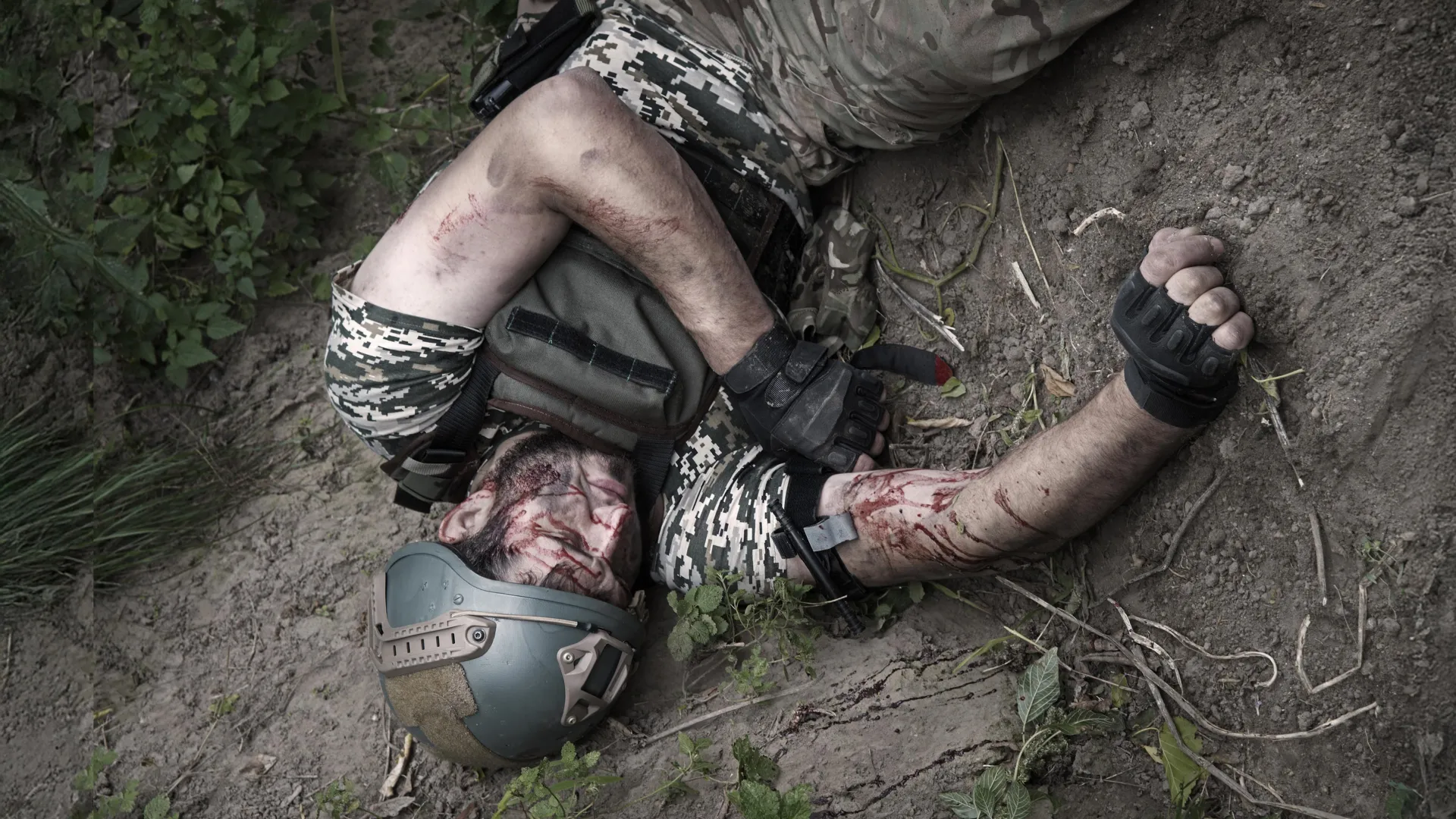
In the high-stakes environment of modern combat, the difference between life and death is often measured in seconds. Hemorrhage—uncontrolled, rapid blood loss—remains the leading cause of preventable death on the battlefield. When a soldier sustains a traumatic injury, traditional medical interventions often fall short due to the complexity of the wound or the logistical constraints of the front line.
However, a groundbreaking advancement from the Korea Advanced Institute of Science and Technology (KAIST) promises to change this paradigm. A multidisciplinary research team has developed a "next-generation" spray-on hemostatic powder capable of halting severe, high-pressure arterial bleeding in approximately one second. This innovation, which combines advanced materials science with practical military application, is poised to redefine emergency trauma care, both for those in uniform and civilians caught in disaster zones.
The Genesis of a Life-Saving Innovation
The project began with a clear, mission-driven objective: to bridge the gap between laboratory-grade medical technology and the chaotic reality of the battlefield. The research was spearheaded by Professor Steve Park of KAIST’s Department of Materials Science and Engineering and Professor Sangyong Jon of the Department of Biological Sciences.
Crucially, the team included active-duty military expertise. Army Major Kyusoon Park, a Ph.D. candidate at KAIST, played a central role in the development process, ensuring that the technology was not merely effective in a sterile petri dish, but rugged enough to perform under the extreme conditions of active combat.
Overcoming the Limitations of Conventional Patch Technology
For decades, the medical industry has relied on patch-type hemostatic agents. While effective in controlled clinical settings, these products suffer from inherent design flaws when applied to trauma. Their flat, rigid structure makes them ill-suited for the irregular, deep-tissue lacerations common in shrapnel or gunshot wounds. Furthermore, many existing products are highly sensitive to environmental factors, requiring specialized storage that is often unavailable in forward-deployed military bases.
The KAIST team identified these bottlenecks early in their research. By shifting from a patch to a powder-based delivery system, the researchers created a solution that is inherently "conformal." Whether a wound is narrow, deep, or jagged, the powder can be sprayed directly into the cavity, filling the void and providing a comprehensive seal that traditional products simply cannot achieve.
Technical Architecture: How the AGCL Powder Works
The efficacy of the "AGCL powder" lies in its sophisticated chemical design. Unlike legacy products that function primarily as passive sponges, the AGCL powder actively engages with the biological environment of the wound.
The Chemistry of Instant Gelation
The acronym "AGCL" refers to the core components of the powder: Alginate, Gellan Gum, and Chitosan.
- Alginate and Gellan Gum: These naturally derived polymers are engineered to react instantaneously with cations—specifically calcium—present in human blood. Upon contact, they trigger a rapid phase transition, turning the powder into a robust, dense hydrogel barrier.
- Chitosan: Included for its synergistic properties, Chitosan bonds directly with blood components, enhancing both the mechanical seal and the biological hemostatic process.
Superior Absorption and Adhesion
One of the most impressive metrics of the AGCL powder is its "three-dimensional internal structure." The material is capable of absorbing over 725% of its own weight in blood. This hyper-absorbency, combined with its adhesive strength (exceeding 40kPa), allows the powder to remain firmly in place even under the pressure of arterial hemorrhaging. To put this in perspective, 40kPa is sufficient to withstand the force of firm manual pressure, ensuring the clot remains undisturbed during patient transport.
Rigorous Testing: Safety, Healing, and Durability
Before transitioning to human applications, the KAIST team subjected the AGCL powder to a gauntlet of biological and environmental trials.
Biocompatibility and Antibacterial Properties
Safety is paramount in any wound-care product. Laboratory results confirmed a hemolysis rate of less than 3%, indicating that the powder does not prematurely break down red blood cells. Furthermore, the material exhibited cell viability scores above 99% and demonstrated a 99.9% antibacterial effect. This is a critical feature, as battlefield wounds are frequently contaminated by debris and bacteria, which often lead to post-injury infections.
Surgical Efficacy and Tissue Regeneration
In animal models involving severe liver injuries, the AGCL powder consistently outperformed standard commercial agents. Not only was blood loss significantly reduced, but the "time-to-hemostasis" was drastically shortened. Perhaps most encouraging was the healing trajectory: within two weeks of application, subjects showed normal liver function and advanced regeneration of collagen and vascular tissue, with no signs of systemic toxicity.
Field-Ready Durability
Recognizing the logistical realities of military service, the team prioritized environmental stability. The powder has been tested to maintain its structural integrity and chemical reactivity for up to two years under high-temperature and high-humidity conditions. This durability ensures that the product can be stored in the back of an ambulance, a soldier’s med-kit, or a disaster relief cache without degradation.
Implications for Global Emergency Medicine
While the project was conceived as a defense-led initiative, its potential applications extend far beyond the front lines. The transition of this technology into the civilian sector is a textbook example of a "spin-off," where defense-funded innovation yields broad societal benefits—similar to the historical development of GPS or the internet.
Disaster Response and Underserved Regions
In the wake of earthquakes, industrial accidents, or urban mass-casualty events, rapid bleeding control is the difference between life and death. Because the AGCL powder is lightweight, easy to deploy, and requires minimal training to use, it is an ideal candidate for civilian emergency responders and humanitarian aid organizations operating in regions with limited surgical facilities.
Internal Surgical Applications
Beyond trauma, the product holds promise for controlled surgical environments. Surgeons could potentially utilize the spray to manage bleeding in hard-to-reach areas during complex internal procedures, reducing the time a patient spends under anesthesia and decreasing the overall risk of post-operative complications.
Official Recognition and Future Outlook
The innovation has already garnered significant attention within both the scientific and defense communities. The project was awarded the 2025 KAIST Q-Day President’s Award and secured the Minister of National Defense Award at the 2024 KAIST-KNDU National Defense Academic Conference.
These accolades reflect a growing consensus: that the AGCL powder is not just a technological advancement, but a strategic necessity. The research, published on October 28, 2025, in the prestigious journal Advanced Functional Materials, highlights the power of interdisciplinary collaboration.
For Army Major Kyusoon Park, the project is deeply personal. "The core of modern warfare is minimizing the loss of human life," he remarked. "I started the research with a sense of mission to save even one more soldier. I hope this technology will be used as a life-saving tool in both national defense and private medical fields."
The Road Ahead
The development team, led by Professors Park and Jon and including Ph.D. candidate Youngju Son, is currently looking toward the next steps in the product lifecycle: large-scale manufacturing and clinical trials. With the support of the National Research Foundation of Korea (NRF), the team is working to ensure that this rapid-clotting technology reaches those who need it most.
In an era where technology is often associated with the lethality of modern weaponry, the AGCL powder serves as a powerful counter-narrative. It is a testament to the fact that the most sophisticated advancements in defense science can—and should—be directed toward the preservation of human life. As the technology moves toward commercialization, it promises to turn the most chaotic, blood-filled moments of trauma into manageable medical events, potentially saving thousands of lives annually in the years to come.