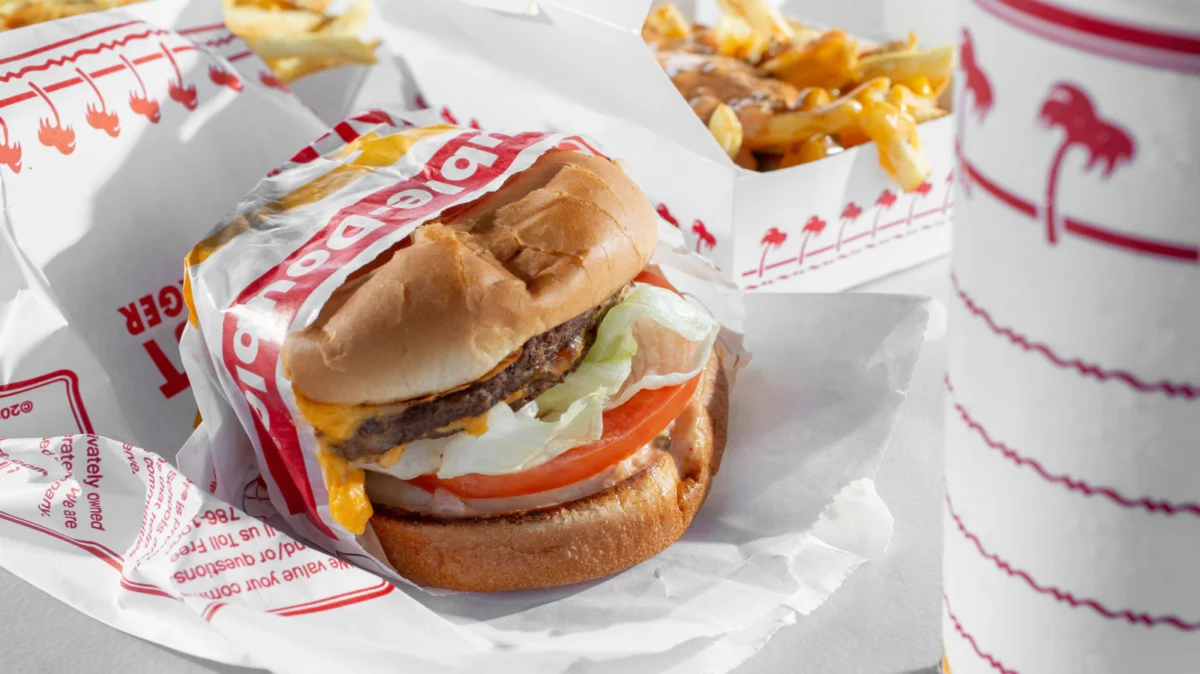
In the ecosystem of American fast food, few legends loom as large as the In-N-Out "Secret Menu." For decades, the California-based chain has cultivated an aura of exclusivity by allowing customers to customize their orders in ways that go beyond the standard menu board. However, the line between clever culinary innovation and pure, internet-fueled fiction recently blurred when a viral video introduced the world to the "Firefighter-Style" burger.
The creation, which promised an indulgent stack of beef, cheese, and a fried egg, swept across social media platforms, leaving thousands of customers confused—and In-N-Out employees exhausted. As it turns out, the "Firefighter-Style" burger is not a hidden gem of the secret menu; it is a meticulously crafted hoax that highlights the modern difficulty of distinguishing between authentic brand lore and digital misinformation.
The Anatomy of the Hoax: The "Firefighter-Style" Promise
The saga began with a Facebook post shared by Brenden Kalfus, a firefighter and Temecula City Council member. In a video that quickly garnered over half a million views, Kalfus is seen at an In-N-Out counter, confidently ordering a "Firefighter-Style" burger. The visual reveal that follows is nothing short of an architectural marvel of gluttony: a Double-Double burger base, an added fried egg, and a secondary grilled cheese sandwich constructed with two bottom buns.
The sheer volume of the item—two beef patties, four burger buns, two slices of American cheese, a fried egg, and the standard fixings—offered a level of decadence that is catnip for social media influencers. The video was framed with enough authenticity to bypass the skepticism of the average viewer, especially given that the "secret menu" concept is already deeply embedded in In-N-Out’s public identity.
A Chronology of the Viral Surge
The timeline of this digital fabrication provides a masterclass in how modern misinformation propagates.
- The Initial Spark: The video was posted to social media, featuring Kalfus appearing to receive the burger in a standard In-N-Out bag. The video included a tongue-in-cheek disclaimer: "only located at specific locations that don’t exist yet prior to 10 a.m."
- The Rapid Spread: As the video hit TikTok, Instagram, and Reddit, the "disclaimer" was largely ignored or stripped away by reposts. Viewers began flocking to local In-N-Out locations, filming their attempts to order the item.
- The Confrontation: Within days, the discrepancy between online expectation and in-store reality reached a boiling point. Employees began reporting multiple daily inquiries regarding the item.
- The Debunking: As customers continued to be turned away, the narrative shifted from "How do I get this?" to "Is this real?" Journalists and food bloggers began investigating, leading to the eventual confirmation that the burger was a fabrication.
Behind the Curtain: The Reality of In-N-Out Operations
To understand why the "Firefighter-Style" burger is an impossibility, one must look at the operational constraints of the chain. In-N-Out is famous for its hyper-streamlined menu. Unlike competitors that offer breakfast items or diverse toppings like bacon or eggs, In-N-Out keeps its inventory tightly controlled to ensure freshness and speed.
Kalfus eventually admitted to CBS News Los Angeles that the secret was, quite literally, brought from home. He had fried the egg at his fire station before heading to the restaurant to assemble the "masterpiece." By leveraging the trust associated with his position and a charismatic delivery, he managed to create a video that felt like a genuine "insider tip."
The frustration for In-N-Out employees has been palpable. On community forums like Reddit, staff members have voiced their exasperation. One employee noted, "They filmed that video at my store, and we get asked about it multiple times a day now." The hoax has turned simple customer service interactions into repetitive explanations of menu boundaries, putting unnecessary strain on front-line workers who are already managing high-volume, fast-paced environments.
The Broader Implications of Social Media Food Trends
The "Firefighter-Style" incident is not an isolated event; it is part of a growing trend where social media users prioritize "content" over accuracy. This phenomenon has several significant implications for both the food industry and consumers.
1. The Erosion of Brand Trust
When a brand’s reputation is built on the exclusivity of a secret menu, that trust is fragile. By presenting a fake item as a legitimate offering, influencers risk undermining the genuine secret menu items that fans have come to love. If customers are consistently told "no" because of viral hoaxes, the magic of the brand begins to feel more like a series of disappointments.
2. The Burden on Front-Line Workers
Fast food employees are tasked with providing consistent service under intense time pressure. When viral trends force them to explain the non-existence of imaginary products, it disrupts the flow of service and can lead to friction between staff and customers. In the case of the "Firefighter-Style" burger, the staff was put in the position of being "gatekeepers" of a secret that didn’t exist, a role they never signed up for.
3. The "DIY" Consumer Culture
Interestingly, the hoax has inspired a new wave of "hacker" behavior. Some fans, refusing to accept the "no," have started ordering the components separately and building their own burgers at the table—a phenomenon that blends the line between ordering a menu item and performing a culinary DIY project. This reflects a broader shift in consumer behavior where customers are increasingly looking to personalize their dining experiences, often pushing the boundaries of what a kitchen is equipped to handle.
Distinguishing Fact from Fiction: Why the Secret Menu Persists
Despite the frustration caused by the "Firefighter-Style" hoax, the allure of the In-N-Out secret menu remains strong. The chain has built its reputation on a foundation of "Animal Style" burgers and fries, protein-style lettuce wraps, and various modifications that actually are supported by the kitchen.
Authentic secret menu items are successful because they utilize ingredients the store already has. "Animal Style" works because the kitchen already stocks mustard, pickles, and grilled onions. The "Firefighter-Style" burger failed the reality test because it required an ingredient—the fried egg—that is fundamentally absent from the In-N-Out supply chain.
As we move further into an era dominated by short-form video content, consumers must develop a higher degree of media literacy regarding food trends. Before attempting to order the next "secret" sensation, customers should consider two simple questions:
- Does the restaurant carry these ingredients?
- Is this a recognized modification, or is it a custom assembly project?
Conclusion: Lessons from the Firehouse
The "Firefighter-Style" burger serves as a modern cautionary tale. While the creativity behind the idea is evident, the impact on the brand and its employees is a reminder that there is a cost to misinformation. The internet has transformed the way we consume food, turning simple meals into theatrical events, but it has also created a space where the truth can be easily obscured by a well-edited video.
For now, the lesson remains clear: if you want a burger at In-N-Out, stick to the classics. Whether it’s an Animal-Style cheeseburger or a simple Double-Double, the joy of the chain lies in its consistency—a quality that is far more valuable than a viral, yet impossible, menu item. As for the "Firefighter-Style" burger? It will likely remain what it has always been: a clever, albeit slightly mischievous, piece of digital performance art that proved just how much power a simple, high-resolution video has over the appetites of the masses.