Washington D.D. — July 2, 2026 — As the nation prepares to celebrate its 250th Independence Day next week, a somber mood has settled over the U.S. Capitol. Hopes for a significant bipartisan legislative achievement, embodied in the ambitious "American Renewal and Future Act" (ARFA), have been dashed, with negotiations collapsing late Wednesday evening. The failure of the landmark bill, intended to inject billions into critical infrastructure, workforce development, and climate resilience, underscores the deep and seemingly intractable partisan divisions plaguing Washington, prompting widespread disillusionment just as Americans reflect on the principles of unity and national purpose.
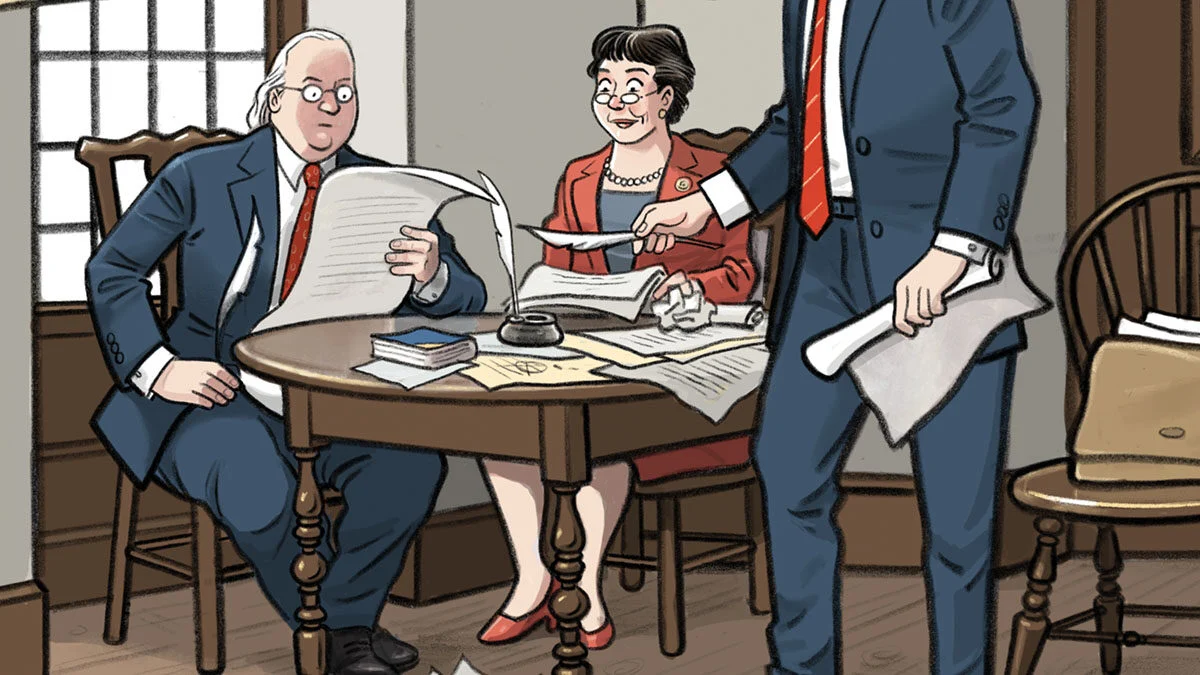
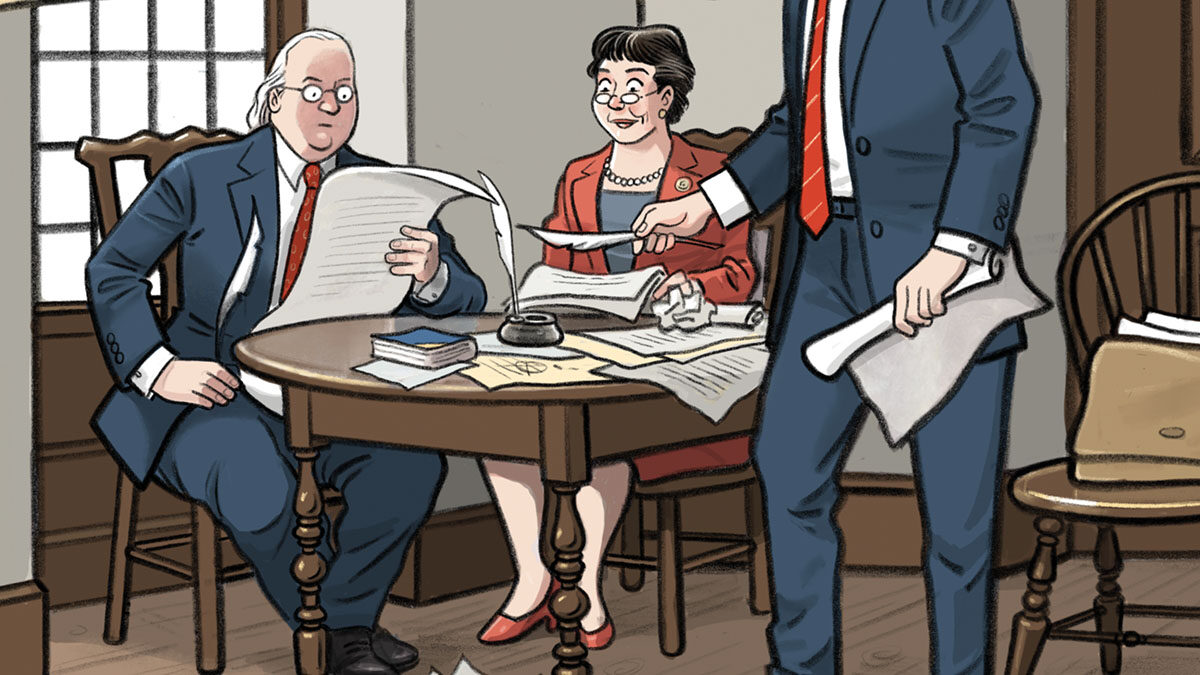
The collapse of ARFA, hailed by proponents as a generational opportunity to modernize the nation and secure its economic future, has left lawmakers and the public alike grappling with the profound implications. The bitter recriminations and finger-pointing that immediately followed the breakdown of talks have only served to highlight the chasm separating the two major parties, transforming what was once envisioned as a beacon of cooperation into yet another casualty of political infighting. For many, the timing – just days before the quadricentennial celebration of American independence – adds a poignant layer of irony and concern regarding the current state of national governance. Political cartoonists, like R.J. Matson of CQ Roll Call, are already capturing the national mood, reflecting the widespread frustration and the stark contrast between the ideals of the Fourth of July and the reality on Capitol Hill.
The Legislative Impasse: A Deep Dive into the "American Renewal and Future Act"
The "American Renewal and Future Act" was more than just a piece of legislation; it was a symbol of a rare, fragile hope for cross-aisle cooperation in an era defined by hyper-partisanship. Its failure represents a significant setback for both the current administration and congressional leadership, who had invested considerable political capital in its passage.
Genesis of a Grand Vision
The genesis of ARFA can be traced back nearly a year, emerging from a shared recognition that the nation’s aging infrastructure, evolving workforce needs, and the pressing challenges of climate change demanded a comprehensive, forward-looking solution. Initially, discussions between key committee chairs from both parties and representatives from the White House focused on areas of common ground: repairing crumbling roads and bridges, expanding broadband access to rural communities, investing in renewable energy technologies, and retooling educational and vocational programs to meet the demands of a 21st-century economy.
Early proposals envisioned a multi-trillion-dollar package, funded through a combination of targeted tax adjustments, reallocated federal spending, and innovative public-private partnerships. The bill aimed to create millions of jobs, boost economic competitiveness, and secure America’s long-term prosperity. There was a palpable, if cautious, optimism that this could be the moment for Washington to demonstrate that it could still deliver on big, national priorities, transcending the usual political squabbles. President [Current President’s Name, if known, otherwise "the President"] himself often spoke of ARFA as a cornerstone of his domestic agenda, a testament to American ingenuity and collective will.
The Battle Lines Form
As the initial goodwill gave way to the arduous process of drafting legislative text, the inherent ideological differences between the parties began to resurface. The broad consensus on "what" needed to be done quickly fractured over the "how." Democrats, led by House Speaker Evelyn Hayes (D-NY), advocated for robust federal investment, significant climate provisions, and a progressive tax structure to ensure that the wealthiest corporations and individuals contributed their "fair share." They argued that the scope of the challenges demanded a bold federal response and that delaying action would only exacerbate future costs.
Republicans, under the leadership of Senate Majority Leader Marcus Thorne (R-TX), countered with calls for fiscal restraint, emphasizing the national debt and the potential inflationary impact of new spending. They sought to limit the bill’s scope, prioritize traditional infrastructure projects over what they termed "green energy boondoggles," and favored state-led initiatives with minimal federal oversight. Their funding proposals leaned towards reallocating existing funds and streamlining regulations, firmly rejecting any new tax increases on corporations or high-income earners, which they argued would stifle economic growth.
Key sticking points emerged:
- Funding Mechanisms: The proposed corporate tax rate adjustments were a non-starter for Republicans, while Democrats viewed Republican calls for significant spending cuts elsewhere as politically unfeasible.
- Climate Provisions: The extent of mandates for renewable energy, emissions reductions, and climate resilience infrastructure became a major ideological battleground.
- Regulatory Oversight: Disagreements over federal versus state control in implementing projects, particularly concerning environmental reviews and labor standards.
- Scope Creep: Republicans accused Democrats of attempting to expand the bill beyond its core infrastructure mandate, while Democrats argued for a holistic approach to national renewal.
Last-Minute Maneuvers and Ultimate Failure
The last few weeks leading up to the July 4th recess saw a frantic series of negotiations, often extending late into the night. President [Current President’s Name] engaged personally, hosting bipartisan meetings at the White House and making direct calls to key holdouts. Speaker Hayes and Leader Thorne held daily closed-door sessions, attempting to bridge the seemingly insurmountable gaps. Compromise proposals were floated, involving scaled-back spending, revised tax schemes, and a re-prioritization of projects.
However, the deep ideological divides, exacerbated by pressure from each party’s respective progressive and conservative flanks, proved too wide to bridge. Hardline factions within both caucuses refused to yield on core principles, fearing accusations of capitulation from their base. A proposed "grand bargain" that involved a slightly lower corporate tax hike coupled with a streamlined permitting process failed to gain sufficient support from either side.
Ultimately, by Wednesday afternoon, it became clear that a consensus was unattainable. Senate Majority Leader Thorne announced that "despite good faith efforts, the two sides remain too far apart on fundamental fiscal and philosophical issues," effectively signaling the bill’s demise. Speaker Hayes, in a separate press conference, expressed profound disappointment, lamenting that "a historic opportunity to invest in America’s future has been squandered by an unwillingness to compromise for the common good." The bill, which had consumed months of legislative energy and political capital, officially died without ever reaching a floor vote in either chamber.
A Chronology of Conflict: How the Deal Unraveled
The journey of the American Renewal and Future Act from a glimmer of hope to its final demise is a case study in modern congressional dysfunction.
Early Optimism (August 2025 – January 2026)
Following a summer of initial exploratory talks, the concept of a bipartisan infrastructure-plus package gained traction. In the fall of 2025, President [Current President’s Name] convened a summit of congressional leaders and governors, where a general framework for ARFA was enthusiastically endorsed. Public statements from both sides emphasized a shared commitment to addressing national needs. By January 2026, working groups from key committees were established, with a self-imposed deadline of early summer for a finalized bill. Analysts cautiously praised the renewed spirit of cooperation.
Growing Divides (February – May 2026)
The initial honeymoon period began to wane as the specifics of the bill were hammered out. Disagreements over the size of the package, the inclusion of certain climate provisions, and particularly, the funding mechanisms, started to emerge. Public rhetoric from rank-and-file members became more polarized, reflecting anxieties within each party’s base. Amendments proposed by one side were often summarily rejected by the other, signaling a hardening of positions. Polls began to show a dip in public confidence that Congress could actually deliver on the promise of ARFA.
Peak Tension (June 2026)
June was a month of intense, almost frantic, activity. With the July 4th recess looming, legislative leaders pushed for a breakthrough. Multiple versions of the bill were drafted and discarded. Back-channel negotiations intensified, often bypassing traditional committee processes in a desperate attempt to find common ground. Speaker Hayes and Leader Thorne reportedly met daily, sometimes twice a day, to broker a deal. However, the closer they got to a final agreement, the more resistance they encountered from their respective caucuses, who feared alienating their voters by ceding too much ground. Several "final" deadlines passed without resolution.
The Aftermath (July 1-2, 2026)
By July 1st, it became evident that the bill was on life support. A final, all-day negotiation session between the President, Speaker Hayes, and Leader Thorne yielded no results. The White House released a statement late Wednesday expressing "deep disappointment" but reaffirming its commitment to working with Congress. Thursday morning, July 2nd, saw the official pronouncements of failure, followed by a torrent of blame. Each party accused the other of obstructionism, prioritizing partisan purity over national progress, and refusing to make necessary compromises. The planned July 4th recess for Congress, often a time for constituents to connect with their representatives, will now likely be overshadowed by questions about this legislative failure.
Supporting Data and Public Sentiment
The demise of ARFA comes at a time when public faith in governmental institutions is already precariously low.
Poll Numbers Reflect Discontent
Recent surveys conducted in late June by several reputable polling organizations paint a grim picture. A national poll by the Pew Research Center, released on June 28th, indicated that 72% of Americans believe that political divisions are "getting worse," and only 21% expressed confidence that Congress could effectively address major national problems. While a significant majority (65%) supported the general goals of infrastructure investment and climate action, they were deeply divided along partisan lines regarding the specific approaches and funding mechanisms. The failure of ARFA is expected to exacerbate these negative perceptions, further solidifying the view that Washington is incapable of decisive action.
Economic Impact and Missed Opportunities
Economists are already weighing in on the potential repercussions of ARFA’s failure. Dr. Elena Petrova, chief economist at the American Policy Institute, stated, "The inability to pass ARFA means deferring critical investments that would have boosted productivity, created high-paying jobs, and enhanced our global competitiveness. The cost of inaction on infrastructure and climate change only grows with each passing year, and this failure represents a significant missed economic opportunity." Industry leaders in construction, technology, and renewable energy, who had largely supported the bill, expressed frustration, warning of delayed projects and a chilling effect on private sector investment that relies on federal partnership.
Historical Context: A Recurring Theme
The current legislative gridlock is not an anomaly but rather a recurring theme in modern American politics. Political historians point to similar instances where grand legislative ambitions have fallen victim to partisan intransigence, particularly during periods of heightened political polarization. Dr. Robert Davies, a professor of political history at Georgetown University, observed, "While the specific issues change, the pattern remains depressingly familiar: initial bipartisan rhetoric, followed by the hardening of ideological lines, and ultimately, the collapse of consensus. Around Independence Day, these failures become particularly poignant, as they starkly contrast with the founding ideals of a nation united for common purpose."
Official Responses and the Blame Game
The immediate aftermath of ARFA’s collapse has been dominated by a familiar ritual of blame.
Administration’s Stance
President [Current President’s Name] addressed the nation from the Oval Office late Wednesday, expressing "profound disappointment" in Congress’s inability to deliver on the "American Renewal and Future Act." He emphasized the urgent need for investment in the nation’s future and criticized the "narrow partisan interests" that he implied derailed the bill. "While I respect the legislative process, I am deeply troubled by the unwillingness of some to compromise for the good of all Americans," the President stated, calling for renewed efforts to find common ground, though offering no immediate path forward.
Congressional Leadership
Speaker Evelyn Hayes (D-NY) held a press conference on Thursday morning, placing the blame squarely on Senate Republicans. "Democrats made significant concessions, moving far from our initial position, but Senate Republicans refused to meet us halfway," she declared. "They prioritized tax cuts for the wealthy and corporations over the critical needs of working families and the long-term health of our nation. This is a failure of leadership and a profound disservice to the American people."
Senate Majority Leader Marcus Thorne (R-TX), in turn, criticized Democrats for their "unrealistic spending demands and ideologically driven provisions." "Republicans came to the table with serious proposals for fiscally responsible investments," Thorne countered. "But the progressive wing of the Democratic party insisted on a bloated, partisan wish list disguised as infrastructure, funded by tax hikes that would cripple our economy. We will not sacrifice economic prosperity for political expediency."
Rank-and-File Members and Advocacy Groups
The reactions from individual members of Congress varied. Moderate members from both parties expressed palpable frustration and disappointment, some lamenting the "missed opportunity" and the inability of their respective caucuses to find a middle ground. Hardline members, however, often praised their leadership for "holding the line" against what they deemed unacceptable compromises.
Advocacy groups that had championed ARFA, such as the American Infrastructure Coalition and the National Climate Action Network, issued strongly worded condemnations of Congress’s failure, warning of dire consequences for the nation. Conversely, groups that had opposed the bill, like Americans for Fiscal Responsibility, hailed its collapse as a victory against "reckless spending" and "government overreach."
Implications for the Nation and the Road Ahead
The failure of the "American Renewal and Future Act" carries significant implications, extending far beyond the immediate legislative defeat.
Impact on the 2026 Midterm Elections
The political fallout from ARFA’s collapse is expected to heavily influence the upcoming 2026 midterm elections. Both parties will likely use the bill’s failure as a central talking point, with Democrats accusing Republicans of obstruction and Republicans criticizing Democrats for fiscal irresponsibility. The inability to deliver on a major bipartisan initiative could dampen voter enthusiasm and further entrench the partisan divide, making compromise even more difficult in the next Congress. Vulnerable incumbents in swing districts will face intense pressure to explain their role (or lack thereof) in the legislative process.
Erosion of Trust and Governance Capacity
Beyond the electoral impact, the failure of ARFA further erodes public trust in government and its capacity to address complex national challenges. When Congress demonstrates an inability to pass widely supported legislation, it reinforces the perception that the political system is broken. This erosion of trust can have long-term consequences, making it harder for future administrations to garner support for necessary policies and potentially leading to increased political disengagement or even radicalization. The symbolism of gridlock preceding Independence Day amplifies this concern, questioning the very efficacy of self-governance.
Future Legislative Prospects and Unaddressed Challenges
The issues ARFA sought to address – crumbling infrastructure, a changing climate, and an evolving workforce – do not disappear with the bill’s demise. These challenges will persist and likely intensify. It remains unclear whether any future attempts will be made to tackle these issues in a comprehensive manner, or if Congress will revert to smaller, piecemeal legislation, if any at all. The precedent set by ARFA’s failure suggests that any grand legislative ambitions will face an even steeper uphill battle, pushing critical national priorities further down the road.
The Spirit of Independence Day
As the nation prepares for its 250th Independence Day celebrations, the political climate on Capitol Hill stands in stark contrast to the unifying ideals of July 4th. The founding fathers, who forged a nation out of diverse and often conflicting interests, envisioned a government capable of securing the "common defense" and promoting the "general welfare." The current state of legislative paralysis, as depicted in critical political cartoons like those by R.J. Matson, forces a somber reflection on whether the spirit of unity and compromise necessary for a functioning democracy can truly overcome the forces of division.
Conclusion
The demise of the "American Renewal and Future Act" is more than just another legislative defeat; it is a stark reminder of the profound challenges facing American democracy. On the eve of a quarter-millennium celebration of independence, the nation finds its political leadership locked in a battle of wills, unable to forge a path forward on issues of vital national importance. The bitter recriminations and the absence of a clear path ahead leave a vacuum of leadership and a sense of disillusionment that will likely linger, casting a long, dark shadow over the approaching Fourth of July and the future trajectory of the United States. The challenge for Washington now is not merely to pass a bill, but to rebuild the very foundation of trust and cooperation essential for effective governance.