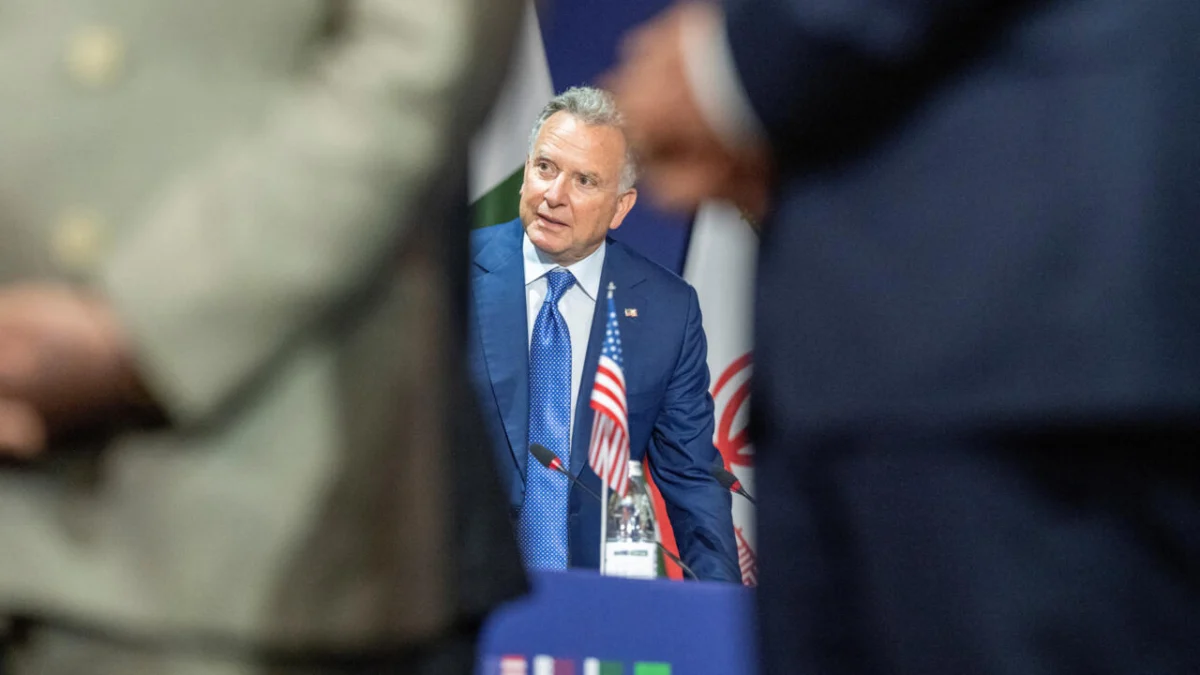
DOHA – A pivotal week of shuttle diplomacy is underway in the Qatari capital, as delegations from the United States and Iran arrive to navigate the precarious implementation of a landmark memorandum of understanding (MoU) aimed at de-escalating the sweeping Middle East conflict. While the presence of high-level envoys from both nations in Doha has stoked global anticipation, the atmosphere remains one of guarded tension, with both Washington and Tehran downplaying the prospect of direct bilateral negotiations.
The diplomatic mission follows an intense period of military volatility. Earlier this month, the two longtime adversaries reached a tentative agreement to halt hostilities, a move intended to stabilize the region after months of direct and proxy warfare. However, the path to a lasting peace is currently obstructed by deep-seated distrust, competing regional agendas, and the persistent fragility of the ceasefire on the ground.
The Core Conflict: A Delicate Balancing Act
The current talks in Doha are not a forum for face-to-face negotiations, but rather a hub for indirect mediation facilitated by Qatari officials. The core objective is to move from the abstract language of the recent memorandum to the practical realities of a sustained de-escalation.
The primary issues at stake involve the restoration of maritime security in the Strait of Hormuz—the world’s most critical oil chokepoint—the unfreezing of billions of dollars in Iranian assets held under US sanctions, and the stabilization of the Lebanon front, where the Israel-Hezbollah conflict continues to cast a long shadow over the broader regional settlement.

For the United States, the focus remains on ensuring that Iran curtails its military aggression against commercial shipping and adheres to the terms of the MoU regarding its regional proxies. For Iran, the priority is the tangible economic relief promised by the release of $6 billion in restricted assets, a move they view as a fundamental test of the US commitment to the deal.
Chronology of Escalation and Engagement
To understand the gravity of the Doha summit, one must look at the rapid sequence of events that brought these parties to the table:
- Mid-June 2026: Washington and Tehran sign a memorandum of understanding, marking a surprise breakthrough in the Middle East war. The agreement mandates an immediate cessation of military operations.
- Late June 2026: Despite the agreement, the Gulf experiences a series of skirmishes. A commercial vessel is struck in the Strait of Hormuz, causing a temporary dip in maritime traffic.
- June 29, 2026: US President Donald Trump claims on social media that Iran has requested "fresh talks" in Qatar. He declares, "IT WILL TAKE PLACE TOMORROW IN DOHA!"
- June 30, 2026: US Central Command launches strikes on 10 Iranian military targets, citing "continued Iranian aggression against commercial shipping." Iran responds with retaliatory strikes against US-affiliated bases in Kuwait and Bahrain.
- July 1, 2026: The Qatari Foreign Ministry clarifies that no direct US-Iran meetings are on the agenda. US envoys Steve Witkoff and Jared Kushner arrive in Doha to meet with Qatari mediators, while an Iranian delegation led by Deputy Foreign Minister Kazem Gharibabadi prepares for its own session with Qatari officials.
The Divergent Narratives: Washington vs. Tehran
The diplomatic friction is exacerbated by a stark difference in how the two capitals are framing the event. President Trump’s characterization of the meeting as an Iranian-initiated request for "fresh talks" was met with a swift rebuttal from Tehran.
Iranian officials have been careful to emphasize that their presence in Doha is for discussions with mediators, not their American counterparts. This semantic distinction is vital for the Iranian leadership, which faces significant domestic pressure to avoid the appearance of capitulation to US demands.

"When a war of this magnitude comes to an end, it is inevitable that there will be implementation challenges, incidents, and differences of opinion," said Deputy Foreign Minister Kazem Gharibabadi. He further noted that the Iranian delegation is focused strictly on the implementation of the existing MoU, specifically regarding the unfreezing of assets and the cessation of Israeli military activities in southern Lebanon.
Qatar, playing the role of the honest broker, has sought to manage expectations. Spokesman Majed Al Ansari confirmed the presence of the US and Iranian teams but emphasized that their calendars were independent. "They are not here for their negotiations with the Iranians," Al Ansari stated, highlighting that the primary function of the visit is to coordinate with Qatari leadership on regional issues, including the delicate situation in Lebanon and the broader maritime security architecture of the Gulf.
Economic Leverage and the Strait of Hormuz
The economic dimension of the talks cannot be overstated. Iranian President Masoud Pezeshkian has publicly linked the success of the de-escalation to the release of frozen funds. "The necessary steps are underway," Pezeshkian noted, referencing a target of $6 billion from a total pool of $12 billion in restricted assets.
This financial component is intrinsically linked to the security of the Strait of Hormuz. Iran has been engaged in separate, parallel talks with Oman regarding the future management of shipping lanes. By positioning itself as a responsible manager of the strait, Tehran hopes to provide the necessary assurances for the US to lift, or at least ease, the current sanctions regime.

However, the "chokehold" strategy has been a point of contention. The US insistence on unhindered transit is a red line for Washington. The recent maritime incidents have forced the US to maintain a posture of "enforced security," which Iran characterizes as provocative. The Doha talks aim to bridge this gap by establishing a verification mechanism that would allow Iran to receive its funds while guaranteeing the safety of international commercial fleets.
The Lebanon Factor: A Third-Party Complication
While the Gulf remains the focal point, the conflict between Israel and Hezbollah in Lebanon is a major complicating factor. Tehran has consistently demanded that any regional deal include a firm commitment to end the parallel conflict and, more specifically, the withdrawal of Israeli troops from southern Lebanese territory.
The recent relative quiet on the Israel-Lebanon border is viewed by some analysts as a positive spillover from the US-Iran MoU. However, the presence of the "Israeli factor," as described by Iranian negotiators, means that even if the US and Iran reach an understanding, the implementation depends on a complex web of regional actors who are not signatories to the memorandum.
Implications: A Fragile Peace or a Tactical Pause?
The global community is watching the Doha talks with cautious optimism. If the US and Iran can successfully navigate the implementation of the current MoU, it could pave the way for a more comprehensive regional security framework.

Potential Outcomes:
- Normalization of Communication: Even without direct talks, the presence of both delegations in the same city—facilitated by a neutral party—creates a "de facto" channel for crisis management, which is essential for preventing accidental escalation.
- Economic Stabilization: Should the release of the $6 billion proceed, it would provide a significant boost to the Iranian economy and serve as a "proof of concept" that diplomacy can yield tangible benefits for the Iranian populace.
- The Risk of Collapse: Conversely, if the incidents in the Strait of Hormuz continue, or if the "implementation challenges" mentioned by Gharibabadi prove insurmountable, the ceasefire could collapse. A return to open conflict would likely be more intense, given the current concentration of military assets in the region.
As the delegations move through their respective schedules in Doha, the ultimate question remains whether these talks represent a genuine shift toward regional stability or merely a tactical pause in a much longer, more intractable conflict. For now, the world waits for the outcome of the mediated sessions, hoping that the quiet in the Gulf and in Lebanon persists long enough for diplomacy to take root.
The role of the Qatari mediators will be the deciding factor. By acting as the bridge between two nations that have effectively severed direct diplomatic ties, Qatar is performing one of the most difficult balancing acts in modern international relations. Their ability to keep the US and Iranian teams focused on the "how" of implementation—rather than the "why" of their ideological divide—will determine if the Middle East continues to de-escalate or slides back into the chaos of the last several months.